UTI Symptoms in Men: Early Signs, Causes, Diagnosis & Prevention


Hey!
Many people think that infections like UTIs mainly bother women, but the symptoms of UTIs in men also deserve attention.
A burning sensation while urinating isn’t just discomfort. It could be your body’s way of warning you about a urinary infection.
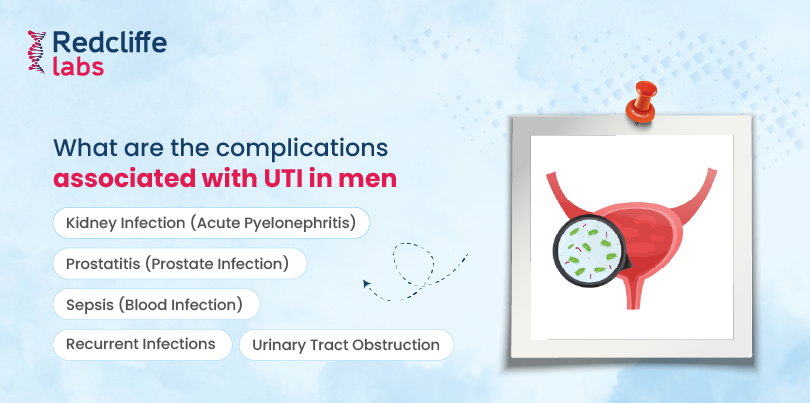
Although it is less frequent, urinary tract infections (UTIs) in men may lead to more severe health complications since these infections are usually linked to some chronic conditions like an enlarged prostate, kidney stones, or blockage of the urinary tract.
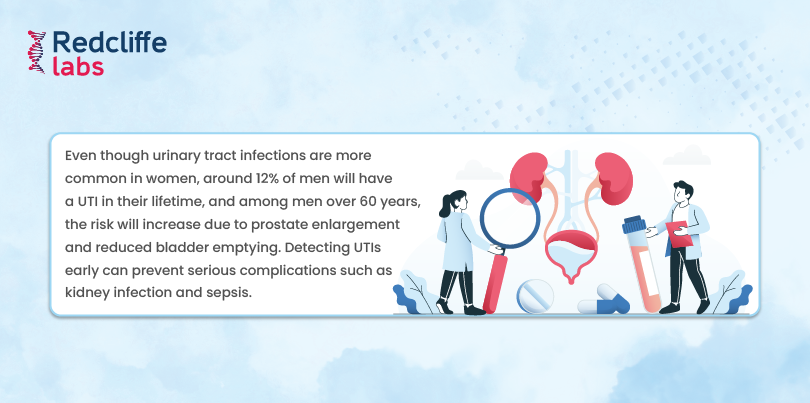
Recognizing the early signs of urinary tract infections in men and seeking prompt treatment can prevent the disease from spreading to the kidneys or blood (sepsis).
In this article, let’s explore the common symptoms of UTI in males, the causes of UTI in men, and when to seek testing.
What Is A UTI In Men?
A urinary tract infection (UTI) is a condition where bacteria multiply in your bladder, kidneys, or ureters to a level that is considered an overgrowth.
Ureters are tubes that carry urine from the kidneys to the bladder.
Often, the bacteria that cause UTIs enter the urethra from the skin around the genital area or the rectum. Since the urethra is the tube through which urine passes, the bacteria will eventually reach the bladder and cause an infection.
Early Signs of Urinary Tract Infection In Men
The early signs of UTI can vary depending on which part of the urinary system is affected. Here are the UTI warning signs in men to watch out for:
1. An urgent need to urinate
One of the early symptoms is a frequent urge to urinate, even if only a small amount of urine is passed each time.
2. Burning sensation while urinating
Infections of the urinary tract, which involve inflammation of the urethra or bladder lining, give men a feeling of a burning or stinging sensation while urinating.
3. Cloudy or foul-smelling urine
Urinary tract infections (UTIs) can cause urine to become cloudy, dark, or have a strong odor. The urine may appear reddish or pinkish, indicating blood in the urine (hematuria) in some cases.
4. Pain in the lower abdomen or back
The pain or pressure in the lower abdomen, groin, or back experienced by men can be a symptom indicating that the infection has already reached the bladder or kidneys.
5. Difficulty starting or passing urine
A UTI may cause hesitation, weak urine flow, and incomplete bladder emptying. This symptom, however, is usually found in men with an enlarged prostate.
6. Fever, chills, or fatigue
The infection that spreads to the kidneys can trigger symptoms such as fever, chills, nausea, or general weakness, indicating that immediate medical intervention is necessary.
7. Pain in the rectal area
When the prostate is suffering from infection (prostatitis), the male will consequently feel pain or discomfort in the rectal or pelvic area, at times, making urination difficult.
Common Symptoms Based On The Type of UTI
The table below shows common symptoms of UTI in men depending on the type of infection:
| Type of UTI | Area Affected | Symptoms in Men |
| 1. Urethritis | Urethra | Burning during urination, discharge, and itching at the tip of the penis |
| 2. Cystitis (Bladder Infection) | Bladder | Frequent urination, lower abdominal pain, cloudy urine |
| 3. Pyelonephritis (Kidney Infection) | Kidneys | High fever, back pain, nausea, chills |
| 4. Prostatitis | Prostate gland | Painful urination, pelvic pain, difficulty urinating, and fever |
Causes of UTI In Men
Even though any man can get a urinary tract infection, certain conditions will make the man more vulnerable, as a urinary tract infection will happen when the bacterium E. coli, or a virus, enters the urinary tract through the urethra, which is the tube that carries urine from the bladder out through the penis.
1. Enlarged Prostate (Benign Prostatic Hyperplasia)
One of the most common symptoms of an enlarged prostate is the blockage of the urine flow that presses against the urethra. This makes it difficult to empty the bladder completely. The urine, now retained in the bladder, becomes a breeding ground for bacteria, thereby increasing the risk of infection.
2. Urinary Tract Obstruction
Such situations as kidney stones or urethral strictures can obstruct or slow the flow of urine. Stagnant urine allows bacteria to multiply, leading to recurrent infections.
3. Poor Hydration
The production of concentrated urine and less frequent urination are the results of insufficient water intake. This hinders the body's ability to eliminate bacteria through urination, which is why the chances of developing a UTI are increased.
4. Catheter Use
Men who use a urinary catheter (a tube used to drain urine) either only for a short period after the operation or forever due to some medical conditions are at a high risk of developing UTIs. This is because bacteria can enter the urinary tract through the catheter insertion site.
5. Unprotected Sexual Activity
Unprotected sexual intercourse, especially anal intercourse, can transfer bacteria from the rectal area to the urethra, leading to infection. Additionally, not cleaning the genitals properly after sexual activity is also a factor that elevates the infection risk.
6. Weakened Immune System
Men with conditions such as diabetes, HIV, or who are on long-term steroid or chemotherapy treatment are among those who have weakened immune systems that make it \easier for bacteria to cause infections.
7. Recent Urinary Procedures
Surgery or diagnostic methods in the urinary tract (e.g., cystoscopy) can temporarily increase the risk of infection by allowing bacteria access to the urinary system.
8. Age-Related Changes
In men older than 60, because of prostate enlargement and decreased fluid intake, along with incomplete bladder emptying, UTIs are comparatively more common, with E. coli being the primary cause. In men under 35, STIs, such as gonorrhea or chlamydia, may be associated.
9. Poor Personal Hygiene
Inadequate genital hygiene or infrequent cleaning of the genital area can promote bacterial growth near the urethral opening, leading to infection.
10. Chronic Health Conditions
Diseases that affect the bladder or kidneys, such as neurogenic bladder (nerve-related bladder dysfunction) or chronic kidney disease, can impair normal urine flow and promote bacterial buildup.
Diagnosis: How Is UTI Detected in Men?
To make an accurate UTI diagnosis in men, your doctor will physically examine you and ask about your:
- UTI symptoms
- History of UTIs
- Sexual History
Additionally, if you experience any UTI symptoms in men, a urine sample is collected for analysis. Doctors may recommend any of the following tests to confirm a UTI:
- Urine Routine & Microscopy Test: This test can detect bacteria, pus cells, and red blood cells.
- Urine Culture Test: The test identifies the bacteria causing the infection and helps determine the most effective antibiotic for treatment.
- Ultrasound of the Kidney, Ureter, and Bladder (KUB): This diagnostic test is used to detect stones, obstructions, or other abnormal formations.
- Prostate Evaluation: Examination of prostate function and size is carried out in chronic or recurrent cases.
Early testing is essential: Book a urine test at home with Redcliffe Labs to confirm UTI and start timely treatment. Call us at 898 898 87 87 or download the Redcliffe Labs’ app now.
Step-by-Step Guide to Book A Test With Us?
- Visit the official Redcliffe Labs website: https://redcliffelabs.com/.
- Browse or search for the specific test you need.
- Add the test to the cart.
- Complete the payment process online.
- You will receive confirmation through SMS and WhatsApp.
Hygiene Care While Giving a Urine Sample
Proper hygiene is essential when providing a urine sample to prevent contamination and ensure accurate test results:
- Wash Your Hands
- Clean the Genital Area
- Use a Sterile Container
- Collect Midstream Urine
- Close the Container Properly
- Wash Hands Again
- Deliver the Sample Promptly
Treatment for UTI in Men
Treatment depends on the cause and severity of the infection. Doctors may suggest:
Antibiotics
- They can help cure UTIs in men within approximately 1 to 3 weeks.
Pain relievers
- They ease burning and discomfort
Fluid intake
- Increase fluid intake to flush out bacteria
Avoid caffeine and alcohol
- Caffeine and alcohol use can irritate the bladder. Hence, they need to be avoided.
Get Treated
- Treatment for underlying issues, like prostate enlargement or stones, if present
How to Prevent UTI In Men?
By understanding symptoms of UTI in men and taking simple preventive steps, you can protect your urinary health and avoid complications associated with untreated urinary tract infections.
- Drink plenty of water daily: Staying hydrated helps eliminate bacteria from the urinary tract.
- Urinate regularly: Urinating frequently helps flush bacteria out of the bladder, preventing their accumulation.
- Keep the genital area clean and healthy: Cleaning the genital area is the first step in eliminating infection-causing bacteria in the body.
- After sexual intercourse, urinate immediately: Urinating right after sex is the way to get rid of bacteria that have been attached to the genital area during sexual activity.
- Manage chronic conditions such as diabetes: Controlling diabetes can strengthen the immune system and decrease the likelihood of urinary tract infections.
- Do not use catheters unless absolutely necessary: The practice of limited catheter use prevents bacteria from traveling up into the urinary tract.
By understanding symptoms of UTI in men and taking timely action, you can prevent complications and protect your urinary health.
Conclusion
Recognizing the signs of UTI symptoms in men is vital to maintaining your health. Signs such as burning while urinating, having the frequent urge to urinate, cloudy or bloody urine, or discomfort in the lower abdominal area should not be ignored. Early medical attention ensures proper diagnosis and reduced risk of complications.
FAQs
-
What are the first signs of a UTI in men?
Some of the early symptoms of UTI in men are the frequent need to urinate, a burning feeling at the time of urination, cloudy or foul-smelling urine, and pain in the lower abdomen or back area. Thus, early identification of these signs can help in avoiding the spread of infections.
-
What leads to UTIs in men?
Most of the cases of UTI in men occur due to bacteria such as E. coli. The main risk factors are an enlarged prostate, urinary tract obstruction due to stones or strictures, dehydration, the use of catheters, unprotected sexual activity, chronic health conditions, and poor personal hygiene.
-
What methods are used by doctors to identify UTIs in men?
Doctors diagnose UTIs by reviewing symptoms, medical history, and collecting a urine sample for tests like urine routine and microscopy, urine culture, and sometimes imaging (ultrasound) or prostate evaluation.
-
What is the duration of treatment to recover from a UTI in men?
The treatment for most men typically lasts 1-3 weeks. Consuming a lot of fluids and following medical advice speeds up recovery.
-
Are there any ways to stop the occurrence of UTIs in men?
Certainly. The preventive measures consist of drinking an adequate amount of water, urinating on time, keeping the genitals clean, urinating after sexual activity, taking good care of illnesses like diabetes, and not using catheters unless it is absolutely necessary.