Is a Negative HIV Test at 6 Weeks Reliable? Here's What You Need to Know.

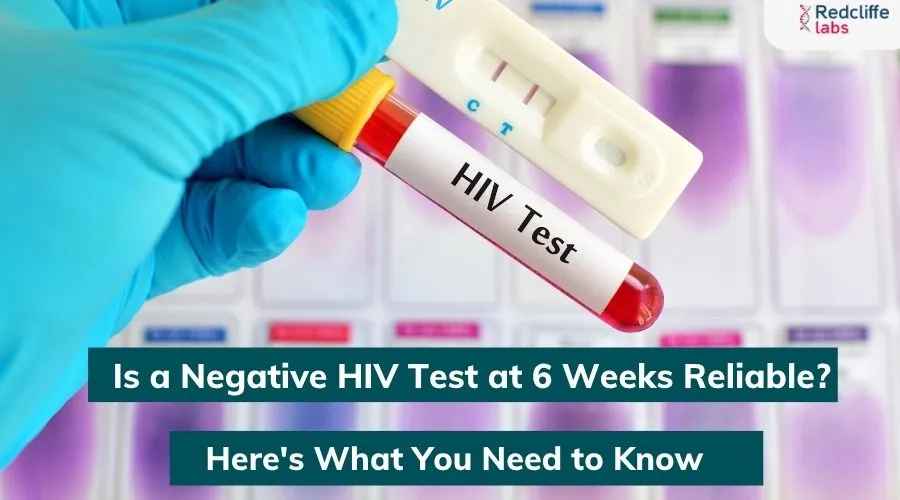
HIV, or human immunodeficiency virus, is an infection that targets and weakens your immune system. It damages CD4 cells, which destroy your body’s ability to fight bacterial and viral infections, illnesses, diseases, and some cancers.
2.4 million people are living with HIV in India, which has no cure. However, antiretroviral therapy (ART) can prevent and treat it. ART is a combination of HIV medicines, which reduce the amount of HIV in the blood.
An HIV test can help detect early exposure to the infection and confirm the diagnosis of HIV infection. A negative HIV test means no sign. However, accurate results are only available after a 'window period' of 23 to 90 days.
Some HIV tests can detect the virus's presence within 6 weeks. However, it depends on your immune system and the type of HIV test.
In this blog, we will provide you with the answer to ‘Is a negative HIV test at 6 weeks conclusive?’ and all you need to know about HIV tests.
HIV Tests and Their Types
An HIV test detects the presence of human immunodeficiency virus (HIV) through blood, saliva, or urine samples.
Experts reported that India conducts over 30 million free HIV tests annually, mainly on pregnant women.
The HIV test runs on a window period from 9 to 11 days to 6 months. However, experts consider a 6-month window period outdated and suggest testing after 3 months to detect HIV infection.
Also, read https://redcliffelabs.com/myhealth/hiv/hiv-symptoms-in-men-key-indicators-to-watch/
Types of HIV Tests
There are three types of HIV tests: antibody, antigen/antibody, and nucleic acid test (NAT).
Each HIV test has a window period, which detects your body’s immune response and provides accurate information.
Antibody Tests
The HIV antibody test requires blood from a vein, a quick and at-home test. The HIV early screen test can detect HIV infection, help avoid transmission, and prepare for treatment to deal with potential complications. It takes 23 to 90 days after exposure to HIV for antibody tests to detect the infection.
Antigen/Antibody Test
The antigen/antibody test is performed in a laboratory by drawing blood from your vein. Doctors suggest you take the test from a reputable diagnostic test like Redcliffe Labs. Redcliffe Labs offers HIV-1 and HIV-2 antibody tests, which can detect the HIV 1 & HIV-2 antibodies and antigens to confirm the presence of HIV. The window period for antigen/antibody tests is 18 to 45 days after exposure, which may take up to 90 days to detect the infection.
Nucleic Acid Test (NAT)
The NAT is also a blood test that detects the presence of the virus in your blood. The window period of the nucleic acid test is 10 to 33 days after exposure. Doctors can recommend NAT to monitor HIV treatment rather than for routine screening.
How Accurate Are HIV Tests?
Experts say that HIV tests can take up to 10 days for accurate results after exposure. However, results vary on how quickly your immune system responds to the virus.
The accuracy of a negative HIV test is over 99.9%. However, the accuracy also depends on your body and the type of test performed. Each test has a window period. A window period refers to the time between exposure to the virus and when it can be detected in your body.
HIV attacks the p24 antigen in blood cells. p24 is the antigen in white blood cells (WBCs), which allows the immune system to fight against bacterial or viral infection.
Is a Negative HIV Test AT 6 Weeks Conclusive?
Yes, a negative HIV test at 6 weeks is conclusive, as research has shown that HIV tests at 6 weeks can detect more than 99% of infections. However, if you had unprotected sex or shared syringes or needles in the last 6-8 weeks, take another test in 6 weeks for confirmation.
Is a Negative HIV Test 100% Accurate?
Experts found, after several studies, that a negative HIV test is highly accurate after 4 weeks. However, a negative HIV test is 100% accurate after 8 weeks, and at 6 weeks the accuracy is 99.9%.
Can The Test Results Be False Positive and False Negative?
An HIV test is accurate, but sometimes there are possibilities of false-positive and false-negative results.
A false negative HIV test can happen because of many factors, including:
-
When the antibody or antigen levels can’t be detected in the collected sample.
-
When your immune system doesn’t develop enough antibodies, which can be detected at the time of testing
-
When the test may not have been sensitive enough to detect the levels.
-
When/If the test is done early in the window period.
A positive HIV test can happen in a situation when the test detects antibodies for other infectious or foreign substances.
A false HIV test means the test result shows positive. However, your body has no presence of HIV antibodies in the blood.
Studies found that 1.5% or 15 of every 1000 antibody tests are false positives. For confirmation, your doctor can suggest another HIV test.
When To Get a Second Test?
Once your HIV test report shows a negative result, it may be recommended to repeat the test after the window period closes because antibodies in some people may take longer to develop. Early detection may lead to false-negative results.
Healthcare providers suggest that 3 months is a pretty good time to take an HIV test, after an initial exposure, and another 3 months to be sure about the HIV-negative results.
A second test is necessary to confirm exposure after a negative test or in the window period.
People living in areas with high exposure to HIV should take regular screening tests and preventive measures to prevent severe health complications caused by HIV.
Also, your doctor can recommend taking a second HIV test to confirm the result.
Who is At High Risk of Catching HIV?
HIV spreads through fluid transmission from one person to another. However, it doesn’t transfer when hugging or kissing an infected person. Some people are at high risk of catching HIV, including:
-
People involved in unprotected vaginal or anal sex
-
People have another sexually transmitted infection.
-
People sharing needles or syringes.
-
People are exposed to accidental needle-stick injuries.
-
People are being exposed to tattoos and piercings through unsterile equipment.
Key Takeaways
A negative HIV test in the 6th week is conclusive. However, you should take regular screening tests and preventive measures to prevent severe health complications. Redcliffe Labs offers an HIV test at an affordable price. Book the test and prevent the infection from becoming a severe, life-threatening disease.