Can the PAP Smear Test Detect HIV?

A Pap Smear test looks for cervical cancer by monitoring abnormalities in the cells of a woman’s cervix. It can detect human papillomavirus (HPV) infections or inflammation. Experts also call it the PAP test or the Papanicolaou test.
Did you know? Cervical cancer is the second most common cancer among Indian women.
HPV, the virus that causes cervical cancer, is often confused with HIV. Let’s find out if a PAP smear detects HIV?
What’s a PAP Smear Test?
PAP smear is a regular screening or diagnostic test that monitors for mutations in the cells of a woman’s cervix, leading to cervical cancer.
It is popular under many names, such as the PAP test, cervical smear test, cervical cytology test, and Papanicolaou test.
A PAP Smear test examines cervical cells for abnormalities to diagnose signs of cervical cancer. The test is generally recommended for women above the age of 21 to ensure early screening and detection of cervical cells before they transform into cancer.
12 Symptoms Indicating a PAP Smear Test
Women over 21 must add the PAP smear to their regular testing. If your doctor suggests taking the test, book it from Redcliffe Labs. A leading diagnostic lab in India, Redcliffe Labs makes diagnostic tests affordable and accessible for all. The PAP smear test price at Redcliffe Labs is INR 500. Many signs indicate the need for a PAP Smear test.
- Abnormal vaginal discharge
- Heavy periods
- Pain during intercourse
- Abdominal bloating
- Leg swelling or inflammation
- Cervical cancer
- Pelvic pain
- Fatigue
- Vaginal bleeding
- Painful urination
- Weakened immune system
- Unusual vaginal discharge
Can PAP Smear Detect HIV?
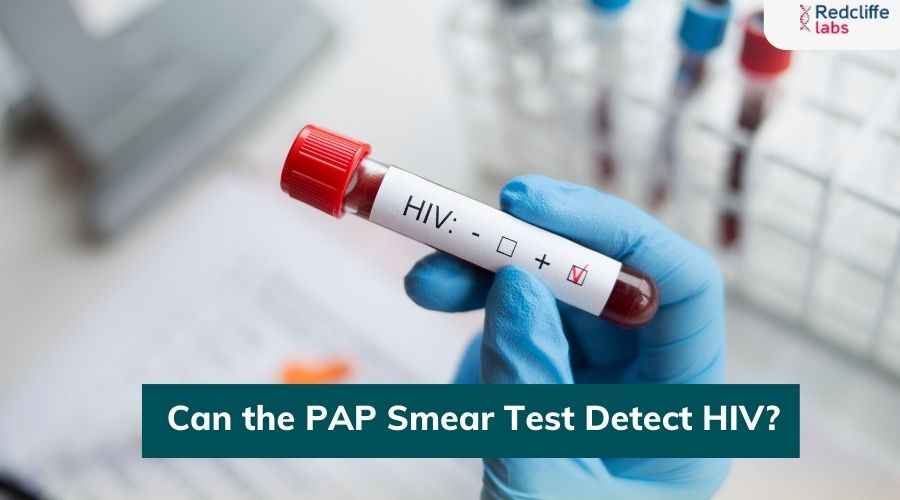
No, the PAP smear test doesn’t detect HIV. However, there is a connection between PAP smears and HIV.
The National Institute of Health conducted a study on HIV-positive women to look at the spectrum of cytological abnormalities on PAP Smears and roll out cancerous lesions in them.
The study found that the PAP smear test helps in the early detection of the lesions and their treatment to prevent their severity. However, there is no association between Pap smears and HIV.
Women linked with HIV have a higher prevalence of HPV infection, which is most likely to develop into persistent HPV infection. Experts recommend antiretroviral treatment for women associated with HIV.
Is There a Connection Between PAP Smears and HIV Tests?
PAP smear test and HIV test have no built-in connection. The HIV test requires a blood sample, while a pap smear requires cells from the cervix.
A PAP smear test requires cells from the cervix to detect abnormalities, and doctors often perform it at the same time as other STI tests. In contrast, the HIV test requires blood samples. A doctor might recommend a rapid test or a blood test.
Are There Any Risks Linked to PAP Smears and HIV Tests?
Both tests have no major risks, whereas, in the PAP smear, you may experience fever, severe abdominal pain, bleeding, and vaginal soreness, while, in the HIV test, you may feel slight pain or bruises.
HIV and Test Required To Screen It?
The Centers for Disease Control (CDC) recommends the HIV test for people between 13 and 64 years of age, as the cases are on the rise and early detection can prevent its major complications. You can get an HIV test at home, at a hospital, or at a healthcare provider’s office (clinic).
The CDC classifies HIV tests into three types: antibody and antigen tests, and nucleic acid tests (RNA tests). Your immune system produces antibodies when exposed to any bacterial or viral infection. If you have HIV, your immune system will produce p24 antigen to fight against developed antibodies.
These are screening or diagnostic tests performed by collecting blood samples from a vein.
- The antibody test uses blood to detect your immune system’s response to HIV.
- The antibody and antigen test monitors the blood for proteins linked with HIV.
- The nucleic acid or RNA test checks the blood for any genetic mutation.
Redcliffe Labs is an omnichannel-PAN India diagnostic test provider that provides 3600+ tests and packages at an affordable price and with home sample collection. Our certified phlebotomists ensure seamless sample collection. Here is the list of HIV tests that you can book by visiting ‘Book a test’ on Redcliffe Labs’ website.
- HIV-1 and HIV-2 Antibodies Test by CMIA Method
- HIV Antibodies (confirmation) Test by Western Blot
- HIV Early Screen Test
- HIV Antibody, Rapid Card Test
- HIV 1 Viral Load Test
- p24 antigen with HIV 1&2 Antibody Test
Are HIV and HPV Interconnected?
Yes, HIV and HPV are interconnected, as they both are sexually transmitted infections (STIs). However, both have different consequences.
Human Papillomavirus (HPV) is an STI that can cause cervical and other cancers. Doctors recommend a PAP Smear test to detect the presence of HPV. However, if the PAP smear test results are unclear (hindered), they might suggest an HPV test. Redcliffe Labs offers the HPV test, too.
Human Immunodeficiency virus (HIV) is an STI that can damage the immune system, decreasing your body’s ability to fight off infections or diseases. Experts say that HIV can increase the risk of certain cancers. There is no cure for HIV, but antiretrovirals (a drug) can keep it in control.
20 Symptoms of HIV
There are primarily three stages of HIV: acute, chronic, and AIDS. The symptoms depend on the stage of HIV you have. During acute HIV infection, the symptoms last about 2 weeks; in the chronic stage, HIV lasts between 2 and 10 years, while AIDS or acquired immunodeficiency syndrome is the final stage of HIV. Here is what you can experience with HIV.
- Fever
- Headache
- Chills
- Rashes
- Sweating during the night
- Swollen lymph nodes
- Fatigue
- Mouth ulcers
- Muscle and joint aches
- Sore throat
- Extreme fatigue
- Recurrent respiratory infections
- Sudden weight loss
- Extreme and unexplained tiredness
- Diarrhea (lasting more than a week)
- Pneumonia
- Sores of the anus, genitals, or mouths
- Long-term swelling of the lymph glands in the neck, groin, or armpits.
- Shingles or herpes zoster
- Oral yeast infection or thrush.
If you experience any of these symptoms, book an HIV test from Redcliffe Labs and take preventive measures.
Did You Know?
According to the HIV Estimations report (2023), over 2.5 million people in India are living with HIV.
Causes of HIV
HIV is a sexually transmitted disease, which, of course, spreads through sexual contact. However, the infection can also be spread by the injection of illicit drugs, the use of shared needles, or contact with infected blood.
Pregnant women can also transfer HIV to their children during pregnancy, childbirth, or breastfeeding.
HIV spreads when an infected blood, semen, or fluids from a vagina enters your body. There are other causes of HIV as well, which include.
- Intercourse- Vaginal or anal sex can transfer the infection from one partner to another, however, oral sex has less risk. The virus can transfer from mouth sores or small tears, which can happen in the vagina or rectum during sex.
- Blood Transfusion- The virus can be transferred through blood from a donor. Hospitals and blood banks can screen the blood supply for HIV.
- Shared Needles- Sharing syringes and needles may put you at risk of HIV, hepatitis, and other infectious diseases.
- During Pregnancy- Pregnant people who have HIV can transfer it to their children during pregnancy, breastfeeding, and childbirth.
There are misconceptions that HIV can spread through casual contact. However, you can’t get AIDS or HIV by kissing, dancing, shaking hands, or hugging an HIV-infected person. HIV doesn’t spread through air, water, or insect bites.
Key Takeaways
HIV infection is a sexually transmitted disease (STD) that can weaken your immune system. You might catch other infections, diseases, or certain types of cancer from HIV. An HIV test can detect HIV infection, but a PAP Smear test cannot.
HIV infection can bring dangerous complications, such as kidney disease, neurological disorders, wasting syndrome, and certain types of cancer. It is better to take early screenings and prevent these complications. Redcliffe Labs offers an HIV Early Screen Test priced at INR 900, which can detect HIV infection to help you avoid transmission and start treatment to ease complications. Book the test and prevent further complications.