Understanding Calories in 100 g Peanuts: A Complete Nutritional Guide

Medically Reviewed By
Dr. Mayanka Lodha Seth
Written By Sheena Mehta
on Mar 13, 2026
Last Edit Made By Sheena Mehta
on Mar 13, 2026
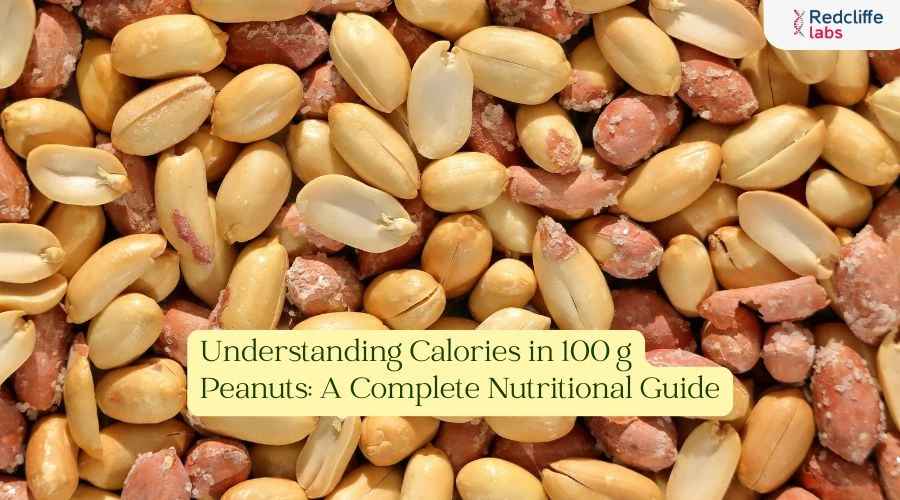
Strolling down the grocery aisle or looking at a quick energy boost often leads to a familiar nutritional dilemma: the peanut jar. They are a crunchy snack that provides lots of protein, but there's always that little voice that tells you to stop pouring the peanuts when you look down into the jar. Is this small legume a "superfood," or just a calorie-dense snack that will affect weight management? Many of us struggle with the pros and cons of eating nuts because they are not very big, yet they can provide a lot of protein and calories.
If you start with a serving size of 100 grams, is that snack or the equivalent of eating the calories found in a whole meal? This guide will help you uncover the answers to peanut nutrition and show you how to enjoy the tremendous taste of peanuts without feeling guilty for ruining your entire day!
What are the Calories in 100 g of Peanuts?
We usually use the "100 gram" measure to talk about the nutrition of any food; it's a universal unit that nutritionists use for straight comparisons. If we take a 100-gram portion of peanuts, it would be about two big handfuls. However, as peanuts are oilseeds, they are inherently high in fats and proteins.
Approximate nutritional values in 100 g of peanuts:
- Calories: 567 kcal
- Protein: 25-26 grams
- Total Fat: 49 grams
- Carbohydrates: 16 grams
- Fiber: 8-9 grams
Breaking Down the Calories in 100 g of Peanuts
To understand why the calorie count is high, we must look at the "macronutrients" of peanuts. The proteins, fats, and carbohydrates that make up peanuts.
-
The Role of Healthy Fats
Peanuts are high in calories, mostly from fat. A 100-gram serving has about 49 grams of fat. Most of it is monounsaturated or polyunsaturated, types that help the heart, like those in olive oil. These fats help the body absorb vitamins and protect organs, as long as you don't overeat.
-
A Powerhouse of Plant Protein
Peanuts pack a strong amount of plant protein. Every 100 grams gives you 25 to 26 grams. That makes them a good plant-based protein source for athletes, vegetarians, and people looking to increase their daily protein intake.
-
Carbohydrates and Dietary Fiber
Unlike many other snacks, peanuts are relatively low in simple sugars. In 100 grams, 16 grams of carbs come with 8 to 9 grams of fiber. This fiber helps slow the absorption of sugar into the blood. It also improves digestive regularity and supports gut health. Plus, it makes you feel full, so you don't overeat later.
Important: Even though peanuts are high in calories, they are also highly nutritious and can be part of a healthy diet when eaten in moderation.
|
Peanuts: More Nutritional Facts Per 100 G | |||
|
Vitamins (Approx. % of RDA) |
Minerals (Approx. % of RDA) | ||
|
Folates: |
60% |
Copper |
127% |
|
Niacin |
75% |
Iron |
57% |
|
Thiamin |
53% |
Phosphorus |
54% |
|
Vitamin E |
55.5% |
Manganese |
84% |
Note: Values may vary depending on peanut variety and the dietary reference standards.
Also read:
Is 100 Grams of Peanuts a Normal Serving?
Although 100 grams is frequently used as a measurement, it is seldom considered a "single serving" in clinical or dietary contexts. Eating 567 calories at once solely from snacks might be too much for a person with a sedentary lifestyle.
A standard daily serving size is about 28 grams (about 1 ounce or a small handful), with about 160 calories. Generally, consuming 100 grams per day is only advised for athletes, people seeking to gain weight healthily, or those following a specific high-protein diet under a professional's supervision.
When Can High Calorie Intake Be Dangerous?
In fact, peanuts can be a very healthy food. However, if you eat too many of them (like 100 grams or more each day) without adjusting the rest of your diet, it can cause some health problems. You should always listen to your body when you eat high-calorie foods.
- Unintentional Weight Gain: If you get used to eating about 500 extra calories per day that are not consumed by physical activity, then you may experience a weight gain over a month.
- Digestive Discomfort: The combination of dietary fiber and fat in a 100-gram serving of peanuts is likely a little too much for sensitive stomachs, potentially causing symptoms like bloating or diarrhea.
- Aflatoxin Risks: If peanuts are not stored properly, they may develop mold that produces aflatoxins. These are very toxic to the liver and, therefore, harmful to our health in general.
- Sodium Overload: It is worth noting that many people consume only "roasted and salted" varieties. So, 100 grams of the salted peanuts may exceed the recommended daily sodium intake, leading to high blood pressure.
Symptoms of Excessive Peanut Consumption.
When you keep eating peanuts in excess, your body may send subtle signals to help it cope with the high levels of fat and fiber. Identifying these symptoms early may help you adjust portion sizes.
- Ongoing feeling of heaviness in the stomach.
- Acne flare-ups or oily skin
- Heartburn or acid reflux, particularly when consumed late at night.
- Unexplained thirst, which generally comes from the high salt content in processed nuts.
5 Health Benefits of Peanuts
Peanuts are considered a nutrient-dense food because they contain healthy fats, protein, fiber, and antioxidants.
- Heart protection: Monounsaturated fats reduce LDL (bad) cholesterol and help the heart's arteries stay healthy.
- Blood sugar control: Peanuts have a low GI or glycemic index. This means they will not cause an immediate spike in blood sugar levels.
- Brain health: Peanuts are a rich source of niacin and vitamin E. Therefore, they help prevent cognitive decline.
- Weight management: Peanuts are generally filling, and small amounts can help you avoid binging at mealtime.
- Reduce inflammation: Peanuts are rich in antioxidants, such as p-coumaric acid, which help neutralize free radicals and reduce inflammation.
Raw vs Roasted Peanuts: Which Is Better?
|
Principle |
Raw Peanuts |
Roasted Peanuts |
|
Protein |
High |
Similar (not significantly higher) |
|
Taste |
Mild |
Stronger |
|
Digestibility |
Moderate |
Better |
|
Added salt |
No |
Sometimes (depends on processing) |
How Much Peanut Protein Is Enough?
A reasonable daily intake (RDI):
- 20-30 g peanuts per day
- Provides approximately 5-8 g of protein
Healthy Ways to Include Peanuts in Your Diet
You can incorporate peanuts in your diet in many healthy ways:
- Add roasted peanuts to salads.
- Mix peanuts with vegetable stir-fries.
- Use peanut butter on whole-wheat bread.
- Add peanuts to homemade trail mix.
- Use crushed peanuts as a topping for yogurt or oatmeal.
- Opting for unsalted or lightly roasted peanuts is usually a healthier decision.
Tips to Avoid Problems from Excess Peanut Consumption
To avoid the side effects of excessive calorie intake from snacking, you need to be aware of how you store your snacks so you can eat them in ways that keep your health markers in the "green" range.
- Check for freshness: Smell your peanuts to determine whether they are fresh. If they have an unpleasant (chemical or bitter) odor, they may be rancid.
- Hydrate them well: In addition to your peanut snacking practices, water is essential for properly processing the extra protein and fiber in the peanuts you produce.
- Rotate your seeds: When you eat nuts, you shouldn't just eat peanuts. Eating different types, such as almonds, walnuts, or pumpkin seeds, will also provide you with additional nutrients.
- Store in Cool Places: Peanut butter should be stored in an airtight container in a cool, dark place to prevent fat oxidation.
When Should You Limit Peanut Intake?
Certain individuals may need to limit peanut consumption. This includes:
- People with peanut allergies.
- People who are on a low-calorie diet.
- Those with sensitive digestive systems.
- People who doctors advise to follow a low-fat diet.
Consult with your health professional for personalized guidance on incorporating peanuts into your diet and achieving maximum benefits.
Conclusion
Peanuts are rich in calories and also in essential fats, proteins, and minerals. When consumed in moderation and as part of a balanced diet, peanuts can provide numerous health benefits. If you can view peanuts as a nutritious supplement rather than a filling snack, you will improve heart health and energy levels! Always listen to your body and consult a doctor if you have special dietary restrictions.
Mindful snacking tips:
- Plan your portion size of 1 handful per day.
- Opt for unsalted versions whenever possible.
- Add fruit to create balanced snacks.
Regular health checkups and nutritional screenings can help you understand how your body processes different fats and proteins over time. Tests such as IgE blood tests or allergy panels booked through Redcliffe Labs can help assess your immune system's response to peanut proteins. Additionally, you can identify food allergies and make better food choices that suit them.
FAQs
How many calories are in 100 g of peanuts?
A cup of 100 grams of peanuts has about 567 calories. Most come from healthy fats, plus some protein and carbs. Peanuts pack a lot of energy, so even a little can add up. That's why it's smart to watch how much you eat when you include them in your routine.
Are peanuts healthy despite being high in calories?
Peanuts can be a healthy choice despite their high-calorie content. Peanuts contain plant-based proteins, are a rich source of healthy fats, are an excellent source of fiber, and are full of the important nutrients magnesium, niacin, and vitamin E, which support heart health and overall well-being. When eaten in moderation, peanuts can serve as a nutritious snack and contribute to a balanced and healthy diet.
Can peanuts help with weight loss?
Peanuts can aid in weight management when consumed in moderation. The protein, fiber, and healthy fats in peanuts can help you feel full and reduce your desire to snack frequently, which may help prevent overeating between meals. Because of their caloric density, large amounts of peanuts will most likely increase your caloric count. However, by including a small number of peanuts as part of a balanced diet, you may achieve healthy weight management.
How many peanuts should I eat per day?
Nutritionists generally recommend 28-30 grams of peanuts, or about one small handful, as an appropriate daily intake. This quantity offers a good balance of nutrients, including protein, fiber, and healthy fats, while adding minimal additional calories to your diet. When selecting your daily portion, many health professionals suggest that unsalted or dry-roasted peanuts may be best for maintaining a balanced diet.
Do roasted peanuts have more calories than raw peanuts?
As the nutritional composition of raw, unroasted peanuts is the same, the calorie count is the same. The calorie count can be higher for roasted peanuts when oils, salts, sugar, or flavoring are added during roasting. However, dry-roasted peanuts usually have the same nutrient and calorie content as raw peanuts, without added ingredients.