Is It Healthy to Stop Eating Ghee or Oil? Effects on Your Body You Should Know

Medically Reviewed By
Dr. Geetanjali Gupta
Written By Sheena Mehta
on Feb 10, 2026
Last Edit Made By Sheena Mehta
on Feb 10, 2026
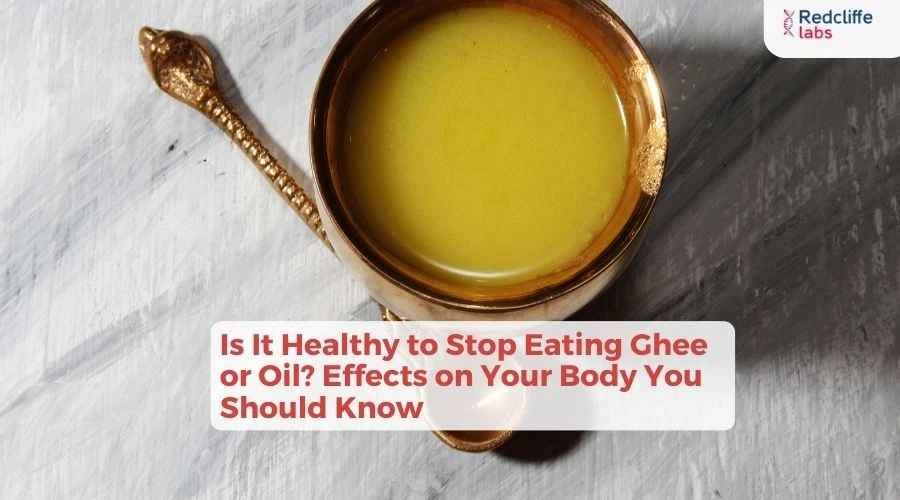
When trying to eat healthier or lose weight quickly, many people make a major change: they eliminate ghee and oil from their diet. Initially, this might seem like the right choice, but your body may respond in unexpected ways.
Fats are not just cooking ingredients, but they are also essential nutrients. Ghee and healthy oils support hormone balance and help your body absorb fat-soluble vitamins A, D, E, and K. But what really happens when you stop eating these fats?
Here's what you need to know.
Role of Ghee and Oils in the Body
Ghee and healthy oils are important sources of dietary fats. They give your body energy and help you absorb vitamins A, D, E, and K. When eaten in moderation, they also support digestion, hormone balance, brain health, and cell function.
Also read:
Key Roles of Ghee in the Body
Supports Digestion:
Ghee has butyric acid, which helps keep your gut lining healthy and supports regular bowel movements.
Nutrient Absorption & Energy:
Ghee is a rich source of energy and helps your body absorb nutrients from foods that require fat for proper use.
Bone Support:
Ghee has only small amounts of vitamin K2, so it is not a main source. Foods like fermented dairy, cheese, and natto are better choices for supporting bone health.
Anti-Inflammatory Support:
They contain healthy fatty acids that support your immune system and help manage inflammation when consumed in moderation.
Skin & Hair Nourishment:
Fats like ghee help keep your skin moisturized and support healthy hair.
Brain Function:
Healthy fats help build brain cells and support memory and focus.
High Smoke Point:
Ghee can handle high cooking temperatures without breaking down or forming harmful compounds.
Roles of Healthy Oils in the Body
Vitamin Absorption:
Healthy oils help your body absorb vitamins A, D, E, and K from the foods you eat.
Energy & Organ Protection:
They provide lasting energy and help protect your vital organs by cushioning them.
Heart Health Support:
Oils with unsaturated fats, like olive oil, can help keep your cholesterol at a healthy level when they replace saturated and trans fats.
Key Considerations
It's best to eat ghee and oils in moderation. For most people, 1 to 2 teaspoons of visible fats a day is enough as part of a balanced diet.
What Happens When You Stop Eating Ghee or Oil?
Cutting out ghee and oil from your diet may help you lose weight at first and improve heart health by lowering your calorie and fat intake. But nutritionists warn that removing them entirely can lead to nutrient deficiencies, especially in vitamins A, D, E, and K.
It can also lead to dry skin, hair loss, less mental sharpness, and hormonal problems.
Key Effects of Eliminating Ghee and Oil:
- Weight Loss and Initial Benefits. If you cut back on ghee or oils, you might eat fewer calories at first and lose some weight. Some people also feel less bloated or notice easier digestion for a while. But if you avoid healthy fats for too long, your body can miss out on the energy and hormone support it needs.
- Nutrient Deficiencies: Dietary fat is needed to absorb vitamins A, D, E, and K. Very low-fat diets can impair absorption of fat-soluble vitamins (A, D, E, and K), potentially affecting immunity and bone health over time. Eating too little fat can also affect your hormones and slow down your metabolism.
- Skin and Hair Problems: Healthy fats keep your skin moisturized, help your hair stay strong, and can ease joint inflammation. Not getting enough essential fatty acids for a long time can cause dry skin, thinning hair, brittle nails, or dull hair. However, small reductions in these fats usually do not cause quick changes.
- Hormonal and Cognitive Effects: Healthy fats are important for your brain and hormones. Without them, you might feel tired and have trouble thinking clearly. Omega-3 fatty acids are especially important for your brain and mental health. Monounsaturated fats help keep your heart and metabolism healthy.
- Digestive Discomfort: A complete absence of oil can lead to digestive issues such as constipation or bloating.
- Increased Cravings and Overeating: Meals without enough fat often leave you feeling less satisfied. This can make you hungrier more often, increase your sugar cravings, and cause you to eat more carbs.
Important Considerations:
- Not all fats are equal: While eliminating refined oils and trans fats is beneficial, the body still requires healthy fats, such as olive oil, nuts, or seeds, for optimal functioning.
- Moderation is Key: Instead of eliminating all fats. Moderation is important. Experts recommend limiting fat intake rather than cutting it out completely to prevent deficiencies.
Can avoiding ghee or oil ever be helpful?
Avoiding ghee or oils can be helpful for a short time in certain cases, like digestive problems, liver issues, or when you need to cut calories for a while. But cutting out all fats for a long time is not a good idea, as it can lead to nutrient deficiencies, hormonal problems, and a weaker immune system.
When Avoiding Ghee or Oil Makes Sense
- Digestive issues: Eating less fat can help people with pancreatitis, gallbladder problems, or IBS by reducing strain on their systems.
- Liver conditions: Eating less fat can help the liver work better in certain illnesses.
- Short-term weight loss: Cutting back on added oils can lower your calorie intake for a while. Still, using healthy oils like olive or mustard oil is important for your heart, even though they have calories.
- Avoiding harmful fats: Limiting refined oils like soybean and canola, as well as hydrogenated fats such as vanaspati, can help reduce inflammation and lower heart disease risk.
Risks of avoiding fats for too long
- Vitamin deficiency: Your body needs fats to absorb vitamins A, D, E, and K.
- Hormonal Issues: Low-fat intake can lead to irregular periods, reduced fertility, or fatigue.
- Dry skin and hair loss: Not getting enough fats can make your skin dry, your hair brittle, and your nails dull.
- Weakened immunity: Essential fatty acids help keep your immune system strong and lower inflammation.
Also read:
A Better Way: Add Healthy Fats to Your Diet
Instead of cutting out fats completely, choose good-quality fats and use them in moderation.
- Ghee: When used in moderation, it supports digestion and remains stable at high temperatures.
- Cold-pressed oils, such as mustard, olive, and coconut, can be good for your heart.
- Natural sources: Nuts, seeds, and avocados supply essential fatty acids.
For most adults, 2-3 teaspoons of healthy, visible fats per day can be sufficient, but total daily fat intake should also include fats from natural foods like nuts, seeds, and dairy to meet the recommended intake (20-35% of daily calories).
Conclusion:
Eliminating ghee or oil may appear healthy, but it can harm energy, digestion, hormone balance, skin health, and vitamin absorption. Moderation is essential. Consuming small amounts of healthy fats each day supports overall well-being and long-term health.
If you're thinking about making big changes to your diet, it's a good idea to check your nutrient and metabolic health first. Redcliffe Labs can help with blood tests and checkups to make sure your body gets what it needs as you adjust your diet.
Suggested Tests Related to Oil and Fat Intake:
- Lipid Profile
- Vitamin A, D, E, and K Tests
- Liver Function Test (LFT)
- Hormone Profile (Testosterone, Estrogen, Progesterone, Cortisol)
- Blood Sugar & HbA1c Test
FAQ
-
Is it safe to completely stop eating ghee or oil?
It's not a good idea to avoid ghee or oils for a long time. You might cut calories for a while, but you could also miss out on important nutrients like vitamins A, D, E, and K.
This can lead to hormonal issues, dry skin, hair loss, and a weaker immune system. Eating healthy fats in moderation is important for your overall health.
-
Can avoiding ghee or oil help with weight loss?
Reducing added oils can help you lose weight in the short term because you eat fewer calories. But if you cut out healthy fats completely, your metabolism may slow down, you might feel more cravings, and your body won't absorb nutrients as well.
Including healthy fats in your diet, in moderation, helps you manage your weight and stay healthy in the long run.
-
What happens to the skin and hair if I stop consuming fats?
Healthy fats help maintain skin moisture, hair strength, and joint health. If you eat very little fat for a long time, you might get dry, flaky skin, dull or thinning hair, brittle nails, and sore joints.
Cutting back on fats for a short time usually isn't a problem, but avoiding them for too long can be harmful.
-
Can avoiding ghee or oil cause digestive issues?
If you cut out fats entirely, you might experience constipation, bloating, and trouble absorbing nutrients. Fats aid digestion and stimulate bile production. Eating moderate amounts of healthy oils supports good digestion and gut health.
-
Are all fats bad if I want to eat healthy?
No. You should limit refined and trans fats, but healthy fats like ghee, olive, mustard, and coconut oils, along with nuts and seeds, are important. They give you energy, help your body absorb vitamins, and support your heart, brain, and organs. Aim for balance.
-
How much healthy fat should I consume daily?
Most adults need about 2 to 3 teaspoons of healthy fats each day, such as ghee or oils. Fats from foods like nuts, seeds, and dairy should make up 20 to 35 percent of your daily calories. This helps your body absorb vitamins, maintain hormone balance, and stay healthy overall.