Fungal Infection on Face: Causes, Symptoms, Treatment & Prevention

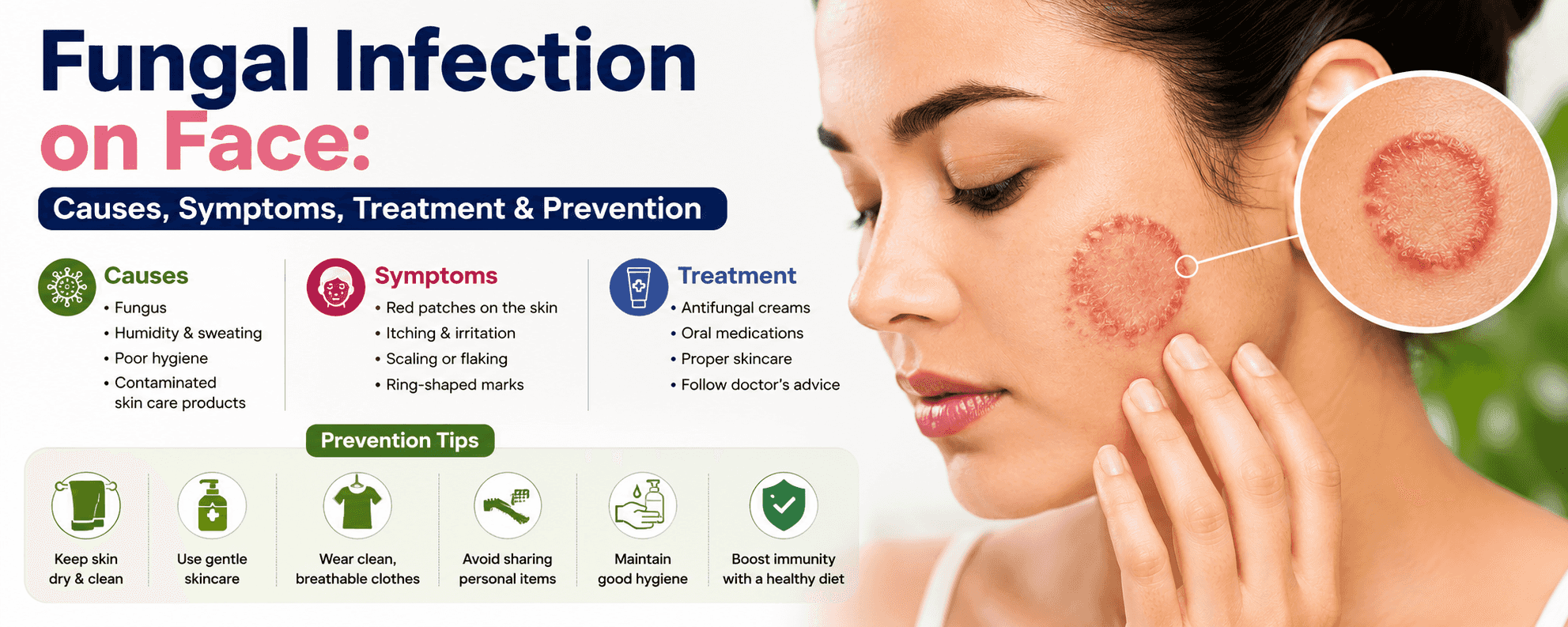
You wake up one morning and notice a red rash on your face that wasn't there before. Initially, you may think it is an allergy, dry skin, or irritation from a particular skincare product. But what if it doesn't go away and starts spreading slowly?
Facial fungal infections can affect anyone and are sometimes mistaken for other skin conditions. Understanding what causes these infections, their symptoms, and treatment methods can help prevent complications and promote faster healing.
What is a Fungal Infection on the Face?
A fungal infection of the face occurs when fungi overgrow on the skin's surface. While fungi are naturally present on the skin, they can sometimes multiply and infect the body.
Examples of fungal infections of the face include:
- Facial ringworm (Tinea Faciei)
- Seborrheic dermatitis, a condition associated with overgrowth of Malassezia yeast.
- Candidiasis of the skin folds of the mouth and nose
Causes of Fungal Infection on Face
Fungi usually flourish in warm, humid environments. Several factors can increase the risk of developing a facial fungal infection.
Some of them include:
- Excessive sweating
- Damp climate
- Excess moisture, sweating, and inadequate cleansing after sweating
- A weak immune system
- Sharing towels and cosmetics
- Use of corticosteroids for a long period of time
- Diabetes
- Coming into close contact with a person with a fungal infection
A weakened immune system and poor skin barrier function can increase susceptibility to fungal infections, research reveals.
Symptoms of Fungal Infection on Face
The symptoms of face fungus can vary based on the severity of the infection.
Some common symptoms include:
- Red or pink skin patches
- Itching or burning sensation
- Rash that forms a circle with a raised border
- Dry or scaly skin
- Change in skin color
- Cracked skin
- Swelling
- Rash that gradually spreads
When Symptoms May Worsen
Seek medical attention if you experience:
- Persistent rash despite treatment
- Painful skin lesions
- Pus formation
- Fever along with skin symptoms
- Infection spreading to other body parts
Also read:
Types of Fungal Infections Affecting the Face
Different types of fungal infections can affect the body. The most popular ones include:
1. Tinea Faciei (Facial Ringworm)
A dermatophyte fungal infection affecting the facial skin. It often appears as red, circular or ring-shaped patches with raised, scaly borders and may cause itching.
2. Seborrheic Dermatitis
While not a fungal infection per se, the condition arises from an excessive growth of Malassezia yeast on the skin surface.
Symptoms include:
- Flaky skin
- Redness
- Itching
- White or yellow scale
3. Cutaneous Candidiasis
Caused by Candida yeast, the infection can appear in the area around the mouth, the folds around the nose, or other moist facial areas.
How is a Fungal Infection on the Face Diagnosed?
Diagnosis of fungal infections on the face usually involves:
- Physical examination
- Reviewing your medical history
- Skin scraping
- KOH (Potassium Hydroxide) examination, in which a skin sample is examined under a microscope to detect fungal elements
- Fungal culture
- Microscopic examination
Accurate diagnosis helps determine the type of infection and ensures appropriate treatment.
Also read:
https://redcliffelabs.com/myhealth/health/simple-home-remedies-for-fungal-infections/
Treatment for Fungal Infection on Face
Treatments vary depending on the type and severity of the infection.
1. Topical Antifungal Drugs
Some possible drugs that doctors may prescribe:
- Clotrimazole
- Ketoconazole
- Miconazole
- Terbinafine
These creams help rid the skin of the fungus and alleviate symptoms.
2. Oral Antifungal Medications
In case of severe infections, oral medications may be recommended.
- Fluconazole
- Itraconazole
- Terbinafine
These should be taken after consultation with a medical professional.
Home Care Tips
To support recovery
- Keep the affected area clean and dry
- Avoid scratching the rash
- Wash hands frequently
- Avoid sharing personal items
- Follow prescribed treatment consistently
Prevention Tips for Facial Fungal Infections
It is simpler to prevent fungal infections than to treat them.
Here are the measures that you need to take:
- Wash your face regularly with a gentle cleanser
- Dry yourself properly after cleansing.
- Do not share cosmetics or towels.
- Clean your makeup brushes.
- Manage excessive sweating
- If you have diabetes, manage your blood sugar levels well.
- Avoid using steroids where unnecessary.
- Wear clean face masks and replace them regularly.
Proper skincare practices greatly help in preventing fungal infections.
Also read:
When Should You See a Doctor?
Seek medical advice when:
- The rash persists for more than two weeks
- The symptoms keep worsening
- Home remedies fail to treat the problem
- You develop recurrent fungal infections
- If you suffer from diabetes and compromised immunity
Getting diagnosed and treated early on will help avoid any complications.
Conclusion
A fungal infection on the face is a relatively common skin condition that may cause itching, redness, scaling, and irritation. It may resemble other skin infections, but proper diagnosis and treatment can effectively clear it.
You can lower your risk of developing such an infection by keeping yourself clean, avoiding sharing personal belongings, and managing any underlying health issues.
In addition, regular health checkups can also help identify conditions such as diabetes and a weakened immune system, which may lead to frequent infections. If you want to take care of your health through testing, visit Redcliffe Labs.
FAQs
-
How do I know if a fungal infection is on my face?
In most cases, a fungal infection of the face presents as redness, itching, scaling, or circular rashes. Some may present as burning, dryness, and skin discoloration. Since fungal infection symptoms are similar to those of eczema or allergies, visiting a doctor can help make an accurate diagnosis.
-
What causes fungal infections on the face?
A facial fungal infection develops when fungi grow excessively on the skin. Common risk factors include excessive sweating, humid weather, poor hygiene, a weakened immune system, diabetes, and prolonged use of steroid creams. Sharing personal items such as towels, makeup, or brushes with others is also a common cause of facial fungal infections.
-
Can a fungal infection on the face heal on its own?
While some milder fungal infections may improve without treatment, most require appropriate antifungal therapy to resolve completely. Leaving an infection untreated can allow it to worsen and possibly spread, while seeking medical care helps diagnose the condition and provide an appropriate treatment plan.
-
What is the best treatment for a fungal infection on the face?
This condition usually requires antifungal creams such as clotrimazole, ketoconazole, or terbinafine. There is also the option of taking oral antifungal medication for serious cases. The best way to treat this type of ailment depends on several factors, including the nature of the fungus, the extent of the infection, and the patient's overall health status.
-
Is a fungal infection on the face contagious?
Yes, certain types of facial fungal infections can be transmitted through skin-to-skin contact or by using contaminated personal items. These personal effects include towels, pillowcases, cosmetic products, and hairbrushes. Maintaining good personal hygiene and avoiding shared personal belongings can help reduce transmission and protect others from developing similar infections.
-
How can I prevent fungal infections on my face?
You can help prevent facial fungal infections by keeping your face clean and dry, maintaining good personal hygiene, avoiding the sharing of personal items, cleaning makeup brushes regularly, managing excessive sweating, and supporting overall health. People with diabetes should keep their blood sugar levels well-controlled, as high blood sugar can increase the risk of infections.