Forehead Pimples Explained: Causes, Care, and Dermatologist-Approved Solutions

Medically Reviewed By
Dr. Mayanka Lodha Seth
Written By Sheena Mehta
on Dec 17, 2025
Last Edit Made By Sheena Mehta
on Feb 16, 2026

Ahhh! Pimples- those uninvited guests, do nothing except spoil the mood, turning "flawless" into "flawsome" overnight.
They are the ultimate frenemies- tiny terrorists who declare war on your selfie game right before date night.
They don't just pop up; they crash the party uninvited, turning your glow-up dreams into a greasy crime scene. Ahhh! Those mood-spoiling villains who gatecrash like they own the place.
And when they choose the forehead as their battlefield, it feels even more personal. They are often difficult to hide. Forehead pimples are often the first thing people notice.
But here is the thing: pimples on the forehead are not just random troublemakers; they often come with a meaning.
So, let’s explore what pimples on the forehead mean, their common causes, and how you can treat and prevent them effectively without sacrificing your glow
Pimples on Forehead Meaning: What Dermatologists Say
What Do Pimples on the Forehead Mean?
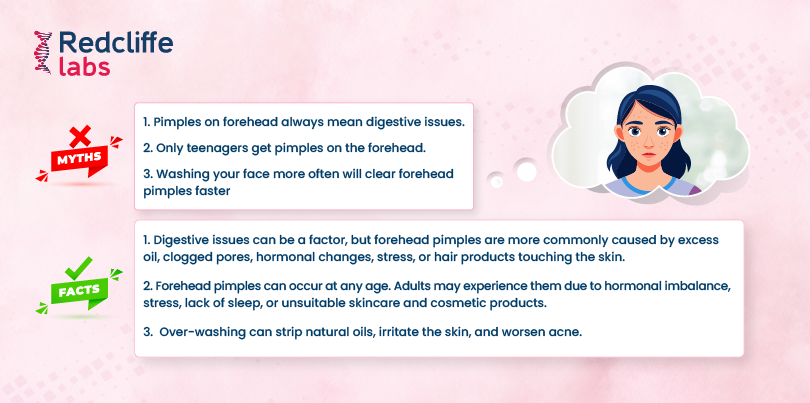
Most of the time, forehead pimples are caused by excess oil production, clogged pores, hormonal changes, and lifestyle. Dermatologists explain that the forehead is the part of the T-zone, which is usually oilier due to higher sebum production, making it more prone to breakouts.
Dermatologist-Approved Causes of Pimples on the Forehead
Excess Oil & Clogged Pores
There are many oil glands on the forehead. When excess sebum mixes with dead skin cells, it clogs the pores, leading to pimples.
Hormonal Imbalance
Hormonal changes (especially androgens) can double the oil production, resulting in forehead acne. This is very common during puberty, periods, pregnancy, and stress.
Hair Products & “Pomade Acne”
Dermatologists often point to hair oils, gels, serums, and sprays. These products can clog pores along the hairline and forehead.
Poor Skincare or Overwashing
Using harsh cleansers or washing your face too frequently strips the skin of its natural oils. As a result, the skin compensates by producing more oil, increasing the risk of forehead pimples.
Stress & Lack of Sleep
Stress increases cortisol levels, which can worsen oil production and inflammation, leading to pimples on the forehead.
Diet Triggers
High sugar, refined carbs, and dairy products may worsen acne in some individuals; however, dermatologists say that it varies from person to person.
Family History
If you have a family history of acne, this significantly increases your risk of developing it. Studies show 70-80% of acne may be genetic, influencing factors such as skin type, sebum (oil) production, inflammation, and how the skin responds to hormonal changes.
Pimples on Forehead & Face Mapping: Is It True?
Dermatologists consider face mapping a non-scientific concept, but it can be a reflection of lifestyle. For instance:
- Recurrent forehead acne may be linked to poor hair hygiene, sweat, or stress
- Digestive issues may indirectly worsen acne by increasing systemic inflammation
Dermatologists recommend focusing on skincare habits and medical causes rather than relying only on face-mapping theories.
Also read:
https://redcliffelabs.com/myhealth/health/gut-check-simple-ways-to-improve-your-digestive-health/
Types of Pimples On the Forehead & What they Mean
Not all pimples on the forehead are similar. Usually, their size, color, and even the pain level give a hint of what is going on under the skin.
|
Type of Pimple |
How It Looks |
What It Usually Means |
|
Whiteheads |
Small white bumps under the skin |
Excess oil and dead skin cells lead to clogged pores |
|
Blackheads |
Tiny dark or black spots |
Open pores filled with oil that oxidizes on exposure to air |
|
Papules |
Red, tender bumps without pus |
Inflammation caused by stress, hormones, or irritation |
|
Pustules |
Red pimples with a white or yellow center |
Bacterial infection inside blocked pores |
|
Nodules |
Large, hard, painful bumps |
Hormonal imbalance or genetic tendency |
|
Cystic Acne |
Soft, deep, pus-filled lumps |
Severe inflammation linked to hormones or genetics |
How to Treat & Prevent Pimples on the Forehead
Using the right skincare and lifestyle habits can help treat forehead acne. The key is to treat active breakouts while preventing new ones from forming.
4 Effective Ways to Help Heal Forehead Pimples that Already Exist
- Gentle cleansing (2× daily): Use a mild, non-comedogenic face wash to remove excess oil and dirt without irritating your skin.
- Targeted acne ingredients: Products with salicylic acid, benzoyl peroxide, or retinoids help unclog pores and reduce inflammation.
- Avoid touching or popping pimples: This prevents scarring and bacterial spread.
- Consult a dermatologist: If your pimples are painful, persistent, or worsening. Please contact your dermatologist.
Home Treatments for Pimples on the Forehead
In most cases, mild acne on the forehead often improve with proper skincare, but some home remedies may also help the skin to heal and prevent the new appearance of the pimples. These remedies work only with mild, non-cystic acne.
- Apply fresh aloe vera gel.
- Mix 1-2 drops of tea tree oil with coconut oil. (Do a patch test first to avoid irritation.)
- Wrap ice in a clean cloth and apply to the pimple for 1-2 minutes.
- Clay mask ( (1-2 times weekly).
Quick Forehead Pimples Prevention Checklist
To prevent forehead acne:
- Keep your hair, scalp, and hairline clean, especially after sweating.
- Avoid placing heavy hair oils, gels, and serums near your forehead.
- Do not touch, rub, or pick pimples.
- Manage stress through sleep, exercise, or relaxation techniques.
- If you notice acne flares particularly due to high-sugar foods, refined carbs, and excess dairy, limit them.
- Use oil-free, non-comedogenic skincare, sunscreen, and makeup.
- Remove your makeup completely before going to bed.
- Change pillowcases and towels frequently.
- Stay consistent. Healthy skin needs routine, not quick fixes.
When to See A Doctor?
Most of the time, pimples on the forehead are light in nature and can be controlled by good skin care and making the right choices in life. Nevertheless, you have to see a doctor if:
- Pimples are painful, deep, or cystic.
- No improvement in acne after 6-8 weeks of over-the-counter treatment.
- Severe pimple breakout or spreading to other areas of the face or body.
- Pimples leave dark spots, scars, or marks.
- Acne is accompanied by irregular periods, excessive hair growth, or sudden weight changes, which may indicate hormonal imbalance.
- Getting adult acne on your forehead.
- Low esteem, mental well-being, or quality of life.
Conclusion
Pimples on the forehead can be annoying, but they are often your skin’s way of signaling underlying factors such as excess oil, hormonal changes, stress, diet, or skincare habits. Even though face-mapping theories can be quite fascinating, dermatologists put the emphasis on proven medical causes and consistent skincare routines.
Once you understand the meaning behind forehead pimples and take the right treatment and prevention measures, you are able to control breakouts effectively. This saves your skin from future damage.
In case that acne on the forehead is painful, lasts for a long time, or severe, it would be wise to see a dermatologist who can determine the cause and recommend the suitable treatment.
FAQs
What does it mean when you get pimples on your forehead?
Forehead pimples mean various things like excess oil production, clogged pores, hormonal changes, or even lifestyle factors such as stress and poor sleep. The forehead being one of the oily T-zone parts is definitely more susceptible to breakouts, particularly when skincare or hair habits lead to pore blockage.
Do forehead pimples mean hormonal imbalance?
Forehead pimples can be influenced by hormonal fluctuations such as those that occur during puberty, menstrual cycles, pregnancy, or stress. Hormones such as androgens that cause an increase in oil production are the ones that make the pores more likely to be clogged. But then again, hormones are often just one of several contributing factors and not the only cause.
How long do forehead pimples take to heal?
Mild forehead pimples may heal within a few days to a week with proper skincare. An inflammatory acne or one caused by hormones may take a longer time. Do not pop pimples, as this will definitely take longer and will increase the scarring. A stubborn acne might need dermatologist-recommended treatments
When should I see a doctor for forehead pimples?
You should see a doctor/dermatologist, if your pimples on the forehead are painful, cystic, frequently occurring, or causing scars . Getting medical advice is also very important when the condition does not get better with simple skincare and even gets worse. In such a case, the use of prescription medications may be necessary.
Can hair products cause pimples on the forehead?
Certainly. Hair oils, gels, serums, and sprays may clog the pores along the hairline, leading to "pomade acne." These products transfer oil and residue onto the forehead, thus making it more vulnerable to breakouts.
Can stress alone cause pimples on the forehead?
Stress is not a factor that causes acne directly; however, it can trigger hormonal changes that increase oil production and cause inflammation. Hence, stress can make the acne that already exists on the forehead worse or can lead to frequent breakouts, especially when combined with poor sleep and an inadequate skincare routine.
Do forehead pimples go away on their own?
Skincare and lifestyle changes may clear mild pimples on the forehead, which may even disappear on their own. On the other hand, recurrent or severely inflamed pimples may require targeted treatment and professional advice to prevent scarring and long-term skin issues.