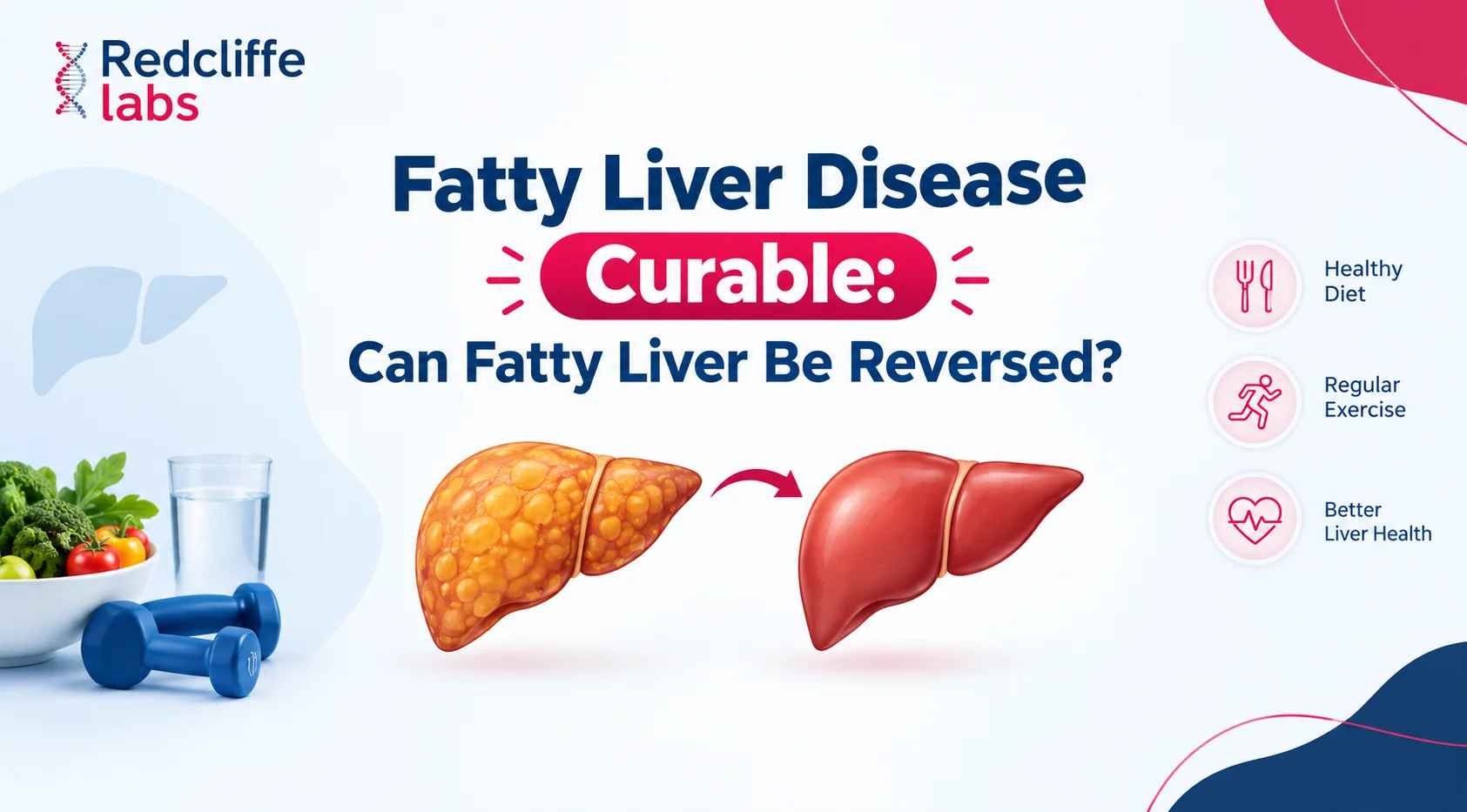
Fatty Liver Disease Curable: Can Fatty Liver Be Reversed?

If you have recently been told that you have fatty liver, one of the first questions you may have is, "Can it go away?
The answer depends on what is happening in your liver. Liver fat can often decrease substantially when the underlying causes are addressed, particularly in earlier disease. However, advanced fibrosis or cirrhosis is a different situation and should not simply be described as “curable.” The amount of fat, presence of inflammation, and degree of liver scarring all matter when assessing the outlook.
So, is fatty liver disease curable? Rather than thinking of fatty liver as a condition with one simple yes-or-no answer, it is more useful to understand whether you have liver fat alone, inflammation, or significant fibrosis.
This distinction can help you understand your report, choose appropriate testing, and take the right steps to protect your liver health.
What Is Fatty Liver?
Fatty liver occurs when excess fat builds up in the liver. One important term you may come across is metabolic dysfunction-associated steatotic liver disease (MASLD). MASLD is not simply another name for every type of fatty liver. It is a specific diagnosis involving hepatic steatosis along with one or more cardiometabolic risk factors, after other relevant causes are considered.
Metabolic risk factors can include:
- Overweight or obesity
- Increased waist circumference
- Type 2 diabetes
- Insulin resistance
- High blood pressure
- High triglycerides or abnormal cholesterol
- Other signs of metabolic dysfunction
Fatty liver can also have other causes, including alcohol-associated liver disease, certain medicines, and some medical conditions. This is why the cause should be assessed rather than assuming that every case is MASLD.
What Causes Fatty Liver?
Several factors can contribute to excess fat accumulation in the liver.
|
Risk factor |
How it may be related |
|
Excess body weight |
Can be associated with insulin resistance and increased liver fat. |
|
Abdominal fat |
Often linked with metabolic dysfunction |
|
Type 2 diabetes |
Insulin resistance can promote liver fat accumulation. |
|
High triglycerides |
May occur alongside abnormal fat metabolism |
|
Physical inactivity |
Can contribute to poor metabolic health |
|
Diet high in excess calories and added sugars |
May promote weight gain and metabolic dysfunction |
|
Alcohol |
Can contribute to liver fat and liver injury |
|
Certain medicines or conditions |
May contribute in some individuals |
Having one of these factors does not automatically mean that a person has fatty liver. Diagnosis and further evaluation depend on the individual's overall clinical picture.
Also Read: Foods To Eat And Avoid For People With Fatty Liver Disease
What Are the Fatty Liver Disease stages?
Fatty liver is better understood as a disease spectrum rather than a fixed sequence that every person follows. Different terms describe different features or levels of liver involvement:
Steatosis
Steatosis means excess fat is present in the liver. It may occur without significant inflammation or scarring.
MASH
MASH, or metabolic dysfunction-associated steatohepatitis, occurs when metabolic liver disease is associated with liver inflammation and hepatocellular injury. Not everyone with liver fat develops MASH.
Fibrosis
Fibrosis refers to scar tissue that develops after ongoing liver injury. The degree of fibrosis is particularly important because increasing fibrosis is associated with a greater risk of future liver-related complications.
Cirrhosis
Cirrhosis is advanced liver scarring that can alter the structure and function of the liver. It represents a much more advanced form of chronic liver disease.
These features do not mean that everyone with steatosis will progress through MASH, fibrosis, and then cirrhosis. Some people remain stable, while others may develop progressive disease. Individual risk depends on factors such as metabolic health, inflammation, fibrosis, and other causes of liver injury.
Can I Live a Normal Life With Fatty Liver?
Many people with early fatty liver can continue to live active, healthy lives, particularly when contributing health risks are addressed. Having fatty liver does not automatically mean that cirrhosis or liver failure will develop.
The long-term outlook depends more on the overall liver condition than simply the presence of liver fat. Fibrosis, diabetes, obesity, cardiovascular risk factors, alcohol exposure, and other liver diseases can influence risk.
Therefore, life expectancy with fatty liver disease cannot be determined simply from an ultrasound report saying “fatty liver.”
Instead, the important questions are:
- Is there significant liver fibrosis?
- Are liver enzymes abnormal?
- Are diabetes or prediabetes present?
- Are cholesterol or triglycerides elevated?
- Are there other causes of liver injury?
- Does the person have other metabolic or cardiovascular risk factors?
Understanding these factors gives a more meaningful picture of long-term health.
Is Severe Fatty Liver Reversible?
“Severe fatty liver” usually refers to a larger amount of fat, or steatosis, seen on imaging. It does not automatically mean severe fibrosis or cirrhosis.
This distinction is important. An ultrasound may identify excess fat in the liver, but it cannot reliably determine the degree of liver fibrosis or scarring. A person with substantial liver fat may not have advanced fibrosis, while another person with less obvious fat may still require assessment for fibrosis based on their overall risk.
If your report describes severe fatty liver, speak with your doctor about whether you need further assessment of liver fibrosis rather than assuming that you have cirrhosis.
How Is Fatty Liver Evaluated?
There is no single blood test that can answer every question about fatty liver.
Doctors may consider:
- Medical history and physical examination
- Blood tests
- Blood glucose or HbA1c
- Cholesterol and triglycerides
- Liver enzymes
- Ultrasound or other imaging
- Non-invasive fibrosis assessment when appropriate
The exact combination depends on your symptoms, risk factors, previous results, and clinical assessment.
Blood Tests
A Liver Function Test may provide information about several liver-related markers and can be useful when evaluating or monitoring liver health.
Commonly assessed enzymes include
- ALT (SGPT): An enzyme that can increase with liver-cell injury, although an elevated level can have several causes.
- AST (SGOT): Another enzyme that may increase with liver injury and certain other conditions.
- Lipid Profile: Measures blood lipids such as cholesterol and triglycerides and can help assess metabolic risk.
- Blood glucose or HbA1c, when clinically appropriate.
A key point is that ALT and AST do not confirm or rule out fatty liver or fibrosis on their own. Some people with fatty liver may have liver enzymes within the laboratory reference range.
A Liver Function Test should therefore be interpreted alongside medical history, examination, and other relevant investigations.
How Is Liver Fibrosis Assessed?
Fibrosis assessment is not required in exactly the same way for every person with fatty liver.
When metabolic fatty liver is suspected, doctors may first use a non-invasive risk score such as FIB-4, which uses routinely available clinical and laboratory information.
If the initial assessment suggests increased risk, a doctor may recommend a secondary non-invasive assessment such as elastography. Other methods may be considered depending on the clinical situation.
This stepwise approach helps identify people who may need specialist evaluation without assuming that everyone with fatty liver requires advanced imaging.
What Can Help Improve Fatty Liver?
The appropriate fatty liver disease treatment depends on its cause, severity, and whether inflammation or fibrosis is present. For many people with metabolic fatty liver, the foundation is improving overall metabolic health.
Work Towards a Healthy Weight
If you have overweight or obesity, gradual weight loss can reduce liver fat. NIDDK notes that losing at least 3%–5% of body weight may reduce liver fat, while a greater reduction, around 7%–10% in appropriate patients, may be needed to improve liver inflammation and fibrosis. These figures should not be treated as a universal target because the appropriate goal varies between individuals. Rapid weight loss or crash diets should be avoided. A sustainable plan is more appropriate.
Stay Physically Active
Physical activity can benefit fatty liver even when significant weight loss does not occur.
Activities may include:
- Brisk walking
- Cycling
- Swimming
- Strength training
- Yoga alongside other physical activity
If you have not exercised regularly or have another medical condition, discuss an appropriate exercise plan with your healthcare professional.
Improve Your Overall Diet
There is no single food that “cleans” or reverses fatty liver.
Instead, focus on an overall eating pattern that supports healthy weight and metabolic health.
Helpful changes may include:
- Eating more vegetables and whole foods
- Choosing appropriate portions
- Including adequate protein according to individual needs
- Choosing whole grains and minimally processed foods
- Limiting sugar-sweetened drinks
- Reducing excess added sugar
- Limiting highly processed foods
- Choosing healthier unsaturated fats instead of saturated and trans fats where appropriate
For Indian diets, this does not necessarily mean completely eliminating rice or roti. Portion size, cooking methods, vegetables, protein, and the overall balance of meals are more useful considerations.
Manage Diabetes, Cholesterol, and Blood Pressure
Fatty liver often occurs alongside metabolic conditions. If you have diabetes, prediabetes, high cholesterol, high triglycerides, or high blood pressure, managing these conditions is an important part of protecting your long-term health.
Your doctor may recommend medicines when appropriate. Do not stop or start medication based only on a fatty liver report.
Be Careful With Alcohol and Supplements
If you have liver disease, discuss alcohol consumption with your doctor.
Also be cautious about products marketed as liver cleanses or detox supplements. Some herbal and dietary supplements can cause liver injury or interact with medicines.
How Long Does It Take to Reverse Fatty Liver?
There is no fixed timeline for improvement. The time required depends on the amount of liver fat, metabolic health, lifestyle changes, treatment, adherence, and whether inflammation or fibrosis is present.
Some changes in liver fat may occur with sustained lifestyle improvements, but improvement in inflammation or fibrosis can take longer and needs appropriate medical follow-up.
Instead of expecting a specific number of weeks or months, focus on consistent changes and follow your doctor's advice about repeat testing or imaging. The aim is not simply to make one report look better. It is to improve the factors contributing to liver disease and reduce the risk of progression over time.
Can Fatty Liver Improve Without Weight Loss?
Yes. Physical activity itself can provide metabolic benefits even when the scale does not change significantly.
However, if you have overweight or obesity, gradual weight loss may provide additional benefits for liver fat and, when sufficient, inflammation and fibrosis. This is why focusing only on body weight can be misleading. Exercise, diet quality, blood sugar, cholesterol, blood pressure, and waist circumference can all be relevant to overall metabolic health.
Are Medicines Used for Fatty Liver?
Lifestyle and management of associated metabolic conditions remain important. Treatment options are evolving for selected people with MASH and significant fibrosis. In the United States, the FDA has approved resmetirom for adults with non-cirrhotic MASH and moderate-to-advanced fibrosis, and semaglutide has also received a specific U.S. FDA indication for adults with MASH and moderate-to-advanced fibrosis. These approvals apply to specific patient groups and do not mean that either medicine is suitable for everyone with fatty liver. U.S. FDA approval also does not automatically mean the same approval, availability, or indication in India.
Any medication should be considered by a qualified doctor based on the individual's diagnosis, fibrosis status, other medical conditions, and locally approved treatment options.
When Should You See a Doctor?
Medical evaluation is particularly important if:
- An ultrasound or other scan shows fatty liver
- Liver enzymes are repeatedly abnormal
- You have diabetes or prediabetes
- You have high triglycerides or cholesterol
- You have overweight or obesity
- You regularly consume alcohol and are concerned about liver health
- You have another known liver condition
- Your doctor has identified possible fibrosis
Seek urgent medical care for symptoms such as vomiting blood, severe confusion, rapidly developing jaundice, or significant abdominal swelling.
A Practical Fatty Liver Action Plan
If you have recently been told that you have fatty liver, use these steps to decide what to do next:
1. Know what the report can tell you.
Determine if the report indicates liver fat storage, suggests inflammation symptoms, or demonstrates signs of fibrosis.
2. Check your metabolic status.
Consider raising the points associated with levels of blood sugar, cholesterol, triglycerides, blood pressure, weight, and waist circumference with a doctor.
3. Inquire about the need for a fibrosis risk evaluation.
Your doctor may start the evaluation with a risk score like FIB-4 based on your situation and recommend further impact assessment later.
4. Make lasting adjustments to your way of living.
Aim to modify your eating habits, increase physical activity, and control your weight.
5. Do not rely on unchecked liver cures.
Avoid detox drinks and pills and diet plans that offer immediate results instead of effective treatment.
6. Follow up as advised.
Your doctor can determine whether and when repeat blood tests, imaging, or specialist assessment is needed.
Redcliffe Labs Tests for Liver Health Evaluation
If your doctor has advised blood testing as part of your liver or metabolic health evaluation, Redcliffe Labs offers relevant tests such as SGPT/ALT, SGOT/AST, and Lipid Profile.
Redcliffe Labs also currently lists a Fatty Liver Screening Package in selected locations. The package includes laboratory tests, but it should not be presented as a standalone diagnosis of fatty liver or as a test that determines the degree of liver fibrosis. Package contents and availability can vary by location and should be checked before booking.
For example, readers can be directed contextually to the SGPT/ALT test or the Fatty Liver Screening Package, with the destination selected according to the reader's location.
The next step after testing is just as important as the test itself: discuss the results with a qualified healthcare professional who can interpret them alongside your history and any imaging findings.
Conclusion
Fatty liver does not always mean permanent liver damage. Liver fat can often decrease when the underlying causes are addressed through healthy lifestyle changes, regular physical activity, and appropriate medical care. If you have been diagnosed with fatty liver, understanding your liver health and fibrosis risk is an important next step. Redcliffe Labs makes testing convenient with home sample collection, so you can get relevant blood tests without visiting a center. Once your tests are completed, Smart Reports help you track and understand your health trends more easily. Discuss your results with your doctor to decide what further evaluation or follow-up may be appropriate.
FAQs
Question: Can fatty liver be completely reversed?
Answer: Fatty liver can often improve substantially, especially when identified early. Reducing excess weight, improving diet, exercising regularly, and managing diabetes or cholesterol may reduce liver fat. Reversal of established fibrosis is more complex and requires medical assessment.
Question: Is severe fatty liver reversible?
Answer: Severe liver fat can improve, but reversibility depends on whether there is inflammation or fibrosis. Severe fat on imaging does not automatically mean cirrhosis. A doctor may recommend further assessment to understand the degree of liver scarring.
Question: Can I live a normal life with fatty liver?
Answer: Many people with early fatty liver live active lives, particularly when metabolic risk factors are managed. The long-term outlook depends on fibrosis, associated conditions, and other causes of liver injury, so appropriate follow-up is important.
Question: What is the best way to improve fatty liver?
Answer: The approach depends on the cause and severity. For many people, gradual weight management, a balanced diet, regular physical activity, and control of diabetes, cholesterol, and blood pressure are important. Medical treatment may be considered for selected patients.
Question: Can fatty liver occur without obesity?
Answer: Yes. Fatty liver can occur in people who are not visibly overweight. South Asian populations can develop metabolic dysfunction-associated fatty liver at different body weights, so diabetes, waist circumference, cholesterol, triglycerides, and other metabolic factors also matter.
Question: Does normal ALT mean the liver is healthy?
Answer: Not necessarily. Liver enzymes can sometimes remain within the laboratory reference range even when fatty liver or fibrosis is present. Doctors may therefore combine blood tests with medical history, metabolic assessment, and imaging or fibrosis testing when appropriate.
Question: Does fatty liver always become cirrhosis?
Answer: No. Many people with fatty liver do not progress to cirrhosis. The risk is influenced by factors such as inflammation, fibrosis, diabetes, obesity, alcohol exposure,re and other liver conditions. Identifying fibrosis risk helps determine the appropriate follow-up.
Question: Can diet alone reverse fatty liver?
Answer: Diet is an important part of management, but it is not the only factor. Physical activity, weight management, and control of conditions such as diabetes and abnormal cholesterol can also influence liver health. Your doctor or dietitian can help create an appropriate plan.
Question: Should I take liver detox supplements for fatty liver?
Answer: Liver detox supplements are not a proven substitute for medical management. Some herbal or dietary supplements can cause liver injury or interact with medicines. Discuss any supplement with your healthcare professional before using it.
Question: Which tests may be used when fatty liver is suspected?
Answer: Depending on the individual, doctors may consider liver enzymes, blood glucose, HbA1c, cholesterol,ol and triglycerides, along with ultrasound or other non-invasive fibrosis assessments. The exact combination depends on symptoms, risk factors, and previous results.