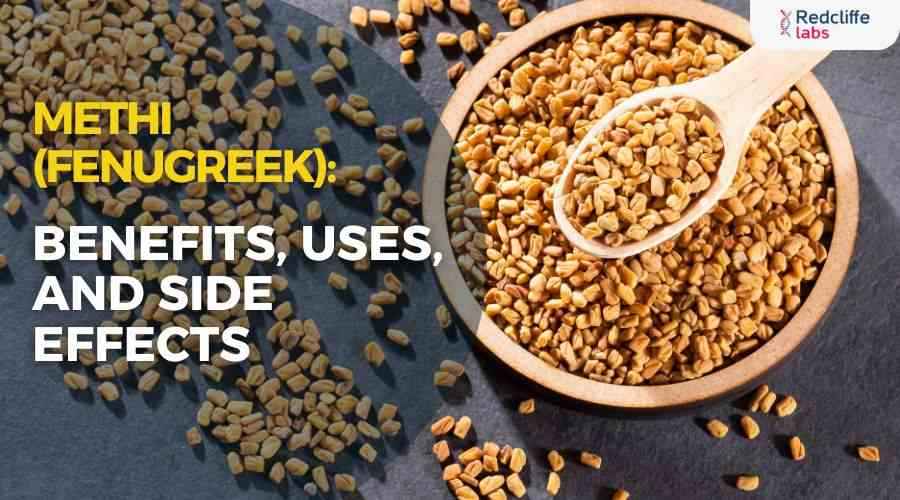
Methi (Fenugreek): Benefits, Uses, And Side Effects

Introduction
Methi (Fenugreek), also known as Trigonella Foenum-Graecum, is approximately a thousand years old and belongs to the Fabaceae family. It is a herb used in the oldest traditional medicinal plants to treat skin conditions and many other diseases.
Did you know?
- Methi (Fenugreek) is cultivated in the Indian subcontinent, covering Rajasthan, Madhya Pradesh, Uttar Pradesh, Maharashtra, and Punjab.
- Methi belongs to the South Eastern and South Western regions of Europe.
- Relish methi as herbs (dried leaves), fresh leaves (vegetables), and spices (seeds).
- Fenugreek is used in Indian diets due to its nutrient-dense, functional, and nutraceutical properties. It can increase organoleptic properties, including taste, smell, sight, and touch.
- The height of a Methi plant is approximately. 2-3 feet (60-90 centimeters). It is a robust herb characterized by its green leaves, small white flowers, and pods.
Nutritional Value of Methi (Fenugreek)
Methi (Fenugreek) is a potent source of dietary fiber and contains other essential nutrients. Let’s examine the nutritional value of fenugreek per 100 grams.
| Carbohydrates | 54.55 g |
| Dietary Fiber | 27.3 g |
| Protein | 23 grams of protein |
| Lipids | 6 grams of lipid |
| Water | 9 g |
| Calories | 327 Kcal |
| Fat | 9.09 g |
| Fiber | 27.3 g |
| Iron | 32.73 mg |
| Calcium | 182 mg |
5 Properties of Methi
Methi fenugreek exhibits a wide array of properties that help improve your well-being. Incorporating methi into your diet can promote health.
- Antioxidant-rich composition: Methi fenugreek has an antioxidant-rich composition, meaning they have relatively high amounts of flavonoids, alkaloids, saponins, and other antioxidants. This helps combat oxidative stress.
- Galactomannan Content: The galactomannan content in Methi is believed to improve your heart health by reducing cholesterol levels.
- High in Protein: Methi is a rich source of protein (23 g), which can help repair tissues and build lean muscle mass. Besides, it boosts satiety and reduces hunger cravings.
- Contains vitamins and minerals: Methi is rich in vitamins A, B6, C, and K. The minerals, such as iron, calcium, magnesium, manganese, and potassium, in Methi make it a multipurpose crop that helps meet the diverse nutritional needs of your body.
- Rich in dietary fiber: Fenugreek (Methi) is packed with dietary fibre that aids digestion and regulates blood sugar levels.
Others may include antibacterial, neuroprotective, anticancer, antiulcer, liver-protective, and anti-inflammatory properties.
7 Amazing Benefits of Methi (Fenugreek)
Methi (Fenugreek) is a humble and versatile herb that boasts dense nutrients and confers incredible health benefits.
Although there are not many reliable benefits of Methi for medicinal purposes. The herb has been used as a medicinal plant for about 6,000 years for treating a wide range of conditions, such as:
- Diabetes
- Cough
- Swellings
- Burns
- Abscesses
- Fever
Let’s learn more about the benefits of Methi:
1. Reduces the Risk of Diabetes
The primary benefit of methi is that it helps reduce the risk of diabetes. According to the 2023 systematic review and meta-analysis, it is revealed that fasting blood sugar levels can be reduced by taking fenugreek seeds by mouth.
Additionally, replacing 10% of the refined wheat flour with fenugreek seed powder can prove beneficial for people with type 2 diabetes.
Nonetheless, uncontrolled high fasting blood sugar can increase the risk of:
- Diabetic neuropathy
- Hearing and vision loss
- Kidney disease
- Heart disease
- Tooth decay
2. Increases Breast Milk Production
Fenugreek benefits for females focus on helping them produce sufficient amounts of breast milk to support their newborn’s development.
Consequently, experts suggest that taking 1 to 6 grams (g) of this supplement daily may help stimulate breast milk production in new mothers. It is safe too.
A study was conducted on 78 new mothers, revealing that consuming fenugreek seeds and herbal tea together increased breast milk production. Another study, conducted in 2011, divided approximately 66 mothers into three groups. There was an increase in the volume to 34 milliliters, equivalent to 1.15 ounces, in the breast milk of mothers who drank methi fenugreek tea.
Consult with your healthcare professional before taking methi supplements or teas to avoid negative outcomes.
3. Boost Testosterone Levels in Men
Methi fenugreek also benefits men. It increases their testosterone levels. According to an older study, consuming 300 mg of fenugreek twice a day, along with resistance training, for approximately 8 weeks, helped men with increased libido.
A 2020 study conducted on 138 men revealed that those who consumed 600 mg of supplements derived from fenugreek (Testofen) experienced a decrease in body mass, body fat, and an increase in lean mass.
4. May Reduce Cholesterol
Fenugreek, also known as methi, is believed to reduce cholesterol and triglyceride levels in the blood. Its consumption can help lower high LDL (bad cholesterol) and raise HDL (good cholesterol).
High low-density lipoprotein (LDL) is linked to an increased risk of heart disease and may cause death among adults. Fenugreek herb manages cholesterol levels when combined with medications and lifestyle modifications.
5. Methi helps in periods
Did you know that a recent study revealed you could alleviate menstrual cramps by 67% with methi?
Method:
- Soak one teaspoon of Methi seeds overnight.
- The next day, drink the water with seeds first thing in the morning on an empty stomach.
Tip: Follow this procedure at least 10-15 days before your expected period for best results.
6. Methi improves weight loss
Methi is also good for weight loss. Its high fiber content may lead to a feeling of fullness. This can help prevent overeating and contribute to weight loss.
A 2015 study conducted on Koreans revealed that drinking fennel or fenugreek tea before lunch helped keep them full and made them feel less hungry.
7. Methi reduces inflammation
Methi also acts as an anti-inflammatory agent, meaning it can help reduce inflammation. A 2023 laboratory study revealed that instead of doxycycline and aspirin, the application of fenugreek gel could prevent the growth of oral microbes following dental surgery.
Note: Further research is needed regarding the health benefits of methi, including its potential to enhance digestion and metabolism, as well as its potential applications in treating other conditions.
Interesting Uses of Methi
Methi fenugreek may show potential uses because of a wide variety of active phytochemicals, including:
1. Methi can control arthritis
Suppose you wonder what the use of methi seeds (methi dana) is for controlling arthritis, then, as the herb contains anti-inflammatory compounds. This can help reduce joint pain and swelling.
Also read: https://redcliffelabs.com/myhealth/lab-test/comprehensive-guide-to-rheumatoid-arthritis-treatment/
2. It has anticancer properties
The antioxidants and compounds, such as diosgenin, in methi may inhibit the growth of cancer cells.
3. It may help avoid gastric ulcers
Eating methi fenugreek seeds may help avoid gastric ulcers by protecting the stomach lining and reducing inflammation.
4. Methi helps combat brain disorders
One of the potential uses of methi might be effective against brain disorders like Parkinson’s disease, Alzheimer’s disease, and depression. Additionally, it can improve your memory and reduce oxidative stress in the brain.
5. It can treat mild asthma
The expectorant properties of methi help clear mucus and ease breathing. A study reveals that using a fenugreek extract could treat mild asthma. With regular use of methi, you may be able to overcome asthma symptoms.
Caution: Consult your doctor before making any decisions.
6. Methi shields against alcohol-induced liver damage.
Methi can help enhance liver detoxification and reduce inflammation. Antioxidants and anti-inflammatory properties of methi can help reduce oxidative stress and regulate liver enzymes that increase with alcohol consumption. Methi helps prevent fat accumulation in the liver and supports detoxification.
7. Methi reduces PCOS symptoms.
Infertility, ovarian cysts, irregular menstrual periods, and pelvic pain may occur due to Polycystic Ovary Syndrome, or PCOS. A clinical trial reveals that regular consumption of two Fucrocyt capsules of 500 mg made of fenugreek seed extract resulted in smaller ovarian cysts and no more pain experienced.
Other Possible Uses of Methi:
1. Methi for Hair
Methi is a potent source of iron and protein. Flavonoids and saponins play a crucial role in promoting hair growth. Additionally, applying a methi hair mask can help promote prolonged hair growth and thicker, healthier hair strands.
How to Make a Methi Seeds Hair Mask?
- Take 2 tablespoons of methi seeds.
- Soak them in water overnight.
- Grind into a fine taste.
- Apply this to the scalp and hair.
- Before rinsing your hair with lukewarm water, leave it for 30-45 minutes.
Tip: No shampoo is required immediately.
2. Methi For Skin
Methi (fenugreek seeds) is also amazing for your skin. They contain antibacterial and anti-inflammatory properties that can help reduce the presence of bacteria that cause acne.
How to use Methi for skin?
- Soak 1 tablespoon of methi seeds overnight.
- Strain it.
- Use this water as a natural toner or in face masks.
3. Methi Tea
Did you know drinking boiled methi seeds can help in digestion, reduce inflammation, and improve blood sugar control?
4. Methi for Weight Loss
Methi seeds can help lose extra weight effectively.
How to Use Methi for Weight Loss?
- Soak 1 tbsp of methi seeds in water.
- Keep it overnight
- Your morning detox drink is ready. Drink Methi water or chew seeds on an empty stomach to boost metabolism, curb cravings, and improve digestion.
8 Side Effects of Methi
Methi (fenugreek seeds) is also amazing for your skin. They contain antibacterial and anti-inflammatory properties that can help reduce the presence of bacteria that cause acne.
- Diarrhea
- Gas
- Nausea or vomiting
- Stomach upset
- Severe allergic reactions include swelling, itchiness, rash, and breathing difficulties.
- Avoid fenugreek in case of a troubled liver, causing dark-colored urine and jaundice.
- If you have low potassium or hypokalemia, avoid methi fenugreek, as it may cause muscle weakness, cramps, abnormal heartbeat, numbness, or tingling sensations.
- Severe breathing and wheezing difficulties.
Precautions
It suggests that an excess of everything is detrimental. It is crucial to eat methi in moderation. Consult a doctor, especially if you have a pre-existing condition:
- Allergies
- Pregnancy
- Breastfeeding
- Children
- Older adults over 65
- Liver problems
Take Away
Methi fenugreek is an herb that treats asthma, diabetes, promotes sexual health, and aids in hair growth, among other benefits. Mindful eating is recommended, especially when taking blood-thinning medication, to minimize adverse side effects, such as lowering sugar and potassium levels.
Consult with your healthcare provider to discuss the appropriate fenugreek dosage, any necessary supplements, and whether it is suitable for you.
Leave a comment
7 Comments
Nam Tran
May 20, 2025 at 3:12 AM.
very helpful
Myhealth Team
May 23, 2025 at 10:49 AM.
Thankyou! We are glad you have liked the information.
Amit gupta
May 8, 2025 at 9:15 AM.
Great information from yr side about fenugreek seeds. Thanks
Myhealth Team
May 9, 2025 at 12:40 PM.
You're Welcome!
Nivedita paswan
Apr 30, 2025 at 5:34 AM.
Thanks ... aapki jankaari .....hum pharma student je liye upyogi
Myhealth Team
May 1, 2025 at 8:24 AM.
You're Welcome! We are glad you have liked the information.
Swati Nitin Bhise
Apr 26, 2025 at 9:03 AM.
Thanks for writing so much details about Fenugreek seed its very helpful for me
Myhealth Team
Apr 29, 2025 at 12:30 PM.
We are glad you have liked the information.
V.b.naidu
Apr 26, 2025 at 4:16 AM.
Over all it is excellent.
Myhealth Team
Apr 29, 2025 at 12:45 PM.
Thank you! Glad you found the article informative.
Rajendra Babu Meenuga
Apr 25, 2025 at 4:13 PM.
Neat description
Myhealth Team
Apr 29, 2025 at 12:46 PM.
Thankyou! We are glad you have liked the information.
K sudhakar Goud
Apr 25, 2025 at 6:07 AM.
Excellent info and thanks
Myhealth Team
Apr 29, 2025 at 12:56 PM.
You're Welcome!