Reasons for Low Hemoglobin: Common Causes and How to Fix Them

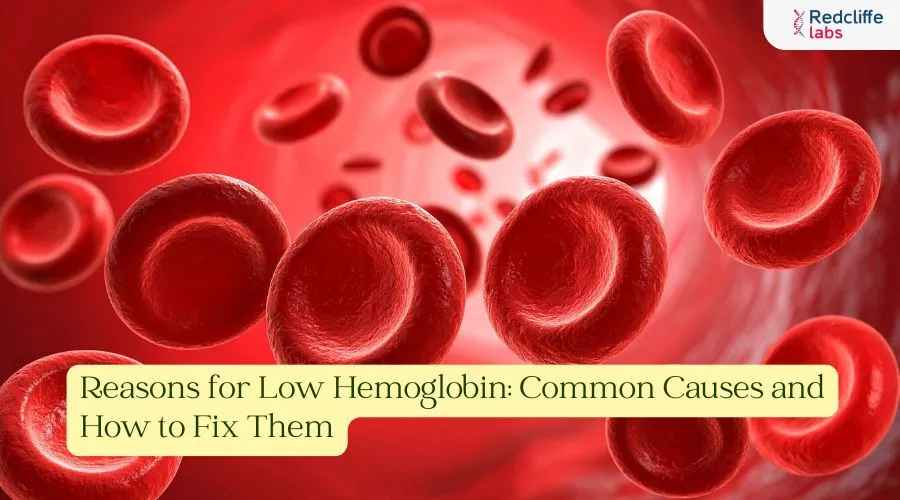
Around 1.8 billion people worldwide have low hemoglobin levels, meaning about 1 in every 4 people experience symptoms such as shortness of breath, fatigue, and weakness.
Red Flag, Red Flag, Red Flag!
Do you believe your own blood cells can be a red flag for your health?
Yes, Red Blood cells, which are responsible for transporting oxygen from the lungs to the rest of the body. If these cells stop making enough hemoglobin, your body gets less oxygen. Over time, this can cause countless health issues.
Read the complete blog to understand the reasons for low hemoglobin, its symptoms, and how to increase its quantity.
What causes Low Hemoglobin level and their health Risk?
A low hemoglobin level reduces oxygen delivery and can lead to various health risks. In this condition, you may experience fatigue, shortness of breath, weak immunity, and heart strain if untreated.
There can be many reasons for low hemoglobin, which include:
- Iron Deficiency
Iron is the main mineral your body needs to make hemoglobin. When you don't get enough iron from food, it may lead to low hemoglobin levels.
- Vitamin B12 or Folate Deficiency
If your diet lacks these vitamins or your body can't absorb them properly, it can cause fewer or misshapen red blood cells, resulting in low hemoglobin.
- Blood Loss
Losing blood, whether from heavy periods, injury, surgery, or internal bleeding, is one of the reasons for low hemoglobin levels.
- Chronic Diseases
Long-term health issues like kidney disease, cancer, or autoimmune disorders can affect how your body makes or uses hemoglobin. It may often lead to anemia over time. - Poor Diet or Malnutrition
Eating too few nutrient-rich foods can lead to deficiencies in iron, vitamins, and protein. Over time, poor nutrition lowers your hemoglobin and energy levels.
Also read: Red Blood Cells (RBCs): Functions, Role, and Importance
Real-Life Impact: What Happens When Hemoglobin Drops Suddenly?
When hemoglobin levels drop, your body starts showing clear signals. If these symptoms sound familiar, it's time to get a simple blood test done.
- Constant tiredness and low energy
- Pale or yellowish skin
- Dizziness or frequent headaches
- Shortness of breath during small tasks
- Cold hands and feet
- Rapid heartbeat or chest pain in severe cases
How badly can a Low Hemoglobin level affect?
Low hemoglobin might seem minor at first, but long-term deficiency can weaken your heart and brain.
In severe anemia, oxygen supply to vital organs decreases. That may cause heart palpitations, memory issues, and even fainting.
Also, pregnant women may face complications, and children may experience slow growth or poor concentration.
Also read: Ways to Increase Platelet Counts in Blood Naturally
Test to detect the Reasons for Low Hemoglobin and its deficiency
Early diagnosis helps prevent complications and improves energy levels faster. Doctors usually recommend these tests to find the reasons for low hemoglobin:
- Complete Blood Count (CBC): It is a kind of blood test that assesses red blood cells, white blood cells, hemoglobin, hematocrit, and platelets
- Vitamin Tests: This test checks your Vitamin D and B12 levels, which are essential for energy, bone health, mood, and immunity.
- Stool Test: It helps find hidden blood loss from ulcers or internal bleeding.
- Kidney and Liver Function Tests: These tests help identify if chronic diseases are affecting blood production.
How to increase Low Hemoglobin levels quickly?
Balanced nutrition and regular check-ups are key to maintaining healthy hemoglobin levels. You can boost your hemoglobin naturally with a few lifestyle and diet changes:
- Incorporate iron-rich foods like spinach, dates, pomegranates, and lentils.
- Add vitamin C foods (like oranges or amla) to help absorb iron.
- Include folate and B12 sources such as beans and milk.
- Keep your body hydrated and avoid excessive tea or coffee right after meals.
- For severe anemia, your doctor may suggest iron supplements or injections.
Final Takeaway
Low hemoglobin is not just about tiredness; it’s a signal that your body isn't getting enough oxygen. It shouldn't be avoided. You can manage it with the proper diet, medical care, and awareness. Also, through this, you will feel energetic again.
Don't ignore your body's red flags. Act early for better health. Book your CBC test today for better health at Redcliffe Lab. Here, you will receive a free consultation and proper guidance from a specialist to increase your hemoglobin level.
FAQ
-
What is a normal hemoglobin level & when is it considered low?
For men, a normal hemoglobin level is 13.8-17.2 g/dL, and for women, it's 12.1–15.1 g/dL.
Anything below these ranges means your blood isn't carrying enough oxygen. It is a sign of anemia or low hemoglobin.
-
Why is my hemoglobin low even though I eat well?
Even with a healthy diet, low hemoglobin can occur if your body doesn't absorb iron or other nutrients properly. Conditions like thyroid issues, kidney problems, or hidden blood loss can also cause it.
-
Could heavy periods (menstrual bleeding) be the reason for low hemoglobin?
Yes, heavy menstrual bleeding is one of the most common causes of anemia in women.
Losing too much blood every month lowers iron levels and reduces hemoglobin production.
-
What foods help increase hemoglobin naturally?
Include iron-rich foods like spinach, lentils, jaggery, and beetroot in your meals. Also,
Pair them with vitamin C-rich foods, such as oranges or amla, to help your body absorb iron better.