CT Scan Test - Price, Purpose, Procedure And Results!

CT Scan Test: Price, Purpose, Procedure and Results
A CT scan helps doctors examine injuries and health conditions that cannot be assessed through a physical examination alone. It uses X-rays and computer processing to create detailed pictures of bones, organs, blood vessels and other tissues.
Your doctor may recommend a CT scan to investigate symptoms, assess an injury, plan a procedure or check how well treatment is working. Some scans use contrast material to make particular structures easier to see.
The preparation, appointment time and CT scan price depend on the area being examined, the scan protocol and the imaging centre.
What Is a CT Scan?
CT stands for Computed Tomography. A CT scan is a diagnostic imaging test that produces cross-sectional pictures, often called “slices,” of the inside of your body.
During the examination, an X-ray source rotates around you while a computer processes the information into detailed images. These images can also be reconstructed into views from different angles or three-dimensional pictures.
Unlike a standard X-ray, which usually produces a flat image, CT provides detailed views through the body. However, it does not detect every disease. Your doctor interprets the results alongside your symptoms, medical history, examination and other tests.
For more information, read our guide to CT scans, their types and how they work.

Why Might a Doctor Recommend a CT Scan?
A doctor may recommend a CT scan to:
- Assess injuries, complex fractures or suspected internal bleeding.
- Examine the brain, lungs, abdomen, pelvis, spine or other body areas.
- Investigate symptoms when an examination or other tests have not provided enough information.
- Assess a suspected tumour or changes in an internal organ.
- Examine blood vessels using a suitable CT protocol.
- Monitor a known condition or response to treatment.
- Plan surgery, radiotherapy or guide a biopsy.
The need for a CT scan depends on the medical question. A headache, fever or abdominal pain does not automatically mean you need one. Your doctor decides whether CT, another imaging test or a different investigation is appropriate.
Common Types of CT Scans
CT scans are usually named after the body area or the purpose of the examination.
| Type of CT Scan | What It Examines |
|---|---|
| Head CT | The brain, skull and surrounding structures |
| Chest CT | The lungs and other structures within the chest |
| Abdominal CT | Organs and tissues within the abdomen |
| Pelvic CT | Structures within the pelvis |
| Spine CT | Vertebrae and other bony structures of the spine |
| Limb or Joint CT | Bones and joints in a particular arm or leg |
| CT Angiography, or CTA | Blood vessels in a selected area |
The doctor and radiology team select the scan protocol according to the clinical question. Different protocols may be needed even when the same body part is examined.
Plain CT vs Contrast-Enhanced CT
A plain or non-contrast CT is performed without intravenous contrast. A contrast-enhanced CT, sometimes called CECT, uses contrast material to highlight particular tissues, organs or blood vessels.
Depending on the examination, contrast may be injected into a vein, swallowed or occasionally administered through the rectum. Not every CT scan needs contrast.
Is a Full-Body CT a Routine Health Check?
A full-body CT should not automatically be treated as a routine checkup for people without symptoms. Screening can expose a person to radiation and identify uncertain findings that lead to further investigations without a clear benefit.
Discuss the purpose, potential benefits and possible harms with a doctor before booking a screening scan.
CT Scan Test Price in India
There is no single CT scan price that applies to every examination or imaging centre in India. A head CT, contrast-enhanced abdominal CT and CT angiography are different examinations and may have different charges.
For an accurate quote, provide the imaging centre with the exact scan name written on your doctor’s referral.
Factors That Affect the CT Scan Price
The total cost may depend on:
- Body area: The region and extent of the examination.
- Scan protocol: Whether the scan requires a standard, specialised or multiphase study.
- Contrast: Whether contrast is needed and included in the quote.
- Location and facility: Charges can differ between cities, hospitals and imaging centres.
- Additional services: Any required blood tests, sedation or other separately billed services.
- Insurance arrangements: Your policy terms and the facility’s payment arrangements may affect your out-of-pocket expense.
What Should You Ask Before Booking?
- Is this the price for the exact scan on my referral?
- Does the quote include contrast, if required?
- Are the radiologist’s report and access to images included?
- Will any additional tests or services be charged separately?
- What is the final amount payable?
Comparing complete quotes is more useful than comparing advertised starting prices.
CT Scan Cost With and Without Insurance
If You Have Health Insurance
Check with your insurer whether the prescribed scan is covered. Ask about outpatient diagnostic benefits, network restrictions, referral requirements, pre-authorisation and any amount you must pay yourself.
Having insurance does not automatically mean that every CT scan will be covered or available without an upfront payment.
If You Are Paying Yourself
Request an itemised quote and compare centres that can perform the prescribed examination. Ask about available discounts or payment options.
Choose a centre based on its ability to perform the required scan, radiology expertise and service quality as well as price. Confirm with your doctor before substituting a different scan or protocol.
How to Prepare for a CT Scan
Preparation depends on the examination. Some CT scans require little preparation, while others involve fasting, oral contrast or additional checks.
Before your appointment:
- Follow the centre’s instructions: Confirm whether you need to avoid food or drink and for how long.
- Share your medical history: Tell the team about kidney problems, diabetes, thyroid conditions, asthma, allergies and previous reactions to contrast.
- Mention pregnancy: Tell the doctor and imaging team if you are pregnant or might be pregnant.
- Discuss medicines: Provide details of your medicines and supplements. Do not stop them unless instructed.
- Bring relevant documents: Carry your referral and previous imaging or reports, if available.
- Check clothing requirements: You may need to remove jewellery and metal accessories or change into a gown.
Do not independently fast, change your fluid intake or remove a medical device. Ask the team for instructions specific to your scan.
What Happens During a CT Scan?
The procedure generally involves the following steps:
- Preparation: The technologist checks your details, explains the examination and helps you get into position.
- Contrast, if needed: You may receive contrast according to the prescribed scan protocol. An intravenous line is needed only when the examination requires it.
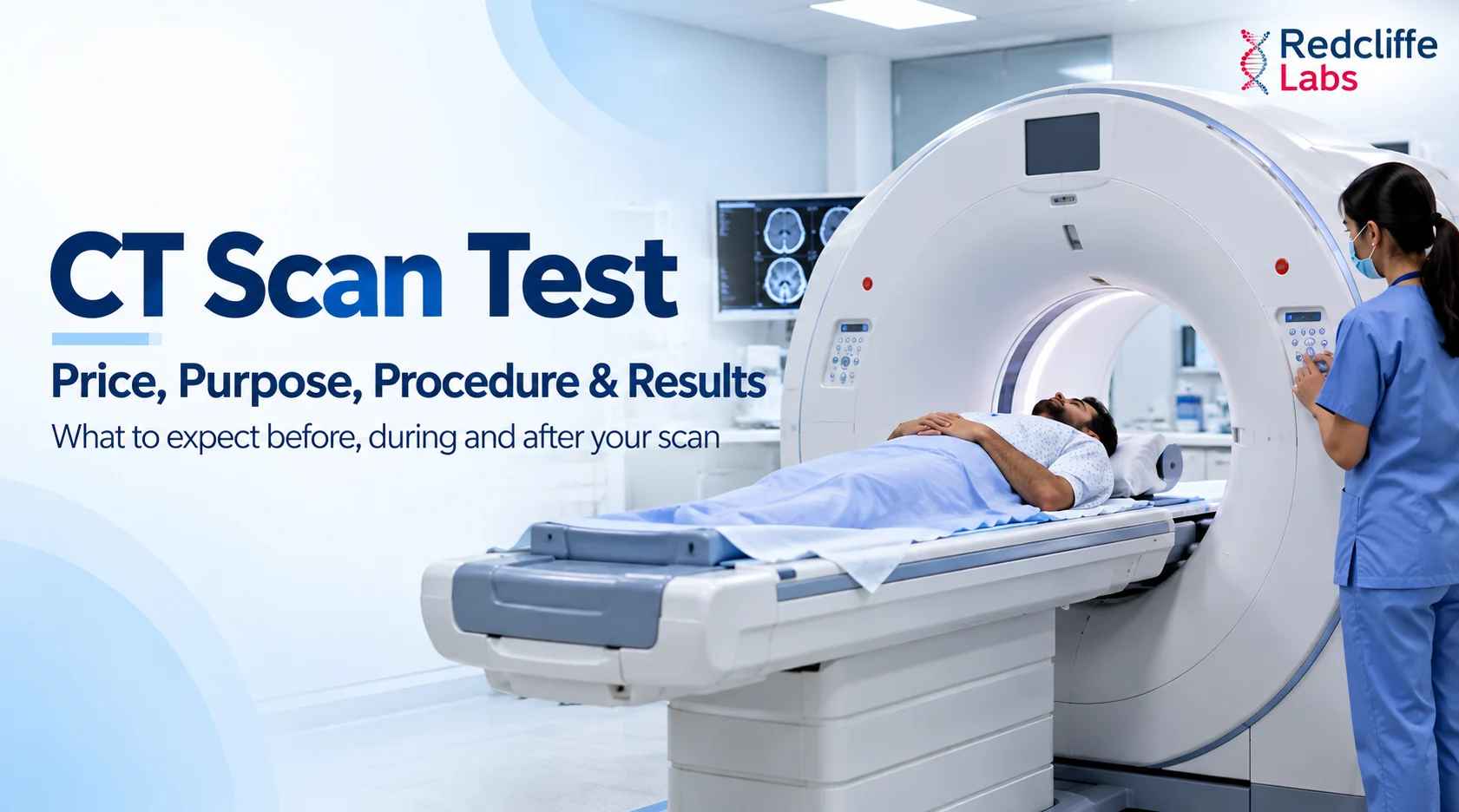
- Positioning: You lie on a table that moves through the scanner’s round opening.
- Image capture: You remain still while the scanner takes pictures. You may be asked to hold your breath briefly.
- Completion: The team checks whether the required images have been obtained and explains any aftercare.
The technologist operates the scanner from a nearby room and can communicate with you during the examination. CT scanning itself is generally painless, although an injection or lying still may cause some discomfort.
How Long Does a CT Scan Take?
Taking the images may take only a few minutes. However, registration, positioning, contrast preparation and any observation afterward can make the overall visit longer.
Ask the imaging centre how much time to allow for your particular examination.
What Are the Risks and Side Effects of a CT Scan?

A CT scan can provide valuable medical information, but it is not risk-free.
Radiation Exposure
CT uses ionising radiation. The dose varies with the examination and protocol, and exposure carries a small potential increase in lifetime cancer risk.
Doctors weigh this risk against the expected benefit of obtaining the images. Sharing previous scans can help the team assess whether another examination is needed.
Contrast Reactions
Injected contrast can cause a brief warm sensation or metallic taste. Allergic-like reactions can occur, although serious reactions are uncommon.
Tell the team about any previous contrast reaction. If you develop difficulty breathing, facial or throat swelling, or feel severely unwell after receiving contrast, seek immediate medical help.
Kidney Considerations
People with certain kidney problems may need an assessment before intravenous iodinated contrast is used. The team may review a recent kidney function blood test or request one when appropriate.
Follow the instructions provided for your circumstances, including any guidance about medicines and fluids.
Can You Have a CT Scan During Pregnancy?
Tell your doctor and the imaging team if you are pregnant or could be pregnant before the examination.
The decision depends on the body area, the clinical concern and whether another test can provide the necessary information. Ultrasound or MRI may be considered in suitable situations, but a medically necessary CT should not be delayed solely because of pregnancy.
An abdomen or pelvis CT requires particular consideration because the fetus may be directly exposed to radiation. Your care team will weigh the benefits and risks and select the most appropriate examination.
Understanding Your CT Scan Report
A radiologist, a doctor trained to interpret medical images, reviews the scan and prepares a report.
The report may describe:
- Technique: The area examined and whether contrast was used.
- Findings: What the radiologist observed.
- Impression or conclusion: The main findings and any suggested next steps.
Depending on the examination, CT may show fractures, bleeding, organ changes, masses or blood vessel abnormalities. Some findings need further assessment.
An abnormal scan does not always establish a final diagnosis. For example, a mass may require additional imaging, a biopsy or other investigations to determine what it is. Discuss the report with the doctor who requested the scan.
Report turnaround varies by centre and urgency. Confirm when and how you will receive the report and images.
How to Choose a CT Scan Centre Near You
When comparing imaging centres, consider the following:
| What to Check | What to Ask |
|---|---|
| Required examination | Can the centre perform the exact scan and protocol on your referral? |
| Radiology team | Who will interpret the images and prepare the report? |
| Quality information | What relevant accreditation or quality information can the centre provide? |
| Preparation and safety | What screening and preparation are needed for your examination? |
| Total price | What is included, and are there additional charges? |
| Report availability | When will the report be ready, and how can you access the images? |
If you are looking for a centre in Delhi, read our guide to choosing a CT scan centre in Delhi. Confirm the prescribed scan, preparation requirements and current total price directly with the centre.
If your doctor has recommended a CT scan, explore Redcliffe Labs’ radiology services and confirm availability in your city.
FAQs
1. What is the full form of CT scan?
CT stands for Computed Tomography. The test uses X-rays and computer processing to create detailed cross-sectional images inside the body.
2. How much does a CT scan cost in India?
The price depends on the body area, scan protocol, contrast requirements, city and imaging centre. Request the current total price for the exact examination on your doctor’s referral.
3. Is a CT scan more expensive than an MRI?
Prices vary by examination and facility. Compare quotes for the specific scans your doctor is considering. Understanding the differences between CT and MRI scans can help you discuss the options with your doctor. The choice should depend on the medical question as well as cost.
4. Does every CT scan use contrast?
No. Some scans are performed without contrast. Your doctor and the radiology team decide whether contrast is needed for the examination.
5. Do I need to fast before a CT scan?
Not always. Preparation varies by scan and facility. Follow the imaging centre’s instructions rather than fasting automatically.
6. Is a CT scan painful?
The scanning process is generally painless. You may feel a brief needle prick if intravenous contrast is needed, and some people find lying still uncomfortable.
7. Can a CT scan detect cancer?
CT can identify a suspicious mass, assess its location and help monitor treatment. However, imaging alone does not always confirm cancer. Further tests may be needed.
8. When will I get my CT scan report?
Timing depends on the imaging centre, examination and urgency. Ask when the report will be available and arrange follow-up with the doctor who requested it.
9. Can I have a CT scan during pregnancy?
A CT scan may be performed when medically necessary. Tell your doctor and imaging team about a possible pregnancy so they can assess the benefits, risks and appropriate alternatives.