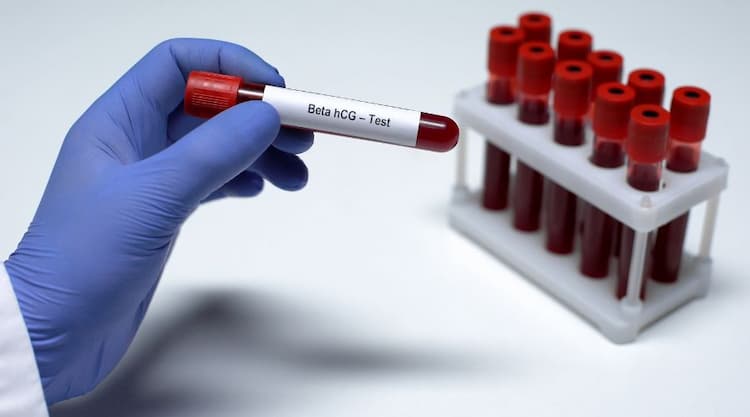
Everything You Should Know About a Pregnancy Blood Test

Medically Reviewed By
Dr. Mayanka Lodha Seth
Written By Anjali Dubey
on Sep 2, 2025
Last Edit Made By Anjali Dubey
on Sep 9, 2025

Which one will you rely on more, the two pink lines on the test kit or a drop of blood? For an early and precise diagnosis, the pregnancy blood test is the gold standard; however, home kits may be an excellent place to start.
When you are patiently and anxiously waiting for answers, every second will feel like an hour, whether it is about planning a pregnancy, dealing with delays, or seeking clarity. Remarkably, millions of years of blood can confirm the start of the beginning. With prenatal blood tests, you can not only confirm the big news but also tell your story at a very cellular level. This pregnancy blood test, which is the HCG Maternal Marker (Pregnancy) Test, is one of the most reliable medical tests in your pregnancy journey. Let's delve deeper into this topic with the help of this blog to understand what it is, how it works, and what the results mean.
What Is a Pregnancy Blood Test?
Also known as an HCG Maternal Marker (Pregnancy) Test or a beta HCG test, a pregnancy blood test is a diagnostic procedure performed in a laboratory. Human chorionic gonadotropin, or hCG, is measured in this blood test to confirm pregnancy. A fertilized egg attaches to the uterus approximately 6 to 10 days after conception, at which point this hormone is released. In contrast to urine testing, this pregnancy can be identified earlier and with greater accuracy before the missed menstrual cycle. This pregnancy blood test provides comprehensive research and data to help pinpoint exact hCG hormone levels and identify any potential issues.
Blood tests for pregnancy are of two types :
Qualitative hCG Test:
The qualitative hCG test confirms the presence of the hCG hormone by providing a yes/no response. Although it verifies your pregnancy, it cannot determine how far along you are.
Quantitative hCG Test (Beta hCG):
This test helps you identify possible gaps and provides information regarding both early and advanced pregnancy. This test measures the precise level of hCG hormones in the blood, helping to track the exact stage of pregnancy.
This blood test for pregnancy can identify pregnancy before menstruation is missed. Because it is more accurate and sensitive than urine testing, it is perfect for early confirmation.
What Does the Pregnancy Blood Test Do to Your Body?
The pregnancy blood test only requires a small blood sample and doesn't affect your body physically. But the information it reveals is highly valuable for both you and your doctor:
Detect Pregnancy Early:
This pregnancy blood test helps to detect early pregnancy in just six to eight days after ovulation, before a missed menstrual cycle. This is the earliest and most reliable method for confirming pregnancy.
Monitor Hormone Levels:
This HCG Maternal Marker (Pregnancy) Test helps measure hCG levels in detail, allowing for the monitoring and tracking of hormonal changes over a specific time period. This is crucial for assessing how the pregnancy is progressing.
Track Progress in Early Pregnancy:
With the repeated tests, it becomes easier to track the fluctuations in hCG levels that eventually indicate fetal development. This helps doctors ensure that the pregnancy is going in the right direction.
Identify Abnormalities Like Ectopic Pregnancy or Miscarriage:
The most important feature of this pregnancy blood test is that it can help to detect miscarriages or Ectopic Pregnancy by variable hCG levels. Early diagnosis enables timely intervention.
Why Does the Pregnancy Blood Test Matter?
This pregnancy blood test is the most accurate method for confirming pregnancy status. Here's why :
- It provides a head start on prenatal care by detecting hCG before a missed menstruation.
- It gives precise hCG levels rather than just a positive or negative outcome. To guarantee a safe pregnancy progression, doctors can monitor these levels over time.
- It is independent of urine concentration and fluid consumption. As a result, blood tests for pregnancy confirmation are more accurate and reliable.
- The blood test aids in tracking early development and implantation success in high-risk or IVF situations. It enables prompt action if something seems strange.
Your following medical decisions may be influenced by knowing the specifics of your pregnancy blood test results.
What Is the Normal Range of a Pregnancy Blood Test?
The range of normal hCG levels varies according to the stage of pregnancy. Results are given in milli-international units per milliliter (mIU/mL).
Those who are not pregnant usually have hCG levels less than 5 mIU/mL. When a pregnancy test is positive, the hCG level is often higher than 25 mIU/mL.
During the first trimester of pregnancy, the HCG level rises quickly before gradually declining. The length of the pregnancy determines the predicted ranges of HCG in expectant mothers.
| Time Since Last Period | hCG Level (mIU/mL) |
| 3 weeks | 72 mIU/mL |
| 4 weeks | 708 mIU/mL |
| 5 weeks | 8,245 mIU/mL |
| 6 weeks | 32,177 mIU/mL |
| 7 weeks | 153,767 mIU/mL |
| 8 weeks | 149,094 mIU/mL |
| 9 weeks | 135,901 mIU/mL |
| 10 weeks | 170,409 mIU/mL |
| 11 weeks | 201,165 mIU/mL |
| 12 weeks | 93,646 mIU/mL |
| 14 weeks | 93,646 mIU/mL |
| 15 weeks | 69,747 mIU/mL |
| 16 weeks | 55,332 mIU/mL |
| 17 weeks | 51,793 mIU/mL |
| 18 weeks | 55,271 mIU/mL |
Note: hCG levels vary from person to person. What's more important is how the levels rise over time.
What Do These Levels Mean for You?
Different levels say different things about your pregnancy:
- Low hCG could be a sign of an ectopic pregnancy, an extremely early pregnancy, or a potential miscarriage.
- A high hCG level may indicate unusual problems, including a molar pregnancy, twins, or an incorrectly estimated pregnancy date.
- To determine whether the pregnancy is developing normally, fluctuating levels are frequently monitored every 48 to 72 hours.
Your doctor will consider trends rather than a single figure when interpreting the results of your pregnancy blood test.
What to Do If Your Levels Are Not in the Normal Range?
You do not need to worry that much if you see any fluctuations in hCG levels. Here are some of the essential steps you can take:
- Repeat the Test in Two to Three Days: Monitoring the rise or decline in hCG levels is made easier by repeating the pregnancy blood test. This pattern provides information about the development of the pregnancy.
- Obtain an ultrasound to see whether the fetus is growing inside the uterus. Eliminating diseases like ectopic pregnancy is essential.
- Observe Your Doctor's Advice: Depending on your results, your doctor may recommend additional testing or observation. To guarantee a safe and healthy pregnancy journey, follow their advice.
Many successful pregnancies began with hCG levels that were unclear. Monitoring and medical supervision are crucial.
Also Read: What is a Good AMH Level for Achieving Pregnancy?
Pregnancy Blood Test Price in India
The price of the pregnancy blood test in India varies based on the lab's reputation and location. The hCG qualitative test typically costs between ₹300 and ₹700, while the quantitative beta hCG test costs around ₹500 to ₹1500.
Important note: The city, lab brand, and whether a home collection is included can all affect prices. Ensure the pregnancy blood test is from a reputable diagnostic laboratory, and always request a detailed breakdown of the costs.
FAQs
1. What blood test confirms pregnancy?
The hCG blood test confirms pregnancy by detecting the presence of the hormone human chorionic gonadotropin in your blood. It includes both qualitative and quantitative (Beta hCG) versions.
2. What is a 100% pregnancy test?
No test is 100% foolproof, but a quantitative hCG blood test is the most accurate and reliable method for confirming pregnancy, especially in the early stages.
3. How much hCG level confirms pregnancy?
An hCG level of 5 mIU/mL or higher typically indicates pregnancy. However, levels vary and should be interpreted in the context of a doctor's assessment.
4. How many days to confirm pregnancy?
A pregnancy blood test can confirm pregnancy 6–8 days after ovulation or about 7–12 days after conception, even before a missed period.
5. What is the maximum delay in periods if not pregnant?
A period can be delayed by up to 7–10 days due to stress, hormonal imbalance, or other non-pregnancy factors. Persistent delays need medical attention.
6. Can I be 3 months pregnant and still test negative?
It's scarce, but it's possible in cases of the hook effect or faulty tests. Blood tests and ultrasounds are more accurate at this stage.
7. How many days late is a period considered normal?
A delay of up to 7 days is generally considered normal. Longer delays may require medical evaluation to rule out pregnancy or other issues.