AMH Test: Normal Range, Its Levels According to Age

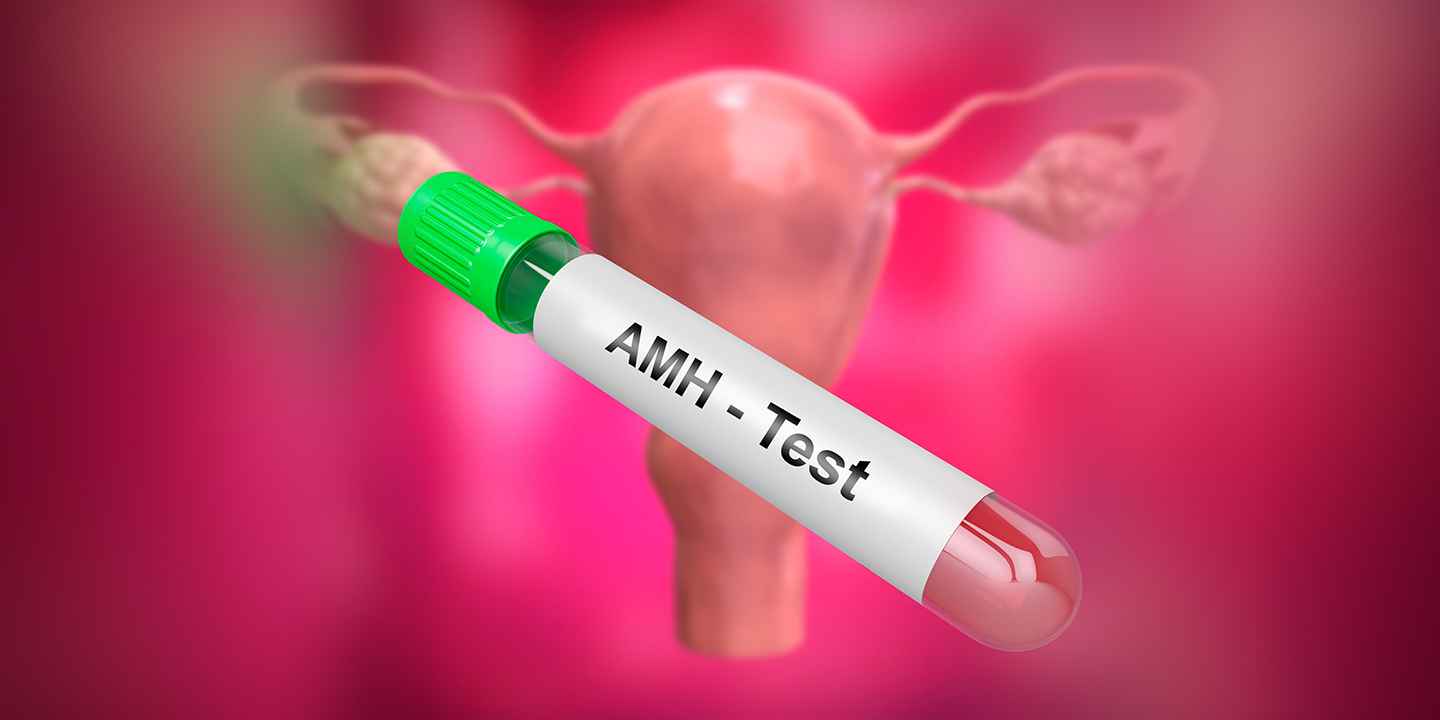
Anti-Mullerian hormone or AMH is one of the most important parameters taken into consideration for identifying fertility. If you have ever got a fertility test done, you might have come across this term in your test report. The AMH hormone acts as a key indicator of fertility in women. These levels help the couple, especially the women, to decide whether she wants to start a family now or later. Also, whether or not she can wait or should she get her eggs frozen, as aprecaution, at an infertility centre.
Interesting, right..!! In this article, let us discuss about what AMH means, what is the normal range of AMH, what AMH levels are ideal for egg freezing, and how you can increase your AMH levels naturally.

In this Article
What is the AMH test?
AMH or anti-Mullerian hormone is produced by the granulosa cells present in the ovarian follicles. The hormone is present in both males and females in their reproductive tissues. The levels of AMH play a crucial role in the development of sex organs in the embryonal stage. The levels of AMH in the foetus depend largely upon their gender, that is, the male foetus has higher AMH levels in order to inhibit the development of female organs, whereas, the female foetus has lower levels of AMH. The condition of ambiguous genitalia or intersex develops in the male fetus while the AMH levels are not high enough. Apart from sex organ development, the AMH comes into play at puberty and regulates the production of eggs by a female ovary. As the levels of AMH increase, the number of eggs produced in a female also increases. Thus, AMH levels enable the gynaecologist to effectively determine the fertility possibilities of a female.
What is the AMH Test used for?
The AMH test can be used with other tests to understand and treat female infertility. If you are a female and having infertility treatment, AMH testing can help.
- AMH is also referred to as "Ovarian reserve." The ovarian reserve declines with age, which is a completely normal process. An AMH can indicate the size of your ovarian reserve, but it cannot provide accurate information about the health of your eggs or predict whether you will become pregnant.
- AMH helps doctors decide on the best fertility treatments based on ovarian reserve.
- High levels suggest conditions like polycystic ovary syndrome (PCOS), where the ovaries have a larger number of small follicles.
AMH test for females:
- As the female approaches menopause, the egg supply shrinks, and your AMH level drops. The AMH levels are used to detect menopause conditions for premature menopause (before the age of 40) and early menopause (before the age of 45). But an AMH test cannot predict when you'll reach menopause. The average age of menopause is 52.
- The AMH test helps to diagnose PCOS, a hormonal disorder that can cause infertility. Also detects certain types of ovarian cancer.
For babies, an AMH test is used:
Healthy testicles in a male baby produce Anti-Müllerian Hormone (AMH). Therefore, normal levels of AMH indicate that the baby has healthy, functioning testicles, even if they haven't descended into the scrotum yet. On the other hand, low or absent levels of AMH may suggest other conditions that require further examination.
Atypical genitalia is a condition that can lead to various issues. For instance, abnormalities in AMH and other hormones in a male baby may result in the development of internal female reproductive organs and external genitalia that appear atypical.
Also read: What is a Good AMH Level for Achieving Pregnancy?
Why Do I Need an AMH Test?
If you are a female, you should consider getting an AMH test. If you-
- Are you having fertility problems
- Have symptoms of polycystic ovary syndrome- Acne, Hair loss, Weight gain, Dark patches of skin, and too much facial hair.
- Are being treated for certain types of ovarian cancer
- Early signs of menopause
Read Also: How To Increase AMH Levels? Step-by-Step Information
What does the AMH Test result mean?
Here is what your AMH Test results indicate-
- AMH naturally declines with age, so results should be interpreted alongside your age and other fertility tests. For example, lower AMH levels are normal for women over 35.
- AMH reflects egg quantity, not quality. Egg quality depends more on age and overall health.
- A low AMH level indicates that you are approaching menopause. But your AMH test results can't predict how long you have until menopause.
- If you are trying to get pregnant, ask your doctor to interpret your AMH test results about your fertility based on your age and other test results.
- In male infants, the absence or low levels of AMH indicate a problem with the AMH gene, which is located on chromosome 19 and directs the production of AMH. This problem may be observed in individuals with absent or dysfunctional testicles.
- A lack of male hormones indicates ambiguous genitalia and may cause abnormal internal reproductive structures.
What is the normal range of AMH?
The AMH levels remain constant during the early years of life and start increasing as the female reaches the adolescent stage. At the age of 25, the AMH levels in a female are at their peak which start decreasing as the women ages further, thereby, decreasing the egg count in subsequent years and finally leading to menopause. If a female wants to get pregnant, the optimum AMH levels required are 1.5 ng/mL to 4.0 ng/mL. The table below tabulates the inference of different AMH levels.
AMH levels according to age
According to a study presented in the annual meeting of the American College of Obstetricians and Gynaecologists (ACOG), average levels of AMH in a female as per her age is tabulated below:
AMH levels and freezing of eggs
With the women becoming more career-oriented and the marriages now being at a later stage, the cases of infertility have increased exponentially. This is because the number of eggs in a female decrease at a certain age which is evident by the decrease in the AMH levels. Therefore, in dealing with the rising cases of infertility in recent times, science has made freezing eggs possible. This means that the women can get their eggs frozen in an infertility centre and later on use those eggs to get pregnant whenever they are ready for a family. However, the number of eggs that can be frozen in a female depends upon their age. It is also important to know that not all eggs that are frozen successfully turn into an embryo, thus, there is a minimum number of eggs that are required to ensure a 50% chance of live birth. The table below summarises the number of eggs that can be frozen in a female as per research, the minimum number of eggs that are required as per the model published in Human Reproduction in 2017, and the AMH levels that indicate the minimum number of eggs that are required for 50% live births as per the Centre for Fertility Research and Education (CFRE).
How to increase AMH levels naturally?
You can increase the levels of your AMH by making certain modifications to your lifestyle. These modifications include:
- Quitting smoking and other tobacco products
- Maintaining a healthy weight and body mass index (BMI)
- Take a diet rich in vitamin D and deficient in fat
Takeaway
AMH levels are an important indicator of the antral follicular count in females. The levels of AMH give gynaecologists a clear view of the number of eggs that are left in a female before she goes into the menopausal stage. Thus, AMH levels play a key role in planning your IVF protocol. Now, that you know the levels of AMH which are considered normal, the average AMH levels as per your age, and the minimum number of eggs that are required for freezing, you can better decide whether you should go for an IVF treatment or get your eggs frozen for future as per your AMH test report.
Frequently Asked Questions (FAQs)
-
What is the normal AMH level to get pregnant?
The normal AMH level for a woman to get pregnant lies between 1.5 ng/mL to 4.0 ng/mL.
-
What is a good AMH level for IVF?
The AMH levels above 1.6 ng/mL are considered good for IVF.
-
What AMH level indicates PCOS?
A high AMH level, that is, AMH levels above 4.0 ng/mL indicates PCOS.
Leave a comment
7 Comments
Shabista shaikh
Nov 1, 2024 at 7:31 AM.
Hello mam, My AMH level is 4.14 is it normal to conceive naturally..?My age is 26.please guide me
Myhealth Team
Nov 5, 2024 at 2:37 PM.
An AMH (Anti-Müllerian Hormone) level of 4.14 ng/mL is considered within the normal range and suggests a good ovarian reserve. At 26 years old, you have a favorable chance of conceiving naturally. However, fertility can be influenced by various factors, including overall health, lifestyle, and any underlying medical conditions. If you have concerns about your fertility or are planning to conceive, it's best to consult a healthcare professional or a fertility specialist for personalized advice and guidance.
Shanta
Oct 2, 2024 at 2:21 PM.
My Age is 34,childless,I have undergone ovarian Choclet cystectomy 5months ago.. Now my AMH has decreased from 4.25 to 1.90.. I m concerned about my fertility issue
Anisha
Jul 22, 2024 at 9:21 AM.
Mera amh 0.0.016 h meri age 40 yr h, kya mai normal conceive kr skti hu, ya ivf krwa skti hu...plz guide me
MyHealth Team
Jul 23, 2024 at 7:33 PM.
आपका AMH स्तर 0.016 बहुत कम है, जो अंडाशय की रिजर्व क्षमता को दर्शाता है। इस स्तर पर प्राकृतिक गर्भधारण करना कठिन हो सकता है, लेकिन असंभव नहीं है। IVF (In Vitro Fertilization) आपके लिए एक बेहतर विकल्प हो सकता है, क्योंकि इससे गर्भधारण की संभावना अधिक होती है। एक फर्टिलिटी विशेषज्ञ से परामर्श लें ताकि वे आपकी स्थिति का मूल्यांकन कर सकें और उचित उपचार योजना बना सकें। स्वस्थ आहार, नियमित व्यायाम और तनाव प्रबंधन आपके संपूर्ण स्वास्थ्य में सुधार कर सकते हैं। कृपया अपने डॉक्टर से मिलें और उनके सुझावों का पालन करें।
Devi
Jun 27, 2024 at 6:32 PM.
Hii mam, AGE 27 , I am suffering from irregular periods, bmi 35, testosterone 17 ,LH ,FSH,DHEA-S, estradiol All r within normal limits, but AMH is 1.27 .. Wt should I do ..is it low AMH
MyHealth Team
Jun 27, 2024 at 1:19 PM.
Hi Devi, Hello! With your age of 27 and a BMI of 35, it's positive that LH, FSH, DHEA-S, and estradiol levels are normal. Your AMH level at 1.27 ng/mL is within the normal range but on the lower side, suggesting potentially lower ovarian reserve. It's advisable to consult a gynecologist or fertility specialist to discuss your irregular periods and AMH level further. They can provide guidance tailored to your situation, which may include lifestyle adjustments and possibly additional tests or treatments to manage irregular periods and address any fertility concerns effectively.
Anju Ebin
Jun 14, 2024 at 8:10 AM.
Amh 0.5anu pregnant akan chance undo madam
MyHealth Team
Jun 14, 2024 at 12:19 PM.
AMH (Anti-Müllerian Hormone) level of 0.5 ng/mL indicates a low ovarian reserve, which can make it more challenging to become pregnant. However, it is not impossible. There are still chances of getting pregnant, but it might require fertility treatments such as IVF (in vitro fertilization) or other assisted reproductive technologies. It is important to consult with a fertility specialist who can provide personalized advice and treatment options based on your specific situation.
Pihu
Oct 15, 2023 at 9:29 PM.
Hi i want to do AMH test...does it makes diffrence if i do.it in a normal Lab or at hospital??
Myhealth Team
Oct 18, 2023 at 9:36 AM.
The AMH test can be done in a regular lab or a hospital, but the key is the reliability of the facility. Choose a reputable and reliable lab for accurate results.
P sunitha
Apr 22, 2023 at 4:37 PM.
Age-23,AMH-4.38,FSH 7.90 ANY Problems sir?
Myhealth Team
May 2, 2023 at 6:01 AM.
Hi P Sunitha, Your AMH levels are slightly elevated. Please do lifestyle changes and consult to a doctor for further evaluation. Thankyou