Behind the Mask: Addressing Doctor Burnout and the Silent Crisis of Mental Health

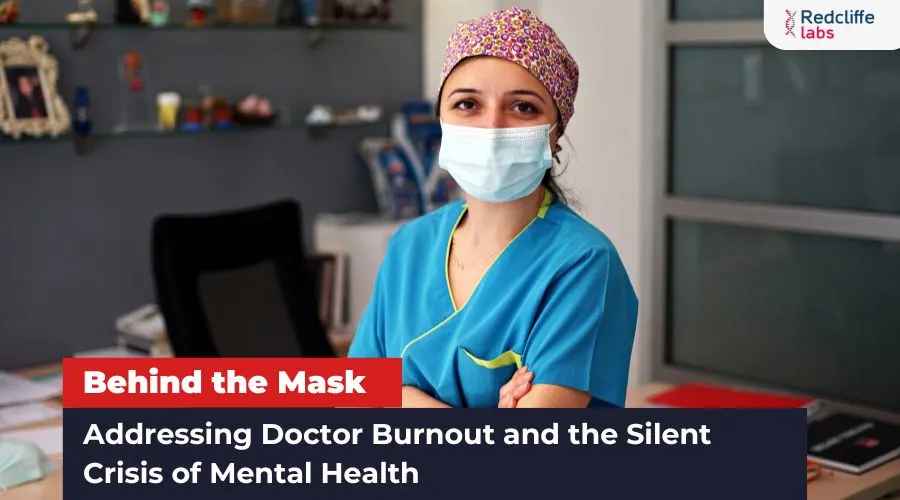
Carrying a stethoscope and wearing a white coat, doctors ensure they keep a check on patients without any complaints.
According to the study, 42% of doctors in India experience burnout in their daily lives, and this is an overwhelming issue faced by the medical fraternity. It is not only impacting doctors’ lives but is also affecting the whole nation in many ways.
Imagine a life devoted to alleviating suffering, an occupation built on compassion and empathy, and a persistent dedication to saving millions of lives. On the other hand, the healer who is healing everyone's life, that very life, is gradually eroded by exhaustion and suspicion. This is not an imaginary scenario; this is the harsh reality for countless doctors in India. The reassuring smile, most healthcare professionals are fighting silent battles of burnout. The emotional toll, long working hours, and immense pressure are some of the reasons that make a doctor's life even more challenging. Burnout is a serious syndrome and a silent epidemic with life-threatening consequences. On the occasion of Doctors Day 2025, with the theme Behind the Mask: Who Heals the Healer. Let's take a deep dive into the issues, the battle, and the solution to address the problem of burnout among healthcare professionals.
What Is Burnout, and Why Are Doctors So Prone to It?
Burnout is not just feeling tired after a long, hectic day; it is more than that. It’s a state of chronic physical and emotional exhaustion. And doctors, de-spite being trained to heal others, often suffer in silence. It is a state of physical, emotional, and mental suffering.
Doctors face a high-pressure work environment daily, so they are more exposed to chronic work stress, negativity, detachment, and a sense of failure. They are trained to save lives and heal patients after they have suffered in silence. A shocking study found that over 62% of Indian doctors, mostly young professionals, trainees, and emergency doctors, said they were showing signs of burnout.
The Sobering Statistics: A Wake-Up Call
Here are some statistics that show how serious the mental health of doctors in India is. According to the 2024 report, it is revealed that around 30% of doctors report burnout. 30 % fight depression, and almost 15% deal with anxiety. To deal with excessive stress and pressure, doctors turn to alcohol to cope with these issues, and this number is between 12 % to 15%. These alarming rates indirectly impact the patient’s health because doctors are not involved in the right consultation and treatment. This will result in poor health treatment. Burnout acts as an accelerator for medical errors.
5 Root Causes of Burnout in Doctors
Being a doctor is not just a job; it is a duty to the nation's wellness. Although doctors give their 100 % to their patients ' well-being, they ignore their needs. Here are some key factors that contribute to burnout among healthcare professionals.
1. Excessive Workloads and Long Hours
This is the most visible reason behind physician burnout, and it is not limited to busy day scenarios. Apart from devoting time to surgical procedures, doctors have to face a non-stop stream of patient appointments, duty rounds, and emergency calls. The 12- to 14-hour shift can change to 24 hours, and this was more evident during COVID-19 and the post-pandemic period. Doctors often experience constant fatigue due to a lack of rest, which leads to slower reaction times, diminished decision-making power, reduced concentration, and an increased risk of making medical errors. To meet financial targets, healthcare systems often push higher volumes of patients, which leads to less time spent on each patient. It disrupts the genuine connection between doctors and patients.
2. Administrative Burdens
The modern healthcare system consumes the valuable time of doctors by requiring them to engage in extensive paperwork, digital tasks, and compliance requirements. This results in distancing doctors from patient care.
- Although electronic health records (EHRs) are becoming a source of efficiency in healthcare, this has also become a reason for exhaustion and burnout among doctors. Healthcare professionals spend a significant amount of their time reviewing the menu and data. These regularity requirements have no such important connection to clinical decision-making. According to studies, doctors spend approximately five to six hours on this process.
- Many administrative tasks, such as reviewing complex billing codes, insurance pre-authorization, and reimbursement documentation, are performed by doctors who take up their valuable time. Doctors are more often judged by their adherence to quality metrics, such as compliance checklists and reimbursement documentation, rather than their clinical expertise.
3. Loss of Autonomy and Control
In the past, doctors have had authority over patient care practices and choices, with power residing in the hands of healthcare systems, which has left people feeling frustrated and helpless.
- In hospital administration and corporate healthcare settings, authorities without clinical expertise are making decisions regarding patient flow, treatment programs, resource management, and patient feedback. This is one of the main reasons for developing dissatisfaction with work among doctors.
- Administrative authorities make doctors rigidly follow the procedures recommended by them without realizing that every patient requires individualized treatment. This price decreases the high warranty cost. It highlights that doctor are not trusted to make their own decisions. Additionally, insurance companies are increasingly prioritizing treatment and medications, leading doctors to compromise on their professional values.
4. Lack of work-life balance
Finding a work-life balance is quite challenging for doctors. Space is left for personal life if you are consumed by every hour of your working hours.
- Serving millions of people comes with dedicating long hours as a doctor. This constant sacrifice of not attending social gatherings and spending less time with family and loved ones can develop a fear of missing out among peers. It causes doctors to feel disconnected and isolated from their personal lives.
- Duty as a doctor requires intense working hours and quality service. They experience burnout, exhaustion, and emotional fatigue because they do not receive regular breaks, vacations, or quality time with their family. Lack of time also affects overall health and puts their health at risk. With the advancement of technology, hospitals are now also utilizing remote work for their doctors. This made the evening even busier while at home.
5. Depersonalisation
Depersonalization is the experience of feeling as though one is observing oneself from a distance, detached from one's thoughts, feelings, body, or activities. People may feel as though they are seeing their own lives from a distance. Most doctors suffer from this. It is also called cynicism.
- Doctors are getting themselves unintentionally detached from the people, and call it a coping mechanism for witnessing deaths, pain, and the severity of diseases. They start treating the patients as cases and diagnoses.
- In the absence of empathy and compassion, communication between the patient and doctor becomes more clinical and less personal, which impacts the connection between the doctor and patient. It compromises patient care, resulting in less thorough communication and lower patient satisfaction.
Breaking the Silence: Strategies for Healing and Prevention
A multifaceted strategy that prioritizes both individual well-being and structural reforms is needed to address physician burnout.
For People:
- The first step is to recognize that burnout is a real phenomenon, and it is crucial to identify its symptoms. Emotional dissatisfaction and a lack of meaningful contribution are some of them. Do not dismiss these feelings; instead, acknowledge them.
- Taking care of yourself is not considered to be selfish. Make time for yourself, try to get quality sleep, eat nutritious meals, and engage in strength training. Taking short breaks from work can make a significant difference.
- As a doctor, it is difficult to say ‘NO’ to extra work that comes outside the designated working hours. However, sometimes that little extra commitment can come at a cost to your health. Tuning off the work motivations and setting boundaries will protect your time.
- Make connections with colleagues, family, friends, and loved ones. Having healthy and meaningful conversations with your team will help you a great deal. This can work as a coping mechanism.
For Healthcare Organizations and Systems:
- Healthcare authorities should regularly monitor the well-being of physicians to identify their problems and suggest solutions.
- It is important to reduce the administrative burdens. Authorities should streamline the documentation process, leverage AI technology, and train support staff to tackle non-clinical tasks. This will help doctors to increase their focus on their patients.
- Higher authorities should implement measures that promote work-life balance by giving flexible scheduling, adequate time off, and a reduction in workloads. This will help doctors to enhance their productivity.
- Build a supportive culture for doctors. Encourage them to talk openly about their mental health and seek help whenever required. Implement some peer support programs to boost participation.
Final Thought
The well-being of doctors is not limited to doctors alone; it is a matter of concern for every Indian. Doctors are the real heroes who serve and save millions of lives by putting their health on the line. How can a healthcare system thrive if its core members are struggling silently? We can help heal our healers if we understand that they also experience burnout, health issues, and mental breakdowns, and work together in support of healthcare professionals. Our doctors struggle a lot after the pandemic and are still suffering, so it is time to look behind the masks and heal our healers with the same care and compassion. Investing in their mental health is proportional to investing in a safer and healthier future. Redcliffe Labs is always there to support the whole medical care fraternity by providing trusted diagnostic services. Visit our website and take your first steps towards a safe and sustainable future.
FAQs
-
What is doctor burnout?
Burnout is a state of chronic physical, emotional, and mental exhaustion caused by prolonged stress in the high-pressure medical work environment.
-
How do some doctors cope with stress and burnout?
A concerning 12-15% of doctors turn to alcohol as a coping mechanism for excessive stress and pressure.
-
What are some other mental health issues doctors face?
A: Beyond burnout, the study revealed that 30% of doctors battle depression and 15% deal with anxiety.
-
How do some doctors cope with stress and burnout?
A concerning 12-15% of doctors turn to alcohol as a coping mechanism for excessive stress and pressure.
-
What is the impact of administrative burdens on doctors?
Doctors spend a significant amount of time (up to 5-6 hours daily) on tasks such as EHR documentation, billing, and compliance, which diverts them from direct patient care.