Testosterone Test Normal Range: Understanding Your Testosterone Test Reports

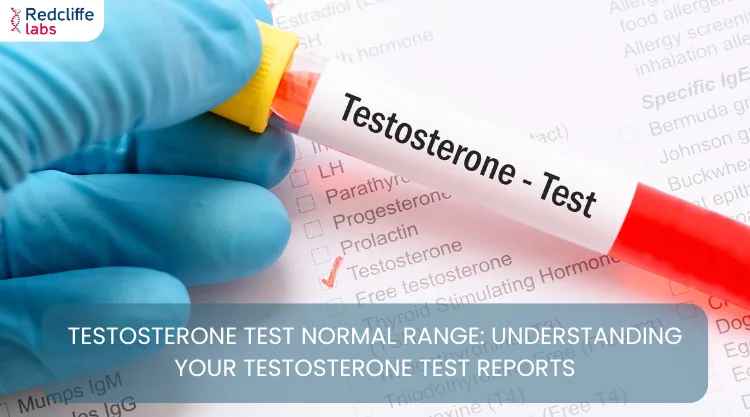
Are you feeling more tired than usual, experiencing mood swings, or struggling with muscle strength? It might be related to your testosterone levels.
Testosterone is a key hormone.
It plays several roles in male development, including supporting muscle growth, maintaining bone strength, regulating fat distribution, and even affecting mood, energy, and sex drive.
In women, the testosterone levels are much lower, but they still support muscle strength, bone density, and overall well-being.
The purpose of the blog is to help you understand the normal range of your testosterone test. Whether they are high or low, what can influence them, and when to see a doctor.
What is a testosterone test, and what does it do?
A testosterone test is a simple blood test performed to measure the testosterone levels in the body. Testosterone is a hormone produced in the testicles in men and in smaller amounts in the ovaries in women, as well as the adrenal glands in both sexes.
The test helps a healthcare professional assess whether your body is producing too little or too much testosterone. It plays a crucial role in:
- Sexual development and reproductive function
- Muscle and bone health
- Red blood cell production
- Mood and mental well-being
- Energy levels and fat distribution
The test is commonly used to
- Evaluate symptoms like low libido, fatigue, infertility, delayed puberty, or abnormal hair growth.
- To monitor conditions like polycystic ovary syndrome (PCOS) in women or testosterone deficiency (hypogonadism) in men that affect hormone production.
- To assess puberty timing in children and teens who may be developing earlier or later than expected.
- To guide hormone therapy and monitor how well treatment is working.
What is the Testosterone Test Normal Range?
The normal testosterone levels can vary slightly depending on age, sex, and the type of testosterone being measured (total or free testosterone). Below are the typical values for adults:
|
Gender |
Total Testosterone |
Free Testosterone |
|
For Men (Adults) |
300 to 1,000 ng/dL (nanograms per deciliter) |
5 to 20 ng/dL |
|
For Women (Adults) |
15 to 70 ng/dL |
0.3 to 1.9 ng/dL |
|
For children |
Much lower than adult levels | |
Note: Testosterone levels decline with age and can also be influenced by underlying medical conditions, certain medications, and time of day.
What do these levels mean for you?
Understanding your testosterone levels is vital for identifying the root of various health concerns. Your results might mean:
1. Low Testosterone Levels
If your levels are below the testosterone test normal range, it may suggest hypogonadism. It indicates a condition where the body does not produce enough testosterone. You may experience:
- Fatigue
- Reduced libido or sexual dysfunction
- Depression
- Mood changes
- Loss of muscle mass or strength
- Difficulty concentrating
- Weight gain
Risks: Prolonged low testosterone can increase the risk of:
- Osteoporosis (weakened bones)
- Infertility
- Reduced muscle mass and strength
- Low red blood cell count (anemia)
2. High Testosterone Levels
Levels above the testosterone test normal range for men are rare and may result from certain health conditions or testosterone therapy abuse. High testosterone levels, whether in men or women, can be concerning when caused by underlying health conditions or inappropriate hormone use.
Common symptoms include:
- Acne or oily skin
- Aggressive behavior or mood swings
- Hair loss
- Irregular periods
- Increased body hair (in women)
- High blood pressure
- Sleep disturbances
- Infertility due to reduced sperm count
- Prostate enlargement
- Deepening of voice (in women)
When to worry?
Symptoms usually accompany high testosterone levels. Long-term high testosterone levels may impact heart health, liver, risk of blood clots, fertility, and potentially cancer risk. If your test indicates high testosterone values, consult a doctor for a thorough evaluation.
Your doctor will guide you through a treatment that may involve lifestyle or medication changes, along with ongoing monitoring to prevent complications.
3. Normal Testosterone Levels
A testosterone lab test's normal range means a healthy hormone balance. In other words, if your levels fall within the typical adult ranges, it suggests that your body is making enough testosterone for your age and sex. However, a doctor may recommend a free and total testosterone test to make an accurate diagnosis.
How to maintain it?
To maintain testosterone test normal values, try to:
- Do regular exercise
- Eat a balanced diet rich in proteins, fats, and whole grains
- Try to sleep for 7-9 hours every day
- Practice stress management techniques
- Avoid alcohol
- Quit smoking
Note: Talk to your doctor as these symptoms could be related to hormonal imbalances or other underlying conditions.
What to Do If Your Levels Are Not in the Normal Range?
If your results show values higher than the testosterone test's normal level, don't panic. Here is what you can do:
Consult a doctor
- Discuss your testosterone test results with your doctor and understand their meaning. Your doctor will consider your symptoms, like low sex drive, fatigue, or mood changes, medical history, health conditions, medications, or supplements, before recommending next steps.
- They may repeat the test, as levels fluctuate during the day, due to stress, or even lab differences.
General lifestyle advice
A treatment may involve general lifestyle advice, such as:
- Better sleep
- Healthy diet
- Regular exercise
- Reduce alcohol use
- Quit smoking
- Eat a nutritious diet
- Minimize exposure to environmental toxins
Regular follow-ups with a healthcare professional can help identify the underlying cause of high testosterone levels and adjust your treatment plan accordingly.
FAQs
What is a standard testosterone level test?
A testosterone test normal range for adult men typically falls between 300 and 1,000 ng/dL. For women, the range is much lower, around 15 to 70 ng/dL.
What is a good testosterone level to check?
If your testosterone test results are in the normal range for your age and sex, that's considered good. For men, a level above 300 ng/dL is usually seen as healthy.
What is the most healthy testosterone level?
The healthiest testosterone level is one that falls within the normal range and doesn't cause any symptoms.
For adult men, 300-1000 ng/dL is often considered optimal for well-being.
Is 70 testosterone good?
A testosterone level of 70 ng/dL is considered low for men and could mean they have hypogonadism. But for women, 70 ng/dL is actually within the normal range on a testosterone test.
What's a good testosterone level by age?
For men, testosterone levels usually stay above 300 ng/dL, even though they might slightly decline as they get older. Teens and younger adults tend to have higher testosterone than older men.
How much testosterone is low?
In men, levels below 300 ng/dL are considered low in the testosterone test normal range. This may lead to symptoms like fatigue, low libido, and muscle loss.
How can I increase my testosterone?
You can increase testosterone naturally through exercise, good sleep, and a balanced diet. Doctors may also suggest testosterone therapy based on testosterone test results.
Conclusion
Knowing the testosterone test normal range helps you manage your health. No matter if your levels are high, low, or just within the range, understanding them can guide your next steps.
It can explain symptoms, aid early diagnosis, and guide effective treatment when you need it. If something feels strange, don't wait. Early actions can make all the difference.
Know Your Numbers? Enter your Testosterone Test Levels in the test value evaluator below to understand what your values mean.