Why is PCOS Continuously Rising in Women?

Medically Reviewed By
Dr. Mayanka Lodha Seth
Written By Ankita Mishra
on Mar 3, 2026
Last Edit Made By Ankita Mishra
on Mar 3, 2026
Have you started noticing more women around you, friends, colleagues, or cousins, complaining about talking about irregular periods, stubborn adult acne, or the sudden struggle to lose weight? If it feels like Polycystic Ovary Syndrome (PCOS) is everywhere lately, you aren't just imagining it.
In India, PCOS has transitioned from a rare clinical diagnosis to a common household term. Recent studies, including data from AIIMS, suggest that nearly 20-25% of Indian women of reproductive age now suffer from this condition. That is one in every four women.
But why is this happening? Is it just our genes, or is the modern Indian lifestyle playing a bigger role than we realize? The reasons are many and vary for each woman, as the saying goes, 'no one size fits all.' It goes without saying that, when it comes to hormones, everybody is different, and the hormones work accordingly. So, to understand PCOS, understanding hormones becomes important.
This blog dives deep into the why behind the rising PCOS numbers and, more importantly, what you can do to take your health back into your own hands.
What is PCOS?
Polycystic Ovary Syndrome (PCOS) is a hormonal disorder that affects women of reproductive age. It causes:
- Irregular periods
- Excess androgen (male hormone) levels
- Multiple small cysts in the ovaries
- Difficulty in ovulation
PCOS is not just a reproductive problem. It is a metabolic condition. That means it affects how your body processes insulin, stores fat, and regulates hormones. And this is exactly why its cases are increasing.
5 Signs of PCOS You Should Not Ignore
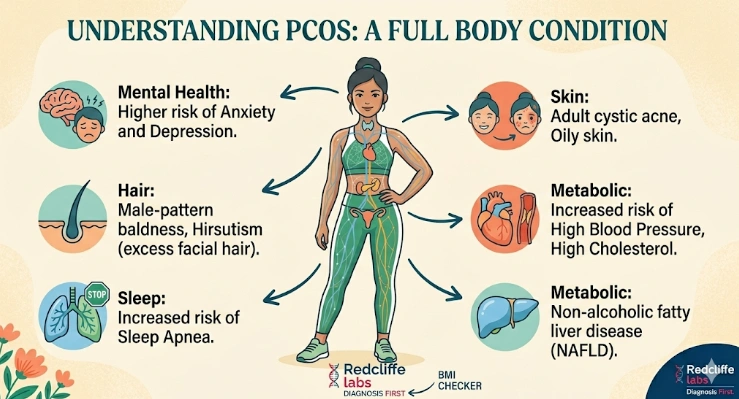
Your body usually sends signals long before a condition becomes severe. For PCOS, these signs can be subtle or mistakenly attributed to just stress.
- Irregular Periods: This is the most common red flag. Whether your cycles are consistently late, you skip months altogether, or you experience abnormally heavy bleeding, your hormones are trying to tell you something.
- The PCOS Belly: Weight gain specifically around the abdomen that feels impossible to shed despite dieting is a classic sign of insulin issues.
- Hirsutism (Excessive Hair Growth): Noticing thick, dark hair on your chin, chest, or upper back? This happens when your ovaries produce too much androgen (male hormones).
- Adult Acne and Thinning Hair: Persistent cystic acne along the jawline or noticeable hair thinning at the crown (female pattern baldness) are strong indicators of hormonal imbalance.
- Darkened Skin Patches: Known as Acanthosis Nigricans, these are velvety, dark patches of skin usually found around the neck, armpits, or groin. This is a direct sign of insulin resistance.
Causes of PCOS: What Triggers It?
While the exact cause is unknown, several interconnected factors contribute to its development:
- Hyperinsulinemia: When your body produces too much insulin, it acts like a growth factor on the ovaries, causing them to produce androgens instead of maturing eggs.
- Low-Grade Inflammation: Women with PCOS often have a type of low-grade inflammation that stimulates polycystic ovaries to produce androgens.
- Heredity: If your mother or sister has PCOS, your risk is significantly higher due to shared genetic markers.
- Epigenetics: Environmental factors, including exposure to endocrine disruptors (BPA in plastics), can turn on PCOS genes.
Why Is PCOS Increasing in Indian Women?
The rise isn't caused by a single factor but a perfect storm of environmental, biological, and lifestyle changes.
The Sedentary Lifestyle Trap
Is a sedentary lifestyle causing an increase in PCOS? Absolutely. In modern India, our daily movement has plummeted. With desk jobs, long commutes, and the convenience of home-delivery apps, many women spend upwards of 8-10 hours a day sitting.
When you don't move, your muscles don't use glucose efficiently. This forces your pancreas to pump out more insulin. High insulin levels then signal the ovaries to produce more testosterone, which halts ovulation and creates those characteristic cysts (which are actually immature follicles).
Shift to Ultra-Processed Diets
Our traditional Indian diets, once rich in fiber and whole grains, have been replaced by convenience foods. Refined flour (maida), sugary beverages, and trans-fats found in snacks cause sharp spikes in blood sugar. These spikes lead to chronic low-grade inflammation, another major fuel for PCOS symptoms.
Chronic Stress and Hormonal Disorder:
Stress isn't just a feeling; it's a chemical reaction. When you are stressed, your body produces cortisol. Chronic high cortisol can interfere with the communication between your brain and your ovaries. In the competitive environments of urban India, the lack of downtime is directly contributing to the rising cases of PCOS.
Genetic Predisposition
Historically, the Indian population survived periods of famine. This led to the evolution of thrifty genes that excel at storing fat and energy. In today's world of food abundance, these same genes make us highly prone to obesity and insulin resistance, making PCOS a much bigger threat for us than for women in other parts of the world.
Difference Between PCOS and PCOD
Many people use these terms interchangeably, but they are not the same. Understanding the distinction helps in seeking the right medical intervention.
|
Feature |
PCOD (Polycystic Ovarian Disease) |
PCOS (Polycystic Ovary Syndrome) |
|
Definition |
A condition where the ovaries produce immature eggs that eventually turn into cysts. |
A serious metabolic and endocrine disorder where the ovaries produce excess androgens. |
|
Severity |
Considered less severe; often managed with diet and exercise. |
A complex systemic syndrome that requires medical and lifestyle intervention. |
|
Hormonal Impact |
Minimal hormonal imbalance; usually doesn't significantly affect fertility. |
Significant hormonal imbalance is a leading cause of female infertility. |
|
Prevalence |
More common; affects a larger percentage of the population. |
Less common but rising rapidly due to modern lifestyle stressors. |
|
Complications |
Lower risk of long-term health issues. |
High risk of Type 2 Diabetes, hypertension, and endometrial cancer. |
What are the Effects of PCOS on Your Body?
PCOS is a full-body condition. It doesn't stay confined to the ovaries; its effects ripple through every system.
|
System Affected |
Impact of PCOS |
|
Metabolic System |
Increased risk of Type 2 Diabetes, Non-alcoholic fatty liver disease, and high cholesterol. |
|
Mental Health |
Higher rates of anxiety, depression, and body dysmorphia due to hormonal shifts and physical changes. |
|
Skin & Hair |
Cystic acne, oily skin, facial hair, and male-pattern baldness at the crown. |
|
Sleep |
Increased risk of Sleep Apnea (repeatedly stopping breathing during sleep), especially if overweight. |
|
Reproductive |
Difficulty conceiving and a higher risk of complications during pregnancy. |
4 Ways to Prevent PCOS in the Next Generation
While you cannot change your genetics, you can prevent the expression of PCOS through proactive habits, especially for young girls entering puberty.
- Regulate Circadian Rhythms: Ensure adolescents sleep by 10:30 PM. Disrupted sleep cycles are a major trigger for hormonal chaos.
- Limit Plastic Exposure: Avoid heating food in plastic containers and switch to glass or steel water bottles to reduce BPA intake.
- Early Screening: If a teenager has irregular cycles for more than two years post-menarche, get a baseline screening at Redcliffe Labs to catch imbalances early.
- Physical Literacy: Encourage sports and active play to ensure high insulin sensitivity from a young age.
3 Effective Ways to Reverse PCOS
The good news?
While no cure makes PCOS disappear overnight, it is highly manageable and, in many cases, reversible through consistent lifestyle changes.
Prioritize Functional Movement
You don't need to spend hours in the gym. Focus on consistency over intensity.
- Strength Training: Building muscle is the best way to combat insulin resistance because muscle tissue consumes glucose even at rest.
- NEAT (Non-Exercise Activity Thermogenesis): Take the stairs, walk while talking on the phone, or stand every hour. These small movements add up to more than a single 30-minute workout.
Eat for Hormone Balance
Stop dieting and start nourishing.
- Fiber is Your Friend: Load up on green leafy vegetables, lentils (dals), and whole grains like oats or millets.
- Protein-First Meals: Always pair your carbs with a protein source (such as paneer, eggs, sprouts, or lean meat) to prevent insulin spikes.
- Healthy Fats: Include walnuts, flaxseeds, and chia seeds to help reduce inflammation.
Quality Sleep
Your hormones reset while you sleep. Aim for 7–8 hours of uninterrupted rest. Poor sleep increases cravings for sugary foods and spikes your cortisol levels the next morning, making PCOS symptoms worse.
Is there a connection between PCOS and Pregnancy?
Can you get pregnant with PCOS?
Yes. PCOS is a delay, not a dead end. The primary issue is Anovulation (the body doesn't release an egg regularly).
However, PCOS does increase the risk of certain pregnancy complications:
- Gestational Diabetes: Higher blood sugar levels during pregnancy.
- Preeclampsia: A sudden rise in blood pressure after the 20th week.
- Preterm Birth: Delivering the baby earlier than the 37th week.
Because of these risks, it is vital to have your metabolic markers (like HbA1c and Blood Pressure) in check before you conceive.
Ways to Enhance Fertility with PCOS
If you are trying to conceive, focus on these four pillars to boost your chances of natural or assisted conception:
- Monitor Your Ovulation: Use ovulation strips or track basal body temperature, but remember that in PCOS, LH surges can sometimes be false. Tracking cervical mucus is often more reliable.
- The Inositol Advantage: Taking Myo-inositol supplements for 3 months before conception can significantly improve the quality of the eggs released.
- Low GI Loading: Eat a low Glycemic Index diet to keep insulin low, which creates a better environment for embryo implantation.
- Timed Intercourse & Ovulation Induction: If natural cycles are absent, a gynecologist may prescribe medications like Clomiphene or Letrozole to help the ovaries release an egg.
Indian Diet Chart for PCOS Management
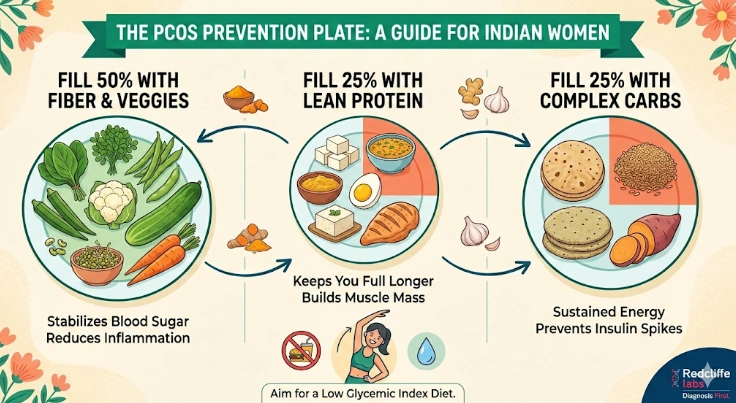
Eating for PCOS isn't about starvation; it's about managing blood sugar. In India, our meals are often carb-heavy. You need to pivot toward a protein and fiber-first approach.
Sample Daily Plan:
- Early Morning: Lukewarm water with 1 tsp soaked Methi (Fenugreek) seeds or Cinnamon water.
- Breakfast: Vegetable Poha with peanuts, or a Moong Dal Chilla with paneer stuffing. Avoid sugary cereals or white bread.
- Mid-Morning: A handful of walnuts and almonds or one seasonal fruit (Apple/Papaya).
- Lunch: 1 small bowl of Brown Rice or 1 Multigrain Roti + a large bowl of green leafy vegetables (Sabzi) + 1 bowl of Dal + a side of curd/probiotics.
- Evening Snack: Roasted Makhana (Fox nuts) or a boiled egg. Skip the "Chai-Biscuit" routine; replace it with Green Tea or Spearmint Tea.
- Dinner: Light and early (by 7:30 PM). Vegetable soup with grilled paneer or a bowl of sautéed sprouts and veggies.
Essential Health Tests For PCOS:
If you suspect you have PCOS, a wait-and-watch approach can lead to long-term complications like Type 2 Diabetes or infertility.
A proper diagnosis typically follows the Rotterdam Criteria (the standard for diagnosing PCOS), where you must meet two of three conditions: irregular periods, clinical/biochemical signs of high androgens, and polycystic ovaries on an ultrasound.
To get a clear picture, you should consider these essential tests:
|
Test Name |
Why It's Important |
|
HbA1c & Fasting Insulin |
To check for insulin resistance and pre-diabetes. |
|
LH/FSH Ratio |
A high ratio (often 2:1 or 3:1) is a classic indicator of PCOS. |
|
Free & Total Testosterone |
To confirm if male hormones are elevated. |
|
AMH (Anti-Mullerian Hormone) |
High levels often correlate with a high number of follicles (cysts). |
|
Lipid Profile |
Women with PCOS are at a higher risk of high cholesterol and heart issues. |
|
Pelvic Ultrasound |
To visually check the ovaries for the string of pearls appearance. |
Key Takeaway
Don't let the silent surge of PCOS affect your quality of life. At Redcliffe Labs, we offer specialized Fertility and PCOS panels that look beyond ultrasound alone. Our tests help identify the type of PCOS you have, whether it's insulin-resistant, inflammatory, or adrenal-driven, so your treatment can be precise.
Use our BMI Checker today to see if your weight is impacting your hormonal health, and book your home sample collection to get a 360-degree view of your wellness.
Not only this, booking your tests with us brings you Benefits like:
- Starting with our expert, well-trained phlebotomists collecting your samples.
- Providing you with smart reports and an overall review, including our "health score," to help you understand where your body stands.
- In case of any confusion, you can get in touch with our experts for report consultation, or with our dieticians for personalized diet plans.
- It doesn't end here, on your follow-up tests, you can track your health trends, "your progress", from the last time.
Frequently Asked Questions
Why is PCOS becoming more common in women today?
The rise in PCOS is a direct consequence of the mismatch between our genetics and our environment. While Indian women are genetically prone to insulin resistance, the sudden shift toward high-calorie processed diets and extremely low physical activity has triggered this genetic predisposition. Additionally, environmental toxins and endocrine disruptors (like plastics) play a role. We believe early screening is the only way to catch these hormonal shifts before they lead to chronic conditions like diabetes.
What are the main reasons for the rise in PCOS cases?
The rise is primarily driven by four pillars: Diet, Activity, Stress, and Sleep. The modern Indian diet is heavily reliant on refined carbohydrates, which wreaks havoc on insulin levels. When combined with a sedentary lifestyle that limits physical activity, metabolic health declines. Stress from urban living and insufficient sleep further disrupts the delicate balance of the HPO (Hypothalamic-Pituitary-Ovarian) axis, leading to the hormonal imbalances we recognize as PCOS.
Is a sedentary lifestyle causing an increase in PCOS?
Yes, a sedentary lifestyle is one of the biggest culprits. When we remain inactive, our cells become insulin-resistant. At Redcliffe Labs, we emphasize that sitting is the new smoking for hormonal health. High insulin levels directly stimulate theca cells in the ovaries to produce excess androgens. This prevents normal egg maturation, leading to irregular cycles. Regular movement is not just about weight loss; it is a vital "medicine" for regulating your hormones.
Does stress contribute to rising PCOS cases?
Stress is a significant, often overlooked catalyst. When you are under chronic stress, your adrenal glands produce high levels of cortisol and DHEAS (an androgen). These hormones can suppress normal ovarian function. Furthermore, stress often leads to emotional eating and poor sleep, creating a vicious cycle that exacerbates insulin resistance. Managing mental health is a core component of any PCOS management plan we recommend to our patients.
Is a poor diet responsible for increasing PCOS in women?
Absolutely. The Westernization of the Indian palate, moving from whole-food, plant-based diets to those high in sugar, maida, and preservatives, is a primary driver. These foods cause rapid spikes in blood glucose, forcing the body to overproduce insulin. Over time, this chronic hyperinsulinemia disrupts the ovarian environment. At Redcliffe Labs, we advocate a Low-Glycemic Index diet as the foundation for managing and reversing PCOS symptoms.
How does insulin resistance lead to PCOS?
Insulin resistance is the catalyst behind most cases of PCOS. When your body's cells don't respond well to insulin, your pancreas compensates by producing more insulin. This excess insulin does two things: it tells the ovaries to produce more testosterone, and it lowers Sex Hormone-Binding Globulin (SHBG) levels. This protein usually mops up excess testosterone. The resulting high testosterone levels stop ovulation, cause acne, and lead to excess hair growth.
Is obesity linked to the growing number of PCOS cases?
While obesity (especially abdominal fat) significantly worsens insulin resistance and makes PCOS symptoms more severe, the hormonal imbalances of PCOS also make it incredibly easy to gain weight and difficult to lose it. However, it is important to note that Lean PCOS also exists. At Redcliffe Labs, we recommend using our BMI checker and metabolic screenings to understand your specific body composition and risk factors.
Leave a comment
Related Posts
Health
Food Intolerance and PCOS: Is There a Connection?
Health
Obesity and Endometrial Cancer Risk: Why Excess Weight Increases the Health Risks in Women
Health
Monk Fruit vs Stevia: Which Sweetener Is Better for a Weight Loss Diet?
Health
World TB Day 2026: Yes, We Can End TB with Early Diagnosis and Treatment