The Most Common Hernia Symptoms People Often Ignore

Health issues, including hernias, rarely develop overnight. The body often provides early warning signs, such as a small abdominal bulge, mild discomfort during exercise, or a heavy sensation in the groin. Because these symptoms are subtle, they are often overlooked or mistaken for muscle strain, fatigue, aging, or weight gain.
A hernia occurs when an organ or tissue pushes through a weak area in the muscle. Without treatment, it can worsen over time. Early detection allows for timely intervention and helps prevent complications. This article outlines common hernia symptoms that are often overlooked and explains when to seek medical attention.
Also Read: 15 Ashwagandha Benefits for Men: Strength, Stamina & Stress Relief
What Is a Hernia?
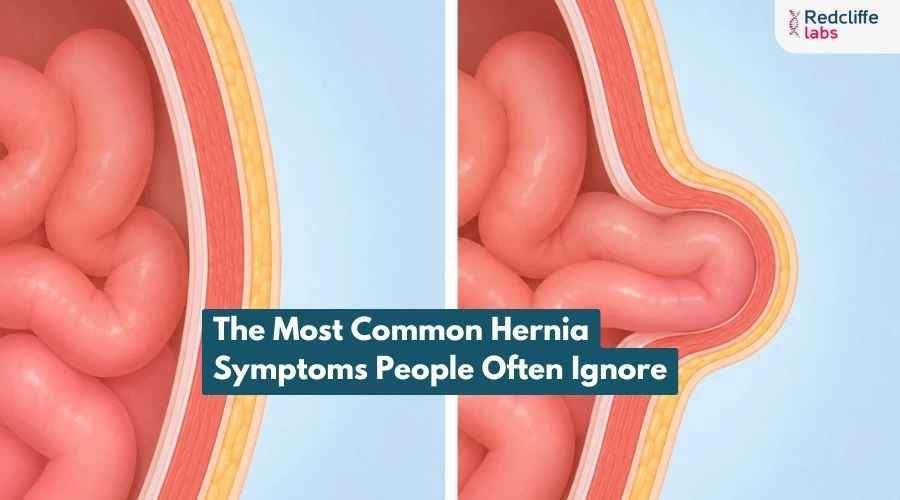
Muscles act as a barrier that holds your organs in place. If a weak spot develops, part of an organ, intestine, or fatty tissue can push through, forming a bulge or lump under the skin. This is known as a hernia.
Hernias can develop in different areas, but are most common in the abdomen or groin. Early on, hernias may cause little or no pain, leading many to ignore them. However, hernias rarely resolve without treatment and can enlarge or cause complications over time. Early recognition and medical consultation are essential.
Why Hernia Symptoms Are Often Overlooked
Hernia symptoms are often subtle at first and may only appear during activities like standing, coughing, or lifting. The bulge can disappear when lying down, leading some to believe the issue has resolved. Early hernias often cause little or no pain and are frequently mistaken for muscle strain, bloating, indigestion, weight gain, or age-related aches. As a result, many delay seeking evaluation, allowing the hernia to progress.
Hernia Symptoms People Often Mistake for Other Problems
The following symptoms are often mistaken for other conditions:
1. A Visible Bulge or Lump
A small bulge or lump is often the earliest sign of a hernia. It may appear in the abdomen, groin, or near a previous surgical scar. The bulge typically becomes more visible when standing, coughing, or lifting, and may recede when lying down.
2. A Feeling of Heaviness
A hernia may cause a heavy, dragging, or pulling sensation in the abdomen or groin, especially after prolonged standing or at the end of the day. While this may seem minor, it can be an early warning sign.
3. Mild Pain or Discomfort
Hernias do not always cause severe pain. Discomfort often begins as a dull ache, mild burning, or slight soreness. Because the pain is manageable and intermittent, it is frequently overlooked until it interferes with daily activities.
4. Pain While Lifting Objects
Lifting heavy objects increases pressure on the abdominal muscles. If a weak spot exists, this can cause pain, discomfort, or a pulling sensation during lifting. Persistent lifting-related pain should not be ignored.
5. Discomfort During Coughing or Sneezing
Coughing, sneezing, or laughing can increase abdominal pressure. If these actions consistently cause pain, discomfort, or a pulling sensation in the groin or abdomen, an underlying hernia may be present.
6. Burning or Aching Sensation
A persistent burning, aching, or tender sensation around the hernia may develop. This discomfort may be mild initially but can intensify over time, often indicating irritation of nearby tissues and muscles.
7. Swelling Around the Groin
Swelling in the groin is a common sign of an inguinal hernia. It may develop after physical activity, prolonged standing, or heavy lifting, and often subsides with rest. This swelling is frequently mistaken for muscle strain or temporary inflammation.
8. Digestive Discomfort
Some hernias impact the digestive system, causing bloating, fullness, gas, or general stomach discomfort. Because these symptoms resemble common digestive issues, hernias are often overlooked, and medical advice is delayed.
Which Hernia Warning Signs Require Emergency Care?
The following hernia warning signs require immediate medical attention:
- Severe and Sudden Pain: While hernias typically cause mild discomfort initially, sudden, intense pain may indicate trapped tissue or a loss of blood supply. This is a medical emergency requiring immediate treatment.
- Nausea and Vomiting: When a hernia is accompanied by nausea or vomiting, it may signal an intestinal blockage. This requires urgent medical attention to prevent serious complications.
- Redness or Discoloration: Red, purple, dark, or unusual discoloration of the skin over a hernia may indicate reduced blood flow and possible strangulation. Immediate medical evaluation is necessary.
- Inability to Push the Hernia Back In: If a hernia bulge becomes stuck and cannot be pushed back in, it may be trapped and require prompt medical evaluation.
- Fever Along With Hernia Symptoms: Fever with hernia pain, swelling, or redness may indicate infection or a serious complication. Immediate medical care is essential to prevent the condition from worsening.
What risk factors increase the chance of developing a Hernia?
The following factors can increase your risk of developing a hernia:
Heavy Lifting
Frequent heavy lifting places significant pressure on abdominal muscles. Over time, this strain can weaken the muscle wall, increasing the risk of hernia, especially if proper lifting techniques are not followed.
Chronic Coughing
Chronic coughing increases abdominal pressure with each episode. Persistent coughing over weeks or months can weaken muscles and increase the risk of hernia.
Obesity
Excess body weight places ongoing pressure on abdominal muscles and tissues. Over time, this stress can weaken the abdominal wall, increasing hernia risk for overweight and obese individuals.
Pregnancy
During pregnancy, the growing baby increases abdominal pressure. This extra strain can stretch and weaken abdominal muscles, increasing the risk of a hernia, particularly around the belly button or lower abdomen.
Aging
As we get older, muscles naturally lose some of their strength and flexibility. This gradual weakening makes it easier for organs or tissues to push through weak spots in the abdominal wall, increasing the risk of hernias.
Previous Abdominal Surgery
Any surgery on the abdomen leaves behind an incision that needs time to heal. Even after recovery, the area may remain slightly weaker than surrounding tissues, creating a spot where a hernia can develop months or years later.
Also Read: 10 Health Benefits of Dark Chocolate for Men
The Most Common Hernia Symptoms People Often Ignore
Health problems usually don't appear suddenly, and hernias are no different. In most cases, the body gives small warning signs before the condition becomes serious. You may notice a small bulge in your abdomen, mild discomfort while exercising, or a heavy feeling in your groin. Because these symptoms seem minor, many people ignore them or mistake them for muscle strain, tiredness, aging, or weight gain.
A hernia happens when an organ or tissue pushes through a weak spot in the muscle. If left untreated, it can gradually become worse over time. The good news is that spotting the signs early can help you get timely treatment and avoid complications. In this article, we'll look at the most common hernia symptoms people often ignore and explain when it's important to see a doctor.
How is the hernia treated?
The right treatment for a hernia depends on its size, location, and symptom severity. In some cases, particularly when the hernia is small and causing little to no discomfort, a doctor may recommend watchful waiting. This involves regular monitoring to ensure the condition does not worsen. Lifestyle changes can also play an important role in managing symptoms and slowing progression. Maintaining a healthy weight, avoiding heavy lifting, treating chronic cough, and preventing constipation can help reduce pressure on the abdominal muscles. However, hernias do not usually heal on their own. For many people, surgery is the most effective and long-term solution. Hernia repair surgery strengthens the weakened area and prevents further complications. Depending on the case, the procedure may be performed through traditional open surgery or minimally invasive laparoscopic techniques.
Conclusion
A hernia usually doesn't develop suddenly. In most cases, your body gives several warning signs before the condition becomes serious. A small bulge, a feeling of heaviness, mild pain, or discomfort during everyday activities may seem harmless at first, but these symptoms should not be ignored. Early diagnosis can help prevent complications and make treatment more effective. If you've noticed any of the symptoms discussed in this article, it's important to consult a healthcare professional rather than waiting for the problem to worsen.
At Redcliffe Labs, we are dedicated to supporting your health. In addition to reliable diagnostic services, we offer free doctor and diet consultations to help you understand your symptoms and make informed decisions. Early action is key to better health outcomes.
FAQs
What are the early warning signs of a hernia?
The early warning signs of a hernia often include a small bulge or swelling in the abdomen or groin, mild discomfort, and a feeling of pressure or heaviness. Some people notice that symptoms become more noticeable when coughing, lifting heavy objects, or standing for long periods. Because these signs are usually mild at first, they are often ignored until the hernia becomes larger or more painful.
What symptoms of a hernia are commonly ignored?
Many people dismiss early hernia symptoms because they seem minor. Commonly ignored signs include occasional groin pain, a burning or aching sensation, a feeling of weakness in the affected area, and a lump that appears only during physical activity. These symptoms may come and go, leading people to believe they are temporary. However, ignoring them can allow the hernia to worsen over time.
How do I know if I have a hernia or just a pulled muscle?
A pulled muscle usually develops after a sudden movement or injury and tends to improve with rest. A hernia, on the other hand, often causes a bulge that may become more noticeable when standing, coughing, or lifting. Hernia-related discomfort usually persists or gradually worsens. If pain continues for several weeks or a lump develops, it is best to seek medical advice for a proper diagnosis.
Can a hernia develop without a visible lump?
Yes, a hernia can sometimes develop without a noticeable lump, especially in its early stages. Some people experience pain, pressure, discomfort, or a feeling of weakness before any visible bulge appears. Certain types of hernias are located deeper within the body and may be difficult to detect. Persistent symptoms should not be ignored, even if there is no obvious swelling.
What does hernia pain feel like?
Hernia pain is often described as a dull ache, pressure, a burning sensation, or a feeling of heaviness in the abdomen or groin. The discomfort may become worse during activities such as lifting, coughing, bending, or prolonged standing. Some people experience only mild irritation, while others may have more noticeable pain. The intensity often depends on the size and location of the hernia.
When should you see a doctor for hernia symptoms?
You should consult a doctor if you notice a lump, persistent pain, or discomfort in your abdomen or groin. Early evaluation can help prevent complications and guide appropriate treatment. Seek immediate medical attention if the hernia becomes suddenly painful, swollen, firm, or discolored, or if symptoms are accompanied by nausea, vomiting, or difficulty passing stool, as these may indicate an emergency.
Can a hernia go away on its own?
No, a hernia does not typically heal or disappear on its own. The weakened area in the muscle or tissue wall usually remains and may gradually enlarge over time. While symptoms can temporarily improve with rest, the underlying problem remains. Without treatment, some hernias can lead to complications, making medical evaluation important even when symptoms seem mild.
Is a hernia always painful?
No, a hernia is not always painful. Some people have a noticeable lump with little or no discomfort, while others experience aching, burning, or pressure. The absence of pain does not mean the hernia is harmless. Even painless hernias can grow larger or develop complications over time. Regular monitoring and medical evaluation are important whenever a hernia is suspected.