10 Most Common Skin Problems: Causes, Signs, and How to Glow Again

Medically Reviewed By
Dr. Mayanka Lodha Seth
Written By Anjali Dubey
on Mar 13, 2026
Last Edit Made By Anjali Dubey
on Mar 13, 2026
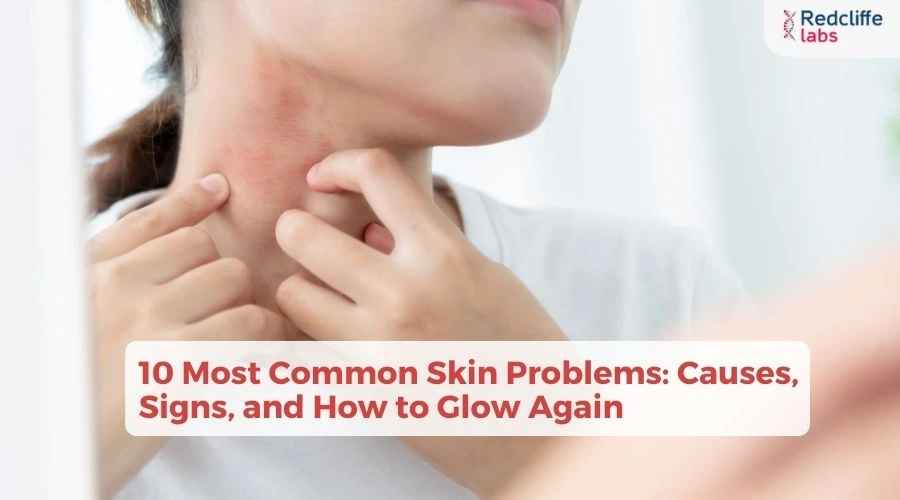
Your skin is more than just the outer layer of your body. It protects you from infections, regulates temperature, and reflects your overall health. But in today's fast-paced lifestyle filled with stress, pollution, irregular sleep, and changing diets, skin problems have become extremely common.
Many people experience issues such as acne, dryness, rashes, pigmentation changes, or itching at some point in their lives. Sometimes these conditions are temporary, but in other cases, they can persist for months and affect confidence, comfort, and overall well-being.
The good news is that most skin problems can be managed or treated effectively when you understand their causes and recognize their early signs.
In this blog, we will explore 10 of the most common skin problems, their causes, symptoms, and practical ways to restore your skin's natural glow.
Also Read: Strengthen Your Skin with Powerful Antioxidants
Why Are Skin Problems Becoming More Common?
Before discussing specific conditions, it's important to understand why skin issues are on the rise today. Several factors contribute to poor skin health:
- Environmental pollution
- Excessive sun exposure
- Hormonal changes
- Poor diet and dehydration
- Stress and lack of sleep
- Use of harsh skincare products
- Underlying medical conditions
In countries like India, heat, humidity, and pollution further increase the risk of skin infections, allergies, and fungal conditions. Recognizing the types of skin problems early helps prevent them from becoming severe.
Types of Skin Diseases You Should Never Ignore
1. Acne
Acne is the most common skin condition worldwide, affecting millions of people regardless of age or background. While we often associate it with the awkward years of high school, adult acne is a very real and frustrating reality. It isn't just about having dirty skin; in fact, over-scrubbing can often make it worse. Acne is a biological perfect storm that happens deep within your pores.
The Detailed Cause: Acne occurs when your hair follicles become plugged. This happens due to a trio of trouble: excess oil (sebum), dead skin cells, and bacteria. Your hormones are often the main culprit, especially during puberty, pregnancy, or that time of the month, because they signal your oil glands to go into overdrive. Diet also plays a role; high-sugar foods and dairy can spike insulin levels, which further trigger oil production. Finally, while stress doesn't directly cause a pimple, it releases cortisol, which worsens existing inflammation and slows the healing process.
Solution: The best way to fight acne is with a consistent, gentle routine rather than aggressive scrubbing. Look for active ingredients like Salicylic Acid, which acts like a pipe cleaner to dissolve the oil inside the pore, or Benzoyl Peroxide, which kills the bacteria that cause the red bump. Most importantly, resist the urge to pop! Popping a pimple pushes the bacteria deeper into the skin, leading to longer-lasting scars and more breakouts.
2. Eczema (Atopic Dermatitis)
If your skin feels like it's constantly thirsty, itchy, and irritated, you might be dealing with eczema. It's often called the itch that rashes because, interestingly, the itching usually starts before any redness actually appears. Eczema can show up anywhere, but it's most common in the "creases" of the body, like the inner elbows or behind the knees.
The Detailed Cause: Eczema is usually a mix of genetic and immune factors. Think of healthy skin like a sturdy brick wall; in people with eczema, that "mortar" between the bricks is weak or missing. This creates a leaky skin barrier that lets vital moisture out and allows irritants like dust, pollen, and harsh chemicals to crawl in. Common triggers include harsh soaps, wool fabrics, cold winter weather, or even pet dander. When the immune system senses these irritants, it overreacts, causing the red, flaky, and sometimes weeping patches we recognize as a flare-up.
Solution: The golden rule for eczema management is moisture, moisture, moisture. You want to repair that leaky barrier by using thick, fragrance-free creams or ointments (lotions are often too watery).
A great tip is the 3-minute rule: apply your moisturizer within 3 minutes of stepping out of a lukewarm shower to lock in the water in your skin. Avoid hot water at all costs, as it strips away the very oils your skin is struggling to produce.
3. Psoriasis
Psoriasis is often mistaken for simple dry skin, but it is actually a much deeper issue. It presents as thick, red patches covered with silvery scales, known as plaques. These patches can be itchy or even sore, and they tend to appear on the scalp, elbows, and knees. Unlike a simple rash, psoriasis is a chronic condition that requires long-term management.
The Detailed Cause: Psoriasis is an autoimmune condition, meaning your body's defense system accidentally attacks healthy skin cells. Normally, skin cells take about a month to grow and shed. With psoriasis, this process is sped up to just a few days. Because the old skin doesn't have time to fall off, the new cells pile up on the surface, creating those thick, scaly patches. Triggers can include infections (like strep throat), significant stress, or even a minor skin injury, such as a cut or a bad sunburn.
Solution: Since psoriasis starts inside the immune system, treatment often involves a two-step approach. Topically, steroid creams can help reduce the immediate inflammation and calm the skin. However, lifestyle changes are just as important. Many people find relief through specialized UV light therapy (monitored by a doctor) and by maintaining a healthy diet that reduces overall body inflammation. It's all about slowing down cell turnover.
4. Rosacea
Do you find yourself turning beet-red after a glass of red wine, a spicy taco, or a quick jog? That persistent blush is rosacea. This condition usually affects the center of the face, the nose, cheeks, and forehead. Over time, the redness can become permanent, and you might notice tiny, broken blood vessels or small, pus-filled bumps that look a lot like acne but don't respond to typical acne treatments.
The Detailed Cause: Scientists are still working to determine the exact cause of rosacea, but it appears to be a combination of genetic, immune system, and environmental factors. Some researchers even believe a tiny mite that lives on everyone's skin (called Demodex) might play a role in the inflammation for some people. Common triggers are very personal but usually involve anything that dilates blood vessels, such as sun exposure, heat, alcohol, and spicy foods.
Solution: The most effective treatment for rosacea is prevention through observation. Keep a skin diary to identify what makes you flush and try to avoid those triggers. Because the sun is the number one enemy of rosacea, wearing a gentle, mineral-based sunscreen every single day is non-negotiable. Look for ingredients like green tea extract or niacinamide, which help soothe the skin and reduce the appearance of redness.
5. Hives (Urticaria)
Hives are those itchy, raised welts that seem to appear out of nowhere and can disappear just as quickly. They can be as small as a mosquito bite or as large as a dinner plate, and they often "migrate," meaning a welt might vanish from your arm only to reappear on your leg an hour later.
The Detailed Cause: Hives are essentially an inflammatory allergic reaction. When your body perceives a threat, it releases a chemical called histamine into the bloodstream. Histamine makes your tiny blood vessels leak fluid, which causes the skin to swell into those characteristic welts. The triggers are endless: it could be a reaction to a new medication, a food allergy (like peanuts or shellfish), an insect sting, or even physical factors like extreme cold, heat, or intense stress.
Solution: For most cases, over-the-counter antihistamines are the first line of defense; they block histamine and help reduce swelling. Cooling the skin with a cold compress or a cool bath can also provide immediate itch relief. However, there is a serious side: if your hives are accompanied by swelling of the lips or tongue, or if you find it hard to breathe, you must seek emergency medical help immediately, as this could be a sign of a life-threatening allergic reaction.
6. Contact Dermatitis
Have you ever tried a new laundry detergent and ended up with an itchy, red rash exactly where your clothes touch your skin? Or maybe your neck broke out after wearing a new "gold-plated" necklace? That's contact dermatitis. It's a localized reaction to something your skin didn't like.
The Detailed Cause: This happens when you come into direct contact with a substance that either irritates your skin or triggers an allergic response. It's divided into two types:
Irritant: where a chemical (like bleach or a harsh soap) physically damages the skin,
Allergic: where your immune system recognizes a substance (like nickel in jewelry or the oils in poison ivy) as an invader. Fragrances and preservatives in skincare products are some of the most common "hidden" culprits.
Solution: To fix contact dermatitis, you have to play detective. Think about any new products, clothes, or environments you've encountered in the last 48 hours. Once you identify the trigger, the solution is simple: stop touching it! To soothe the existing rash, use a fragrance-free barrier cream or a bit of hydrocortisone to stop the itch. If the rash is on your hands, try wearing gloves when doing dishes or cleaning to give your skin a chance to heal.
7. Melasma
Melasma is a frustrating condition that causes brown or gray-brown patches to appear on the face, typically on the cheeks, bridge of the nose, forehead, and upper lip. It's often referred to as the mask of pregnancy because it is so incredibly common in expecting mothers, though it can affect anyone.
The Detailed Cause: Melasma is a complex interaction between hormones and sunlight. Female sex hormones (estrogen and progesterone) stimulate the pigment-producing cells in your skin, known as melanocytes. When these stimulated cells are hit by even a tiny amount of UV light from the sun, they go into overdrive, producing patches of dark pigment. This is why melasma often gets worse in the summer and improves in the winter. Birth control pills and heat (like from a sauna) can also be major triggers.
Solution: Sun protection is absolutely non-negotiable if you want to treat melasma. Even a few minutes of unprotected sun exposure can undo months of expensive treatments. Look for tinted sunscreens specifically; they contain iron oxides, which are the only ingredients that can block visible light (the light from your phone and the sun that we can see), a known trigger for melasma. Brightening ingredients like Vitamin C, Azelaic Acid, and Kojic Acid can also help fade the patches over time.
8. Fungal Infections
Fungi are everywhere, but they particularly love warm, damp, and dark environments. This is why fungal infections like Athlete's foot and ringworm tend to appear in skin folds or between the toes. While the name "ringworm" sounds scary, it's actually just a fungus, not a worm!
The Detailed Cause: These infections are caused by microscopic fungi that live on the dead tissue of your hair, nails, and outer skin layers. They are highly contagious and spread through direct contact. You can pick them up by sharing towels, walking barefoot in gym locker rooms or public showers, or even by cuddling a pet that has a fungal patch. Once the fungus finds a damp spot on your body, it begins to grow in a circular pattern, leading to the red, itchy, and scaly rings we often see.
The Humanized Solution: The key to beating a fungal infection is keeping the area bone-dry. After you shower, use a separate towel for the infected area so you don't spread spores elsewhere, or use a hairdryer on a "cool" setting to ensure no moisture is left behind. Over-the-counter antifungal creams usually work wonders, but you have to be consistent and keep applying the cream for at least a week after the rash seems to be gone to make sure every last spore is defeated.
Also Read: Top 5 Home Remedies to Soothe Skin Allergies Fast
9. Warts
Warts are small, grainy skin growths that often feel like a tiny cauliflower. While they are technically a skin infection, they are benign (non-cancerous). However, because they grow on visible areas such as the hands and feet, they can be a source of embarrassment and mild discomfort.
The Detailed Cause: Warts are caused by the Human Papillomavirus (HPV). There are many strains of this virus, and the ones that cause warts on your hands are generally harmless. The virus enters the skin through a tiny cut or scratch, even one you can't see. Once inside, it causes the top layer of skin to grow rapidly, creating the bump. And despite the old myths, you cannot get warts from touching a frog or a toad!
Solution: Most warts will eventually go away on their own as your immune system recognizes the virus, but this can take months or even years. If you want them gone sooner, you can use over-the-counter salicylic acid treatments to peel the wart off, layer by layer, slowly. For a faster fix, a dermatologist can freeze the wart off with liquid nitrogen. A weird but often effective home tip? Covering the wart with duct tape can sometimes irritate the skin enough to alert your immune system to the virus's presence.
10. Skin Cancer Awareness
While it's the scariest topic on this list, it's also the most important. Most skin cancers, including Basal Cell and Squamous Cell Carcinomas, are highly treatable and often 100% curable if caught in the early stages. This is the one "skin problem" where being proactive can truly save your life.
The Detailed Cause: The primary cause is cumulative damage from UV radiation, either from the sun or from indoor tanning beds. UV rays damage the DNA in your skin cells. Over time, this damage builds up until the cells begin to grow uncontrollably, forming a tumor. People with fair skin, light eyes, or a history of bad sunburns are at higher risk, but skin cancer can affect people of all skin tones.
Solution: The best thing you can do is get to know your skin. Once a month, do a "mole check" using the ABCDE rule:
- Asymmetry: One half doesn't match the other.
- Border: The edges are ragged or blurry.
- Color: The spot has multiple colors or shades.
- Diameter: It's larger than a pencil eraser.
- Evolving: The spot is changing in size, shape, or color. If you see anything that looks like an ugly duckling, a spot that just doesn't look like the others, make an appointment with a dermatologist right away.
Final Thoughts
At the end of the day, your skin is a living, breathing organ that is doing its best to protect you. Instead of getting angry at a breakout or a dry patch, try to see it as a message from your body. Whether it's telling you to drink more water, get more sleep, or finally wear that sunscreen, listening to your skin is the first step toward a healthy glow.
Be patient with your progress. Skin cells renew every 30 days, so any new routine will need at least a month to show results. Keep it simple, keep it gentle, and remember that perfect skin doesn't exist, but healthy, happy skin certainly does!
Along with that, keep track of your overall health by booking a full-body checkup with Redcliffe Labs. They provide a smart report that is easy to understand and helps you take further action.
FAQs
What are the most common skin problems people experience?
The most common skin problems include acne, dryness, eczema, fungal infections, allergies, pigmentation, and sunburn. Many people also experience rashes, itching, or redness due to pollution, weather changes, or lifestyle habits. While some skin issues are temporary, others may need proper care and medical attention to improve.
What causes common skin problems?
Skin problems can happen for many reasons, including pollution, poor hygiene, hormonal changes, stress, allergies, infections, or excessive sun exposure. Sometimes genetics or underlying health conditions also play a role. Using harsh skincare products or having an unhealthy lifestyle can further damage the skin and trigger different skin conditions.
Can stress cause skin problems?
Yes, stress can affect your skin in several ways. When the body is under stress, it releases hormones that can trigger acne, eczema flare-ups, and skin sensitivity. Stress may also weaken the skin's natural barrier, making it more prone to irritation, dryness, and infections over time.
How do allergies affect the skin?
Allergies can cause the immune system to react to certain substances, such as food, cosmetics, dust, or chemicals. This reaction may lead to itching, redness, swelling, rashes, or hives on the skin. Identifying and avoiding the trigger is important to prevent repeated allergic reactions and discomfort.
Can diet affect skin health?
Yes, what you eat can directly impact your skin. Diets high in processed foods, sugar, and unhealthy fats may trigger acne and inflammation. On the other hand, foods rich in vitamins, antioxidants, and healthy fats help nourish the skin, support repair, and maintain a natural glow.
What are the early signs of a skin infection?
Early signs of a skin infection often include redness, itching, swelling, warmth, or small bumps. Sometimes the area may become painful or develop pus-filled spots. If these symptoms spread quickly or worsen, it is important to seek medical advice for proper treatment.
Are skin problems contagious?
Not all skin problems are contagious. Conditions such as acne, eczema, and psoriasis cannot spread from person to person. However, some infections caused by bacteria, viruses, or fungi, such as ringworm or impetigo, can spread through direct contact or shared personal items.
How can I prevent common skin problems?
Preventing skin problems often starts with simple habits like maintaining good hygiene, staying hydrated, eating a balanced diet, and protecting your skin from the sun. Using gentle skincare products and managing stress can also help keep your skin healthy and reduce the risk of common skin issues.