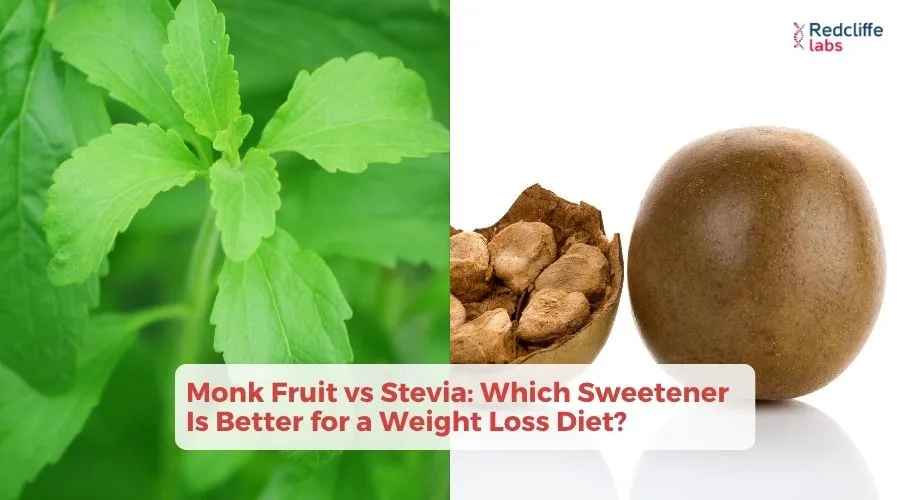
Monk Fruit vs Stevia: Which Sweetener Is Better for a Weight Loss Diet?

Medically Reviewed By
Dr. Gurpreet Kaur Malik
Written By Kirti Saxena
on Mar 26, 2026
Last Edit Made By Kirti Saxena
on Mar 26, 2026
Are you trying to cut back on sugar but still craving something sweet? You are not alone. Many people try to cut back on sugar to lose weight, but fail because they haven't found a better alternative. Sugar cravings can slow down your weight loss journey. They can increase calorie intake, trigger overeating, and even affect blood sugar levels. In fact, high sugar consumption links strongly with obesity and lifestyle diseases like diabetes.
So, what’s the solution? This is where natural sweeteners like monk fruit and stevia come in. They promise sweetness without calories. Both monk fruit and stevia are safe sweeteners for people with diabetes. But the real question is, which one actually works better for weight loss?
In this blog, you will learn how monk fruit and stevia work, their benefits and side effects, and which one suits your weight-loss goals better.
Difference Between Monk Fruit and Stevia
Monk Fruit
Monk fruit sweetener comes from a small green fruit called monk fruit (Luo Han Guo), which grows in Southeast Asia. People have used it for centuries in traditional medicine. The sweetness comes from the compounds called mogrosides from the fruit. These compounds give monk fruit its intense sweetness without adding calories. Monk fruit is 150-200 times sweeter than sugar, so you need only a small amount.
Monk fruit contains zero calories and does not raise blood sugar levels; hence, it is good for people with diabetes and those looking for weight-loss sweet options. Monk fruit makes a good natural sugar substitute for those who want clean, simple ingredients.
Stevia
Stevia comes from the leaves of the stevia plant, native to South America. People have used it as a natural sweetener for many years. The sweetness comes from the compound steviol glycoside, found in the leaves. These compounds provide sweetness without calories. Stevia is even sweeter than monk fruit. It is 200–300 times as sweet as sugar.
Stevia contains zero calories and does not spike your blood sugar levels. It is widely available at affordable prices. It has also become one of the most popular sugar alternatives worldwide.
Nutritional Comparison: Monk Fruit vs Stevia
| Factor | Monk Fruit | Stevia |
| Calories | 0 | 0 |
| Glycemic Index | Does not raise blood sugar | Does not raise blood sugar |
| Carbohydrates | Negligible | Negligible |
| Sweetness Level | 150–200x sweeter than sugar | 200–300x sweeter than sugar |
| Additives | Often mixed with erythritol or other fillers | Often blended with additives or sugar alcohols |
| Natural Compounds | Mogrosides | Steviol glycosides |
Both sweeteners support weight loss by reducing calorie intake. However, product quality matters because many brands add fillers.
How Monk Fruit Helps in Weight Loss
Monk fruit can support your weight loss journey in several ways.
- Helps Maintain Calorie Deficit: Weight loss depends on burning more calories than you consume. Monk fruit adds sweetness without adding calories, making it easier to stay in a calorie deficit.
- Does Not Spike Insulin: Monk fruit does not increase blood sugar or insulin levels. Stable blood sugar helps prevent fat storage and cravings.
- Reduces Sugar Cravings: You can satisfy your sweet tooth without consuming sugar. This helps reduce overeating and unhealthy snacking.
- Supports Sustainable Dieting: Because monk fruit tastes closer to sugar, many people find it easier to stick to their diet long term.
How Stevia Helps in Weight Loss
Stevia also supports weight management effectively.
- Zero-Calorie Sweetener: Stevia helps you cut calories without sacrificing sweetness.
- Helps Reduce Sugar Intake: Replacing sugar with stevia lowers overall calorie intake, which helps in fat loss.
- Supports Blood Sugar Control: Stevia does not raise blood glucose levels. This is good for people with diabetes or those who want to lose weight.
- Suitable for Diet-Friendly Recipes: You can use stevia in tea, coffee, desserts, and beverages without adding calories.
Taste Comparison: Monk Fruit vs Stevia
Taste plays a big role in choosing a sweetener.
Monk Fruit
- Mild and smooth sweetness
- Slight fruity taste
- No strong aftertaste
Stevia
- Sweet but may taste slightly bitter
- Some people notice a licorice-like aftertaste
Most people find monk fruit closer to the taste of sugar. Stevia works well but may not suit everyone’s taste preference.
Side Effects of Monk Fruits Vs Stevia
Both sweeteners are generally safe, but you should still be aware of possible issues.
Monk Fruit
- Safe for most people
- Rare digestive issues due to added ingredients
- No known major side effects
Stevia
- May cause bloating or discomfort in some people
- Can have a bitter aftertaste
- Highly processed versions may contain additives
- Always choose high-quality, pure products to reduce side effects
Which Is Better for Weight Loss?
Both monk fruit and stevia help reduce calorie intake, which supports weight loss. However, the better option depends on your personal preference.
Monk Fruit
- Safe for most people: Monk fruit is a natural sweetener that most people tolerate well. It does not affect blood sugar and rarely causes problems.
- Rare digestive issues (due to additives): Pure monk fruit usually does not cause discomfort. However, many products mix it with sugar alcohols, such as erythritol. These added ingredients can sometimes cause bloating, gas, and mild stomach discomfort.
- No major side effects: No strong scientific reports show serious side effects from monk fruit when consumed in normal amounts.
Stevia May Be Better If:
- May cause bloating or discomfort: Some people may experience digestive issues, such as bloating or mild stomach upset, especially when consuming processed stevia products.
- Bitter aftertaste: Stevia can leave a slightly bitter or licorice-like aftertaste. This is not harmful, but it can affect your overall experience.
- Highly processed products may contain additives: Many commercial stevia products include fillers like dextrose or maltodextrin. These can add unwanted calories, affect digestion, and reduce the overall health benefits.
Who Should Choose Monk Fruit Vs Stevia?
You should choose monk fruit if you:
- Dislike the aftertaste of stevia
- If you want a clean and natural sweetener
- If you want to focus on long-term diet sustainability
- Prefer smoother taste in beverages and foods
You should choose stevia if you:
- Have diabetes and need sugar control
- Want a cost-effective sweetener
- Already like its taste
- Use sweeteners regularly in cooking
Well, you can use both monk fruit and stevia. You can alternate between them based on recipes, use monk fruit in drinks and desserts, and use stevia in cooking or baking.
Wrapping Up
Both monk fruit and stevia offer healthier alternatives to sugar. They help reduce calorie intake and support weight loss. Well, both options are best for sweeteners. The right choice depends on your taste, health goals, and how your body responds. Make mindful choices. Reduce sugar gradually. And choose a sweetener that helps you stay consistent on your weight loss journey.
FAQ’s
1. Which is the best sweetener for weight loss?
Monk fruit and stevia both contain zero calories and do not raise blood sugar. Choose one that suits your taste, supports your diet, and helps you stay consistent.
2. Which is good, monk fruit sweetener or stevia?
Both monk fruit sweetener and stevia are good alternatives to sugar. Monk fruit offers a smoother taste, while stevia is more widely available and affordable. You should choose based on taste preference, product quality, and how your body responds.
3. Is monk fruit sweetener bad for weight loss?
Monk fruit sweetener is not bad for weight loss. It contains zero calories and does not raise blood sugar levels. It can help reduce sugar intake and support calorie control.
4. Can we take stevia for weight loss?
Yes, you can take stevia while losing weight. It contains zero calories and helps reduce sugar intake. It supports better blood sugar control so you can enjoy sweets without adding extra calories to your daily diet.