Congenital Adrenal Hyperplasia: What Every Parent and Patient Should Know

Imagine a little girl who is just born, and soon after, the parents are informed about their baby girl's hormone levels being unusually elevated, which can have long-term health implications throughout her lifetime. Or imagine a young boy developing body hair prematurely and growing faster than his peers, but whose bones might grow prematurely due to a medical condition. Regretfully, the scenario described above is a very real one faced by countless people around the world, starting with a medical condition known as congenital adrenal hyperplasia.
If you have recently heard this term from a doctor, or if you are a parent whose child was flagged in a newborn screening test, you probably have many questions. Is congenital adrenal hyperplasia dangerous? Is it treatable? How does it affect one's life? All of the questions stated above, and more, will be answered in the context of this blog.
Congenital adrenal hyperplasia (CAH) is an inherited disorder of hormones in the adrenal glands. It occurs from birth, which is indicated by the use of the word 'congenital', and can occur in mild and severe cases, depending on the particular disorder. Understanding this condition is the first step toward managing it well.
What Is Congenital Adrenal Hyperplasia?
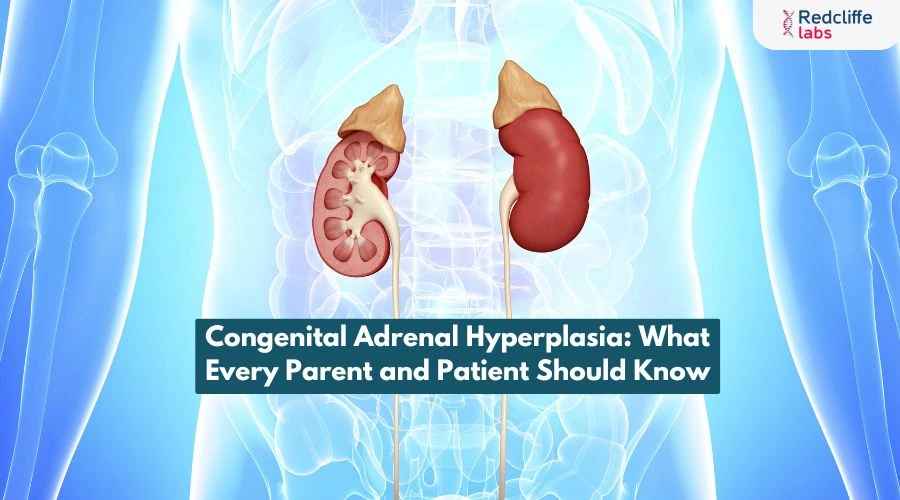
The adrenal glands are two small, triangular-shaped glands located on top of each kidney. Although small in size, the adrenal glands play a crucial role, producing hormones essential for regulating processes such as the body's response to stress, blood pressure, metabolism, and sexual development.
Under normal circumstances, the adrenal glands function through a series of enzymatic reactions to produce these hormones. However, in CAH, a specific enzyme required for hormone production is deficient or absent, disrupting the normal synthesis of adrenal hormones. The most commonly affected enzyme is 21-hydroxylase, which leads to inadequate levels of the hormones cortisol and aldosterone. As a result, the adrenal glands produce excess amounts of androgens (male sex hormones), which leads to enlargement of the adrenal glands; hence the term 'hyperplasia.'
According to the National Institutes of Health, the prevalence of CAH is 1 per 10,000 to 1 per 18,000 births. Both sexes can have CAH, but the symptoms may vary according to the child's gender.
What Causes Congenital Adrenal Hyperplasia?
Congenital adrenal hyperplasia (CAH) is due to mutations in genes encoding enzymes involved in hormone synthesis.
The most frequent defect causing this disorder is 21-hydroxylase deficiency, which accounts for 90%-95% of all cases of CAH.
Some other enzyme deficiencies are:
- 11-beta hydroxylase deficiency
- 17-alpha hydroxylase deficiency
- 3-beta hydroxysteroid dehydrogenase deficiency
- Steroidogenic acute regulatory protein deficiency
As mentioned above, because these enzymes are responsible for cortisol synthesis, their deficiency causes imbalances that lead to CAH.
Types of Congenital Adrenal Hyperplasia
There are two main forms of congenital adrenal hyperplasia. Understanding the difference between the two is important because it affects symptom severity and how the condition is managed.
Classic CAH
This is the most serious form, discovered either immediately at birth or shortly after. Classic CAH is further divided into two different forms:
- Salt-wasting CAH: This is a more severe subtype in which the body loses its ability to retain sodium. Sodium helps regulate normal blood pressure, and this can lead to a life-threatening adrenal crisis in newborns if not treated promptly.
- Simple virilizing CAH: This is a slightly less severe case because the body produces enough aldosterone to avoid salt wasting. However, excess androgen production can cause virilization and signs of early puberty.
Non-classic CAH
This is a milder form of CAH, also known as late-onset CAH. It is usually diagnosed later in life, such as in childhood, adolescence, or even adulthood. Symptoms are not as intense and can include mild skin acne, early development of pubic hair, irregular periods, and fertility issues in women. Non-classic CAH is much more common than the classic form and is often overlooked for years because its symptoms overlap with those of other conditions.
Also read:
Symptoms of Congenital Adrenal Hyperplasia
Symptoms of CAH vary depending on the type and severity of the condition as well as the patient's gender.
The following are the common signs of CAH:
For Babies and Infants
- Ambiguous external genitalia in female newborns with classic CAH
- Feeding difficulties, vomiting, and dehydration in cases of salt-wasting CAH
- Low blood pressure and low sodium levels (hyponatremia)
- Lethargy or weakness
In Children and Adolescents
- Premature development of pubic and armpit hair (under 8 years old in females, under 9 years old in males)
- Fast growth in the early stages, then shorter than expected for their age.
- Acne and oily skin
- Early signs of puberty, including voice deepening in boys
In Adult Women
- Irregular or no periods
- Facial hair in women (hirsutism)
- Fertility issues
- Acne
- Difficulty conceiving in some cases
When Can CAH Become a Medical Emergency?
In most cases, congenital adrenal hyperplasia is a manageable condition. However, the salt-wasting can be life-threatening if not treated in time.
Signs of an Adrenal Crisis That Require Immediate Medical Attention Include:
- Severe vomiting
- Severe dehydration
- Extreme weakness or lethargy
- Low blood pressure
- Low blood sugar
- Confusion or loss of consciousness
- Shock
Adrenal insufficiency is a medical emergency that may occur when cortisol levels become dangerously low, especially during illness, surgery, or severe stress.
Congenital Adrenal Hyperplasia: Diagnosis and Emergency Treatment
The most common way CAH is diagnosed today includes:
1. Newborn Screening Programs
These are standard methods in many countries, including India. CAH screening is often a part of routine newborn blood tests:
2. Blood Tests
Healthcare providers collect a small amount of blood from the baby's heel within the first few days of life and analyze it for elevated levels of 17-hydroxyprogesterone (17-OHP). Additionally, blood tests can measure :
- Cortisol
- Aldosterone
- Electrolytes
- Androgen Levels
3. Genetic Testing
A follow-up confirmatory blood test is done if the screening test comes back positive. Doctors may recommend genetic testing to identify mutations associated with CAH and help confirm the diagnosis.
4. ACTH (Adrenocorticotropic Hormone) Stimulation Test
In some cases, an ACTH stimulation test may be performed further to evaluate the adrenal glands' response to stress.
5. Imaging Tests
Imaging may sometimes be required to evaluate the adrenal glands or reproductive organs when additional information is needed.
Also read:
https://redcliffelabs.com/myhealth/womens-health/what-is-the-purpose-of-prenatal-screening/
Treatment and Management of CAH
The good news is that congenital adrenal hyperplasia (CAH) can be effectively managed with appropriate treatment. However, there is currently no permanent cure for CAH; many people living with the condition live healthy, fulfilling lives.
1. Hormone Replacement Therapy
Doctors may prescribe medications to replace missing hormones the body cannot produce on its own.
- Hydrocortisone is commonly used to replace cortisol.
- Fludrocortisone is used for those with salt-wasting CAH to replace aldosterone.
- Sodium supplements may be required in infants during their first year of life.
2. Monitoring and Follow-up
Individuals with CAH need continuous monitoring with an endocrinologist, a specialist in hormone disorders. Blood tests are performed to check hormone levels and adjust medication dosages as per the individual's needs.
Bone age assessments may also be taken in children to monitor growth.
3. Surgical Management
However, in certain situations, surgery may be considered in selected cases of significant genital virilization. Surgical decisions are deeply personal and require extensive discussions among a multidisciplinary medical team and families.
4. Stress Dose Steroids
Learning "stress dosing" of steroid medication during illness, injury, or surgery is essential for people with classic CAH.
Living With Congenital Adrenal Hyperplasia
Individuals with Congenital Adrenal Hyperplasia (CAH) can lead active, fulfilling lives with the help of adequate medical attention and support. Kids with CAH can go to school, do sports, and generally develop like other kids.
Adults can work, have relationships, and in many cases have children of their own.
Helpful Management Strategies Include:
- Regular follow-up appointments and open communication with the healthcare team.
- Address the emotional and psychological aspects of growing up with CAH.
- Taking medications exactly as prescribed
- Maintaining a healthy lifestyle
- Wearing a medical identification bracelet
Education about the condition empowers patients and families to respond confidently during medical emergencies.
Can Congenital Adrenal Hyperplasia Be Prevented?
Because CAH is an inherited genetic condition, it cannot be prevented.
On the other hand, families that have a medical history of CAH may benefit from:
- Genetic counseling
- Carrier screening
- Prenatal testing
These measures can help families understand potential risks and make informed decisions.
Conclusion
Congenital adrenal hyperplasia (CAH) is a genetic hormonal disorder that disrupts adrenal gland function, thereby affecting the synthesis of essential hormones such as cortisol and aldosterone. Symptoms can vary based on the type and severity of the condition.
With the right care, early diagnosis, and consistent follow-up, most people with CAH lead full, healthy lives.
Here is a quick summary of what to keep in mind:
- CAH is a genetic disorder that is present at birth.
- Approximately 90-95% of cases are caused by 21-hydroxylase deficiency.
- Early diagnosis prevents serious complications.
- Treatment and monitoring are often required.
- Most people with CAH can live healthily.
Routine health check-ups and diagnostic tests help manage hormone disorders. Trusted diagnostic service providers like Redcliffe Labs can assist patients with accurate testing and health insights when recommended by their healthcare provider.
To support better health management, every test at Redcliffe Labs comes with 4X Value Benefits:
- Smart Reports: Easy-to-understand reports with health scores, trend tracking, and actionable insights.
- Expert Consultation: Professional guidance to help interpret results and understand the next steps.
- AI Health Assistant: Round-the-clock support for health-related questions and report clarification.
- Personalized Health Plans: Tailored diet and lifestyle recommendations to support individual health goals.
FAQs
-
Is congenital adrenal hyperplasia a lifelong condition?
Yes, congenital adrenal hyperplasia is a genetic disorder that is usually lifelong. However, although there is no cure for this condition, hormone replacement therapy and follow-up visits will allow one to live an almost normal and healthy life. People with CAH can live long, healthy, and active lives if they receive proper treatment and see their doctor regularly.
-
Can congenital adrenal hyperplasia be detected before birth?
It depends. There are prenatal tests that are used to diagnose this disease during pregnancy in cases where the family has a known history of congenital adrenal hyperplasia. In such situations, patients can undergo genetic counseling to assess the risk and discuss available testing options, helping parents make informed decisions during pregnancy.
-
What is the most common type of congenital adrenal hyperplasia?
The most common type of congenital adrenal hyperplasia is 21-hydroxylase deficiency, which accounts for the majority of CAH cases. The deficiency affects cortisol production and may also reduce aldosterone levels while increasing androgen production, leading to the characteristic symptoms associated with the condition.
-
Can adults develop symptoms of congenital adrenal hyperplasia?
Yes, people with a condition called nonclassic congenital adrenal hyperplasia may not exhibit symptoms until their teenage or adult years. Some of the symptoms may include irregular menstrual cycles, acne, excessive body hair growth, fertility problems, or hair loss at a young age. Because symptoms can resemble those of other hormonal disorders, a proper medical evaluation is important for an accurate diagnosis.
-
What happens if congenital adrenal hyperplasia is left untreated?
If left untreated, several complications may arise due to congenital adrenal hyperplasia: dehydration, electrolyte imbalance, growth issues, fertility issues, and adrenal crisis. In severe cases, adrenal crisis is one of the most dangerous complications that may arise due to congenital adrenal hyperplasia. Early diagnosis, appropriate treatment, and regular monitoring are essential to prevent complications and support long-term health.