Blood Clot in the Eye: Types, Causes, Tests & Treatment

Medically Reviewed By
Dr. Mayanka Lodha Seth
Written By Sheena Mehta
on Jan 27, 2026
Last Edit Made By Sheena Mehta
on Feb 9, 2026

So, you have noticed a blood clot in your eye. Don’t panic.
A bright red patch on the white of the eye, known as subconjunctival hemorrhage, is usually harmless. It often looks like a bruise on the skin and typically resolves on its own within 1-2 weeks.
However, in some cases, red patches or clots in the eye may indicate underlying eye problems or more serious conditions, especially if accompanied by pain, vision changes, or recurring episodes.
This blog explores the blood clot in the eye types, symptoms, causes, and also highlights the frequently asked questions for general awareness and enhancing your reading experience
Tests to Detect Red Clots In the Eyes
Eye clots or bleeding can occur on the surface, inside the front of the eye, or in the retina. Specialists may use:
- Eye Examination: Detects surface bleeds and retinal blockages.
- Optical Coherence Tomography (OCT): Imaging for retinal and macular blood clots.
- Fluorescein Angiography: Identifies blocked or leaking retinal vessels.
- Eye Ultrasound: Detects vitreous hemorrhage or internal eye bleeding.
Additional Tests:
- Blood Tests: Checks for diabetes, high blood pressure, clotting disorders, or cholesterol issues.
- D-dimer Test: It may also be considered to evaluate systemic clotting disorders.
Types of Blood Clots in the Eye
Eye blood clots are segregated into two categories: Harmless Surface Clots & Harmful Internal Clots
1. Harmless Surface Clots
Subconjunctival Hemorrhage (SCH):
- It is a bright red patch on the white surface of the eye.
- It is usually painless and does not affect vision.
- It heals on its own within 1-2 weeks
2. Serious Internal Clots
Hyphaema
- The blood collects between the iris and the cornea.
- It can cause blurred vision, pain, light sensitivity, and increased eye pressure.
Vitreous Hemorrhage
- Bleeding into the jelly-like vitreous humor of the eye.
- It can cause floaters, shadows, and sudden painless vision loss.
Retinal Vein or Artery Occlusion
- It is a serious blockage of the blood vessels that prevents oxygen from reaching the retina.
- It can cause sudden, painless vision loss and requires urgent medical care.
Risk Factors that Increase the Chances of Blood Clots in the Eye
Key factors include:
|
Risk Factors |
Description |
Impact on Eye Health |
|
Age-Related Factors |
Adults aged 40 and above |
Increased risk of central retinal vein occlusion (CRVO). |
|
Medications |
Blood Thinners |
Increase bleeding risk, may worsen existing eye problems, and delay healing. |
|
Cardiovascular Issues |
Hypertension (High Blood Pressure) |
Blocked blood flow, retinal bleeding, and swelling of the optic nerve. |
|
Diabetes |
Poor blood sugar control damages small blood vessels in the eye. |
Increase risk of retinal bleeding, vitreous hemorrhage, and eye clots. |
|
Blood Disorders |
Anemia, clotting disorders |
Increase the risk of retinal and vitreous hemorrhage and eye clots. |
Symptoms of Blood Clots in the Eye
Common blood clot in eye symptoms:
- Red patch on the white of the eye
- Sudden blurred or dim vision
- Dark spots, shadows, or floaters in vision
- Eye pain or pressure (especially with hyphaema)
- Sudden vision loss (possible retinal vein/artery blockage)
Also read:
https://redcliffelabs.com/myhealth/general-health/dry-eyes-causes-symptoms-prevention-and-treatment/
Causes
Knowing the causes of blood clots in the eye can help a professional determine whether the condition is harmless or a sign of a serious eye or systemic disorder.
1. For Subconjunctival Haemorrhage
Common causes include:
- Sudden coughing, sneezing, vomiting, or straining
- Minor eye trauma or rubbing the eyes
- High blood pressure (hypertension)
- Blood-thinning medications such as aspirin or anticoagulants
- Diabetes or fragile blood vessels due to aging
- Contact lens misuse
- Possible vitamin deficiencies, such as vitamin C and vitamin K deficiencies, do not directly cause SCH but may increase susceptibility.
2. For Retinal Haemorrhage
Common causes include:
- Diabetic retinopathy
- Severe or uncontrolled hypertension
- Retinal vein or artery occlusion (blood clots in retinal vessels)
- Trauma or head injury
- Blood disorders such as anemia, leukemia, or clotting abnormalities
- Age-related macular degeneration (AMD)
- Possible vitamin deficiencies include vitamin B12 deficiency, folate deficiency, vitamin C deficiency, and vitamin E imbalance.
For Vitreous Hemorrhage
Common causes include:
- Diabetic retinopathy
- Retinal tear or detachment
- Eye trauma or injury
- Retinal vein occlusion
- Abnormal blood vessel growth (neovascularization)
- Complications after eye surgery
- Possible vitamin deficiencies include vitamin C, vitamin A, and vitamin B-complex deficiencies.
For Hyphaema
Common causes include:
- Blunt or penetrating eye injury
- Sports-related trauma
- Eye surgery or laser procedures
- Bleeding disorders like hemophilia and sickle cell disease
- Use of blood-thinning medications
- Rarely, eye tumors or inflammation
- Possible vitamin deficiencies include vitamin K, vitamin C, and vitamin A.
Also read:
https://redcliffelabs.com/myhealth/web-stories/6-vegetables-that-are-good-for-your-eye-health/
Tips to Treat An Eye Blood Clot (Subconjunctival Hemorrhage)
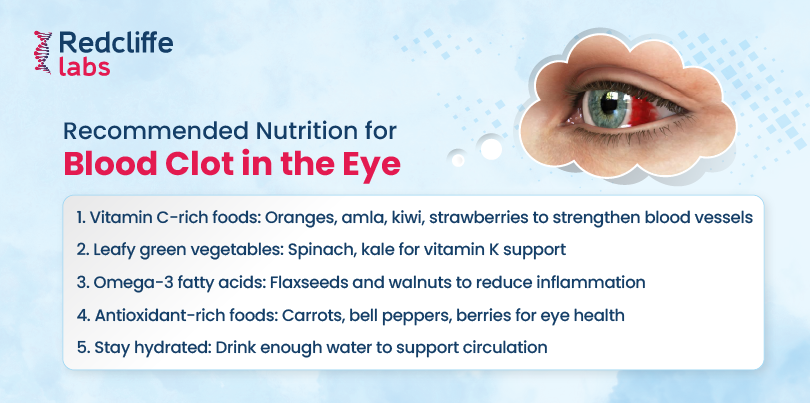
Various treatments are available to treat both minor and serious clots.
For Minor Surface Clots (Subconjunctival Hemorrhage):
Rest your eyes: Do not rub your eyes, avoid straining at screens for long periods, or engaging in intense physical activity.
Use eye drops: Apply lubricating drops to relieve dryness or irritation.
Use a cold compress: Apply it immediately after an injury to reduce swelling.
Give it time: Most eye bleeds heal on their own within 1-2 weeks, changing color like a bruise.
Also read: https://redcliffelabs.com/myhealth/home-remedies/sore-eyes-remedies/
For More Serious Eye Clots (Hyphema, Retinal)
- Seek medical attention immediately: These are serious eye conditions that need urgent care from a medical specialist.
- Rest with your head raised: Keep your head elevated, even while sleeping, to help reduce pressure and bleeding.
- Protect your eye: Wear eye protection or a patch to prevent rubbing or further injury.
- Take medications as prescribed: Doctors may recommend eye drops, antibiotics, or antiviral medications to reduce swelling or eye pressure. Avoid painkillers, as they may increase the risk of bleeding.
Prevention Tips
Here are a few effective tips to prevent a blood clot in the eye:
Manage Conditions
- Manage conditions such as blood pressure, diabetes, and cholesterol levels.
- Avoid smoking and limit alcohol use.
- Maintain a healthy weight.
- Stay physically active.
- Wear protective eyewear during physical activities or hazardous work.
- Regular eye checkups are crucial, especially if you are over 40 or have a family history of eye disease.
When to See A Doctor
In most cases, bleeding in the eye occurs due to Subconjunctival Hemorrhage (SCH) and resolves on its own, minimizing the need for treatment.
However, seek medical attention if you notice:
- Sudden vision changes or partial/complete vision loss
- Eye pain or pressure
- Bleeding after an eye injury
- Floaters or shadows in vision
- Recurrent eye bleeding without a clear cause
Takeaway
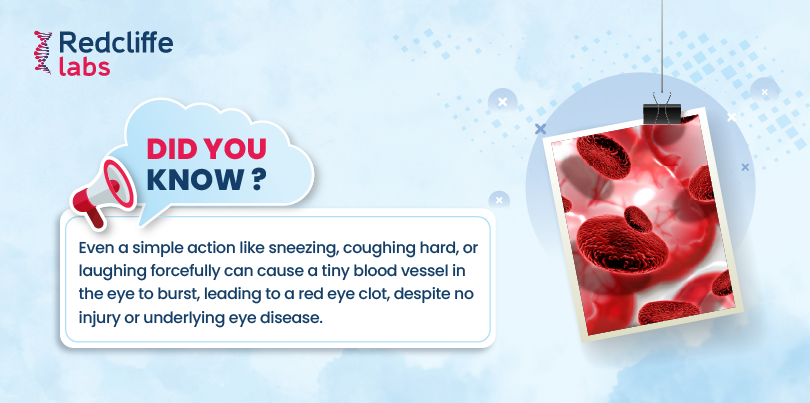
Red clots in the eye, officially also known as (Subconjunctival Hemorrhage), can occur when there is bleeding underneath that covers the white part of the eye. Most often, it is spontaneous, due to minor causes such as rubbing the eye, coughing, or even sneezing.
However, it can be severe following trauma, surgery, or due to some bleeding disorders, clotting disorders, or if the person is on blood thinners due to BP, hypertension, or diabetes.
Nevertheless, there could be blood clots in other parts of the body that you cannot see. Hence, it needs to be investigated.
FAQs
Is a blood clot in the eye dangerous?
A blood clot in the eye is usually not dangerous if it is a subconjunctival hemorrhage. It might look alarming, but it is harmless.
Clots inside deeper eye structures may indicate complications such as retinal vein occlusion and need urgent medical attention to prevent vision loss.
How to cure red clots in the eye?
Blood clots in the eye usually resolve on their own in 1-2 weeks. Resting the eyes, using artificial tears, avoiding eye rubbing, and managing blood pressure help recovery. Applying cold compresses in the first 24 hours may reduce redness. Consult a doctor if symptoms worsen or recur frequently.
What are the symptoms of a blood clot in the eye?
Common symptoms associated with a blood clot in the eye:
- Bright red patch on the white part of the eye
- Mild irritation
- Gritty feeling
- No vision change
- Fullness without affecting vision or causing pain.
Usually, there is no pain or vision loss. Serious eye clots may cause blurred vision, eye pain, headaches, or partial vision blockage.
Does the red clot in the eye go away?
Yes. In most cases, red clots in the eye resolve on their own within 7-14 days as the blood slowly reabsorbs. You may notice a color change from red to yellow or brown before clearing. No treatment is usually required unless symptoms worsen or recur frequently.
What are the best ways to heal broken blood vessels in the eye fast?
To heal broken blood vessels in the eye fast:
- Apply a cold compress
- Switch to a warm compress
- Rest
- Avoid irritants
- Stay hydrated
- Avoid blood thinners
- Protect your eyes
Using lubricating eye drops and controlling blood pressure can further support healing. There is no instant cure, but recovery is usually quick.
What is the home remedy for an eye clot?
Home remedies for eye clot include:
- Applying a cold compress for the first 24 hours, then warm compresses
- Use artificial tears
- Avoid screen overuse
- Staying hydrated.
- Eat vitamin C–rich foods, as they help strengthen blood vessels.
- Do not apply herbal substances directly into the eyes.
- Adequate sleep also helps speed up healing.
What is to be avoided with a broken eye vessel in the eye?
Avoid rubbing your eyes, heavy lifting, intense exercise, smoking, excessive screen time, and straining during coughing or constipation. Do not use steroid or medicated eye drops without medical advice. Also, avoid contact lenses until the eye fully heals to prevent irritation. Managing stress and controlling blood pressure can reduce recurrence.
Leave a comment
Related Posts

Health
Importance of Heart Health Before Pregnancy: Everything You Need to Know
Health
Migraine Treatment at Home: Effective Ways to Relieve Migraines Naturally
Health
High SGPT and SGOT Levels: Causes, Symptoms, Normal Range & When to Worry
Health
What is SGPT in Blood Reports? Everything You Need to Know