10 Common Cellulitis Symptoms You Should Never Ignore

Medically Reviewed By
Dr. Mayanka Lodha Seth
Written By Anjali Dubey
on Mar 18, 2026
Last Edit Made By Anjali Dubey
on Mar 18, 2026
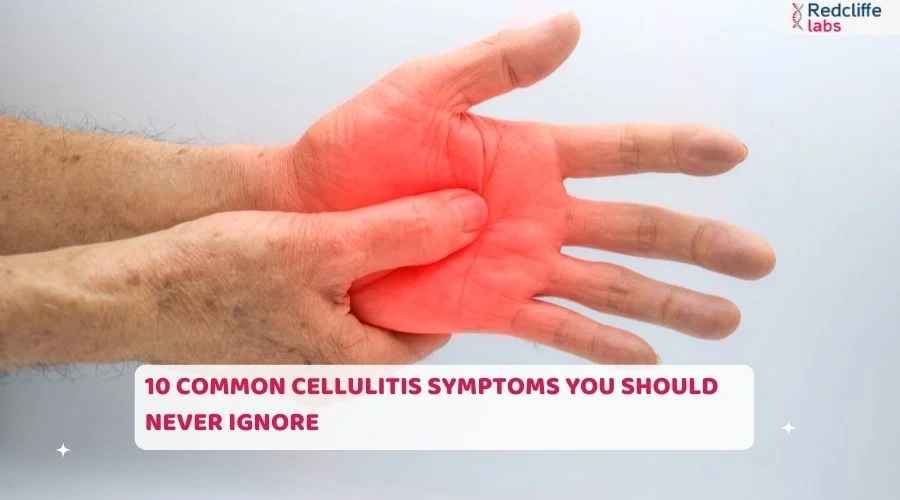
What if that small patch of red skin is actually your body asking for urgent attention? Many people ignore mild skin redness, swelling, or tenderness, assuming it is just a minor irritation or insect bite. However, sometimes these symptoms may be signs of cellulitis, a bacterial skin infection that can spread quickly if not treated in time.
Cellulitis usually begins when bacteria enter the skin through small cuts, scratches, or wounds. At first, the symptoms may appear mild, but they can worsen rapidly and lead to serious complications if ignored. Recognizing the early warning signs is extremely important because timely treatment can prevent the infection from spreading deeper into the body.
In this blog, we will explore 10 common cellulitis symptoms you should never ignore, why they occur, and when it is important to seek medical attention. Understanding these symptoms can help protect your skin and overall health.
What Is Cellulitis?
Cellulitis is a bacterial infection that affects the deeper layers of the skin and the tissues beneath it. It usually develops when bacteria enter the body through small cuts, scratches, insect bites, or open wounds. Once the bacteria enter the skin, the infection can start spreading and cause inflammation. Cellulitis most commonly affects areas like the legs, feet, arms, and sometimes the face. The affected skin may become red, swollen, warm, and painful. If the infection is not treated in time, it can spread to nearby tissues and lead to more serious health complications. Recognizing the early symptoms and seeking medical care quickly is important for proper treatment and faster recovery.
Also Read: Top 5 Home Remedies to Soothe Skin Allergies Fast
10 Common Cellulitis Symptoms
Here are some common symptoms you can watch out for:
- Redness of the Skin: One of the earliest signs of cellulitis is redness on the skin. The affected area may look different from the surrounding skin and appear inflamed. This redness often spreads slowly and becomes more noticeable as the infection begins to develop.
- Swelling: Swelling is another common symptom of cellulitis. The infected area may become puffy or slightly enlarged because of inflammation. This swelling can also create a feeling of tightness in the skin and may cause mild discomfort while moving or touching the area.
- Warm Skin: Skin affected by cellulitis often feels warm or hot when touched. This happens because the body sends more blood to the infected area to fight the bacteria. Warmth around the skin is a common sign that inflammation is present.
- Pain or Tenderness: People with cellulitis often notice pain or tenderness in the infected area. Even gentle pressure on the skin may feel uncomfortable. As the infection progresses, the pain may become stronger, and the area may feel sensitive to touch.
- Skin That Looks Tight or Stretched: Because of swelling and inflammation, the skin may start to look tight or stretched. In some cases, the surface of the skin may also appear shiny. This usually happens when the tissues underneath the skin become swollen.
- Fever: Some people with cellulitis may develop a fever as the body responds to the infection. Fever is a natural reaction of the immune system while fighting bacteria. It often occurs along with other symptoms like redness, swelling, and discomfort.
- Chills or Fatigue: Along with fever, a person may feel chills, tiredness, or general weakness. These symptoms can happen when the body is trying to fight the infection. Feeling unusually fatigued may indicate that the infection is affecting the body more widely.
- Blisters or Skin Changes: In certain cases, small blisters may appear on the infected skin. The texture of the skin may also change, and some areas may develop sores. These visible skin changes can be signs that the infection is becoming more severe.
- Red Streaks on the Skin: Red streaks spreading from the infected area can be an important warning sign. These streaks may indicate that the infection is moving through the lymphatic system. If this happens, seeking medical attention quickly becomes very important.
- Swollen Lymph Nodes: Lymph nodes near the infected area may become swollen as the body tries to fight the infection. For example, cellulitis in the leg may cause swelling in the lymph nodes around the groin area. This is a sign that the immune system is actively responding.
What are the main causes of Cellulitis?
Cellulitis usually occurs when bacteria enter the skin through openings such as:
Cuts or Wounds: Small cuts, scratches, or open wounds can allow bacteria to enter the skin. If these injuries are not cleaned and cared for properly, they may increase the risk of developing cellulitis.
Insect Bites: Insect bites can create small openings in the skin. Scratching these bites may damage the skin further, making it easier for bacteria to enter and cause infection.
Surgical Wounds: After surgery, the skin needs time to heal. If surgical wounds are not properly protected or cared for, bacteria may enter the area and lead to cellulitis.
Skin Conditions Like Eczema: Skin conditions such as eczema can cause irritation, dryness, and cracks in the skin. These openings may make it easier for bacteria to enter and trigger infections like cellulitis.
Cracked or Dry Skin: Very dry or cracked skin can create tiny breaks on the surface. These small openings may allow bacteria to enter the skin and increase the risk of infection.
Weakened Immune System: People with weakened immune systems may have a higher risk of cellulitis because their bodies may find it harder to fight infections caused by bacteria.
When Should You See a Doctor?
You should consider seeking medical advice if you notice:
- Rapidly spreading redness
- Severe pain or swelling
- Fever along with a skin infection
- Red streaks near the infected area
Final Thoughts
Cellulitis may begin with mild symptoms, but it should never be ignored. Early signs like redness, swelling, warmth, pain, or fever can indicate that the body is fighting a skin infection. Recognizing these symptoms early and seeking medical advice can help prevent complications and support faster recovery. Taking care of your skin, cleaning wounds properly, and paying attention to unusual changes can greatly reduce the risk of infection.
Regular health guidance can also help you stay aware of potential concerns. With Redcliffe Labs, you can also benefit from free doctor consultation and free diet consultation services, helping you understand your health better and take timely steps toward better care.
Also Read: 10 Most Common Skin Problems: Causes, Signs, and How to Glow Again
FAQs
What is cellulitis, and how does it start?
Cellulitis is a bacterial infection that affects the deeper layers of the skin and nearby tissues. It usually begins when bacteria enter the skin through small cuts, scratches, insect bites, or wounds. Once inside, the bacteria can cause redness, swelling, warmth, and discomfort in the affected area.
What are the early symptoms of cellulitis?
Early symptoms of cellulitis often include redness, swelling, warmth, and tenderness on the skin. The affected area may also feel slightly painful or sensitive when touched. These symptoms usually start in a small area and may gradually spread if the infection is not treated promptly.
What does cellulitis look like on the skin?
Cellulitis usually appears as a red, swollen area of skin that may feel warm and tender. The skin can look stretched, shiny, or inflamed compared to the surrounding area. In some cases, blisters or red streaks may also develop as the infection progresses.
Can cellulitis cause swelling and pain in the affected area?
Yes, cellulitis commonly causes swelling and pain in the affected area. The infection triggers inflammation in the skin and underlying tissues, which leads to puffiness, tenderness, and discomfort. As the infection develops, the pain may increase,e and the skin may feel tight or sensitive.
Is fever a common symptom of cellulitis?
Fever can occur in some people with cellulitis. It happens when the body’s immune system responds to the bacterial infection. Along with fever, a person may also experience chills, tiredness, or weakness as the body works to fight the infection.
How quickly do cellulitis symptoms spread?
Cellulitis symptoms can spread quickly if the infection is not treated. Redness and swelling may gradually expand to nearby skin areas over a short period. Because the infection can worsen rapidly, early recognition and timely medical care are important for proper treatment.
When should you see a doctor for cellulitis symptoms?
You should see a doctor if you notice increasing redness, swelling, pain, or warmth on the skin. Medical attention is especially important if symptoms spread quickly, fever develops, or red streaks appear near the infected area. Early treatment can help prevent complications.
Can cellulitis go away on its own without treatment?
Cellulitis usually does not go away on its own and often requires medical treatment. Without proper care, the infection may spread to nearby tissues or become more serious. Seeking medical advice early can help ensure the infection is treated effectively and recovery happens faster.