Why are Millets Gaining Popularity? Benefits of Millet for Health

Medically Reviewed By
Dr Divya Rohra
Written By Kirti Saxena
on Sep 22, 2023
Last Edit Made By Kirti Saxena
on Jan 27, 2025

With the aim of creating awareness and increasing the production and consumption of millets, the United Nations, on the proposal of the Government of India, declared 2023 as the International Year of Millets. It's a way to create more demand for millet, both in India and around the world, to improve people's nutrition. In addition, India recently hosted the G20 presidency in New Delhi on September 9-10, 2023, and the guests were served delicious millet-based dishes. This is to promote millet as a nutritious food and increase its popularity worldwide.
Millets are nutrient-rich superfoods like sorghum, pearl millet (bajra), and finger millet (ragi). The best thing about these foods is that they can feed the increasing population without causing any harm to the environment. Whether you're in the mood for a healthy grain bowl, a snack, or a crunchy and healthy dosa, millets offer various delicious options for you to try. Millets have become popular not only for their health benefits but also for their environmental impact.
What are Millets?
Millets are cereal crops and small seed grasses widely used in African and Asian countries. For a long time, these small crops were used for human consumption and fodder for animals. Some of the most common types of millets available in India are Ragi (Finger millet), Jowar (Sorghum), Sama (Little millet), Bajra (Pearl millet), and Variga (Proso millet). Millets are good for you because they are healthy and contain vitamins and minerals.
People also Read:- https://redcliffelabs.com/myhealth/health/millets-information-in-hindi/
Health benefits of Millets
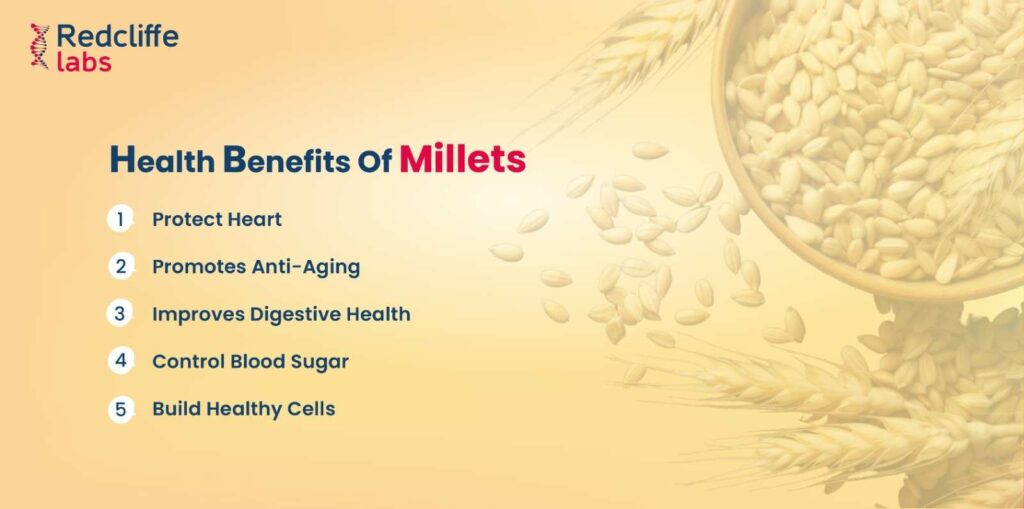
Millets are gaining popularity due to a diverse range of health benefits. It is low in calories and has lots of fiber, which helps to lose weight. Millets are rich in antioxidants that protect your cells, and they don't make your blood sugar spike, which is good for people with diabetes. More or less, millet can help a balanced and healthy diet. Here are some more health benefits of millets:
Digestive Health:
Millets are an excellent source of dietary fiber, which aids digestion by adding bulk to stool and facilitating regular bowel movements. The thread in millet serves as a prebiotic, nourishing beneficial gut bacteria.
Control Diabetes:
Millets are nutrient-rich, gluten-free, and have low glycemic index, which helps to maintain your blood sugar levels for diabetic patients. In addition, millets are a good source of dietary fiber, proteins, essential amino acids, vitamins, and minerals.
Heart Health:
Millets are heart-healthy as they contain nutrients that support cardiovascular health, control blood pressure and cholesterol levels, and help to maintain a healthy weight.
Controlling Cholesterol:
Millets are rich in dietary fiber, which helps reduce cholesterol levels. It is naturally low in saturated fat and is known to raise "bad" LDL cholesterol levels in the blood. The antioxidants in millets help prevent oxidative damage to LDL cholesterol.
A gluten-free diet:
It is rich in antioxidants, like ferulic and catechins, that prevent the body from harmful oxidative stress. It is suitable for those with gluten sensitivities or celiac disease.
Rich in antioxidants:
Millets are packed with antioxidants that protect cells from damage and support overall health.
Weight Management:
Millets are high in complex carbs and low in calories, which keeps you full for a longer time. This helps you manage healthy body weight and reduce unnecessary snacking and overeating. Millets are nutrient-rich, providing essential vitamins and minerals that improve overall health.
People also Read:- https://redcliffelabs.com/myhealth/food-and-nutrition/food-for-overall-health/ragi-or-finger-millet-nutrition-benefits-blood-sugar-control-and-more/
Types of Millets
There are several types of millet, each with unique features and nutritional profiles. Here are some of the most common types of millets:
Sorghum (Jowar)
Features:
- It is a gluten-free grain, making it suitable for people with gluten sensitivities.
- - Sorghum is used in various dishes, including flatbreads, porridge, and as a whole grain.
- It is highly nutritious and rich in dietary fiber, protein, vitamins, and minerals.
Pearl Millet (Bajra)
Features-
- Pearl millet is one of the most widely cultivated millets.
- It has a nutty flavor and is often used in flatbreads, porridge, and rice substitutes.
- It is a good source of iron, calcium, and fiber.
Finger Millet (Ragi/Mandua)
Features:
- Finger millet is known for its rich, dark color.
- It's commonly used to make ragi malt, dosas, and porridge.
- It is highly nutritious and rich in calcium, iron, and amino acids.
Foxtail Millet (Kangani/Kakun)
Features:
- Foxtail millet is small and yellow.
- It is versatile and can be used in dishes like upma, pongal, and pulao.
- It is a good source of protein and dietary fiber.
Proso Millet (Cheena)
Features:
- Proso millet has a mild, nutty flavor.
- It can be used in various recipes, including porridge, pilaf, and salads.
- It is rich in protein and antioxidants.
Kodo Millet (Kodo)
Features:
- Kodo millet is known for its small, round grains.
- It is used in dishes like porridge, pulao, and upma.
- It is a good source of fiber and minerals.
Barnyard Millet (Sawa/Sanwa/ Jhangora)
Features:
- Barnyard millet has a similar appearance to rice.
- It is used in dishes like khichdi, pulao, and porridge.
- It is rich in fiber and low in calories.
Little Millet (Kutki)
Features:
- Little millet is small and round with a mild flavor.
- It is used in recipes like idli, dosa, and upma.
- It is a good source of iron, fiber, and antioxidants.
Buckwheat (Kuttu)
Features:
- It is not botanically classified as a true cereal grain or millet; it's a pseudo-cereal.
- It is used to make dishes like buckwheat flour pancakes (commonly known as "kuttu ka cheela" in India).
- Buckwheat is a good source of protein, fiber, vitamins, and minerals.
Amaranthus (Chaulai)
- It is also a pseudo-cereal and not a true millet.
- It is known for its tiny, grain-like seeds and is often used in both savory and sweet dishes.
- It is highly nutritious and rich in protein, dietary fiber, and essential vitamins and minerals.
Nutritional Value in Millets
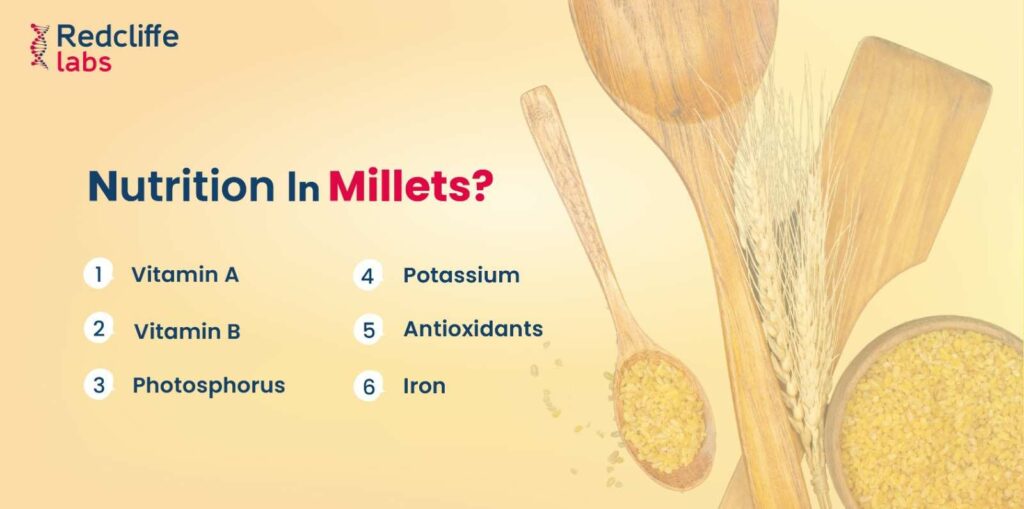
Millets are highly nutritious grains and offer various essential nutrients. The exact nutritional content may vary depending on the variety and quantify of millet, but here is a general overview of the nutritional value of millets (per 100 grams, cooked):
- Calories- 100-150
- Protein: 3-8 grams
- Fiber- 1-3 grams
- Carbohydrates- 20-40 grams
- Magnesium- 44 milligrams (mg) of
- Copper 0.161 mg
- Phosphorus 100 mg
- Manganese 0.272 mg of
How to eat Millet?
Adding millet into your diet is easy and provides a nutritious alternative to traditional grains like rice and wheat. Here are some ways to include millet in your meals:
- Substitute for Rice or Wheat: Cook millets like foxtail millet, pearl millet, or finger millet (ragi) as you would rice or wheat. Serve them with curries, stews, or stir-fried vegetables.
- Millet Porridge: Make a creamy millet porridge by cooking millets in water or milk. Add sweeteners like honey, maple syrup, or fruits for a delicious breakfast.
- Millets in Salads: Add cooked and cooled millets to your favorite salads for extra texture and nutrition.
- Millets in Soups: Millets can be a great addition to soups and broths, providing a hearty and nutritious element to the dish.
- Millet roti: Millet flour (e.g., bajra flour, jowar flour) can make gluten-free rotis, pancakes, or chapatis.
- Baking with Millet Flour: Add millet flour to your baking recipes for muffins, bread, and cookies.
- Millet Upma: Prepare millet upma, a savory dish made with sautéed millets, vegetables, and spices.
- Millet Pongal: Try a millet version of the South Indian dish called "Pongal," using millets instead of rice.
- Millets in Snacks: Use puffed or millet flakes as a healthy snack. You can make millet-based snacks like cutlets, dosas, or savory pancakes.
- Millets in Desserts: Create millet-based desserts like millet kheer or millet-based sweets by combining them with jaggery, coconut, and nuts.
- Smoothie Bowls: Blend millets with yogurt or milk to make a creamy base for smoothie bowls, and top with fruits, nuts, and seeds.
Millets Recipes you must try at home
- Millet Pulao
- Ragi Raita
- Millet Dosa
- Millets Kebabs
- Bajra Bhel
Also Read: - https://redcliffelabs.com/myhealth/food-and-nutrition/is-millet-good-for-diabetes-everything-you-need-to-know/
Millets: A Smarter and Healthy Option
India is the world's largest millet producer, contributing to 20% of the world's total and the rest 80% of Asia's production. The growing popularity of millet can be associated with its numerous health benefits and versatility in the kitchen. Millets offer a smarter and more nutritious option with its high fiber content, low glycemic index, and rich nutritional profile. Millets have become a valuable addition to balanced diets, helping in weight management, cholesterol control, and digestive health. As a gluten-free alternative to traditional grains, it fulfills various dietary preferences and sensitivities. Millets are not only good for your health but also for the environment due to their sustainable cultivation practices.