Buckwheat Flour (Kuttu Ka Atta) Benefits: Nutrition, Health, and Delicious Recipes

Have you been hearing about buckwheat flour around you?
Navratri could be the reason!
This buckwheat flour is the same as Kuttu ka Atta, which is traditionally used during the 9 days of Navratri. One of the ingredients introduced to us by our ancestors was “fasting appropriate”.
But did you know why?
Buckwheat, unlike its name, has nothing to do with wheat.
Yes, it is gluten-free and rich in nutrients and antioxidants. During Navratri, people often avoid wheat and rice, making it a great alternative as it is healthy, tasty and filling.
Still, there are discussions about whether buckwheat is actually beneficial or if it has simply resurfaced, like many other internet trends.
Let’s decode everything about buckwheat flour's nutritional value, health benefits, and easy-to-make recipes.
Keep on reading!
What is Buckwheat Flour (Kuttu Atta)?
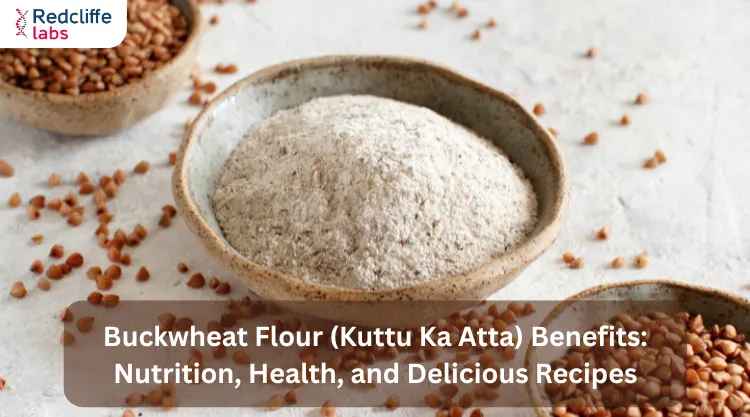
Buckwheat is a pseudo-cereal, which means it is not a grain but is consumed like one. It comes from the seeds of a plant called Fagopyrum esculentum, and it is ground into flour for cooking.
Despite its name, it is entirely gluten-free and safe for people with wheat allergies or who are intolerant to gluten.
In India, buckwheat flour becomes a staple in the kitchen during Navratri, used to make rotis, puris, pakoras, and even desserts. Its earthy taste and versatility make it a fast favourite.
Why do Kuttu and Navratri go together?
- Provides steady energy without bloating.
- Keeps you full for longer during fasting hours
- Pairs beautifully with potatoes, curd, and fresh veggies.
Now that you know what buckwheat really is, let’s take a closer look at what makes it a superfood, its nutrition profile.
Nutritional Value of Buckwheat Flour:
Here is what 100g of buckwheat flour contains:
| Nutrients | Amount (per 100g) |
| Calories | 335 kcal |
| Carbohydrates | 70 g |
| Protein | 13 g |
| Fat | 3.4 g |
| Fiber | 10 g |
| Iron | 2.2 mg |
| Magnesium | 231 mg |
| Potassium | 460 mg |
| Calcium | 18 mg |
| Zinc | 2.4 mg |
| Vitamin B6 | 0.2 mg |
Key Highlights:
- High in protein: ideal for vegetarians during fasting.
- Rich in magnesium & potassium: great for heart health.
- Loaded with fibre: supports digestion.
The nutrition numbers are impressive, but what do they actually mean for your health?
Let’s explore the benefits of buckwheat.
6 Key Health Benefits of Buckwheat Flour:
1. Supports Heart Health
Buckwheat is rich in rutin, an antioxidant that strengthens blood vessels and reduces cholesterol. Its high magnesium content relaxes blood vessels, supporting healthy blood pressure.
During fasting, when fried snacks are prevalent, adding buckwheat can help balance your heart health with its natural goodness.
2. Helps in Blood Sugar Control
Despite being rich in carbohydrates, buckwheat has a low glycemic index (GI). This means it releases sugar slowly into the bloodstream, making it a safe option for people with diabetes, even during festive fasting.
3. Improves Digestion
The high fibre content keeps constipation at bay, especially when diets become heavy on fried foods during Navratri. Buckwheat supports gut health and keeps you light on your feet for garba and dandiya nights.
4. Boosts Energy & Stamina
Navratri often involves long hours of fasting and energetic nights of dancing. Buckwheat’s complex carbs and protein give sustained energy without causing sugar crashes.
5. Supports Weight Management
Its high satiety factor keeps you full for long hours, helping prevent over-snacking on fried sabudana or potato-based dishes.
6. Gluten-Free Goodness
For those with gluten sensitivity, buckwheat offers a safe, wholesome flour alternative that doesn’t compromise on taste or nutrition.
Clearly, buckwheat flour isn’t just a fasting ritual; it’s a health-boosting powerhouse. Now, let’s make it practical with some easy and realistic Navratri recipes.
Easy Buckwheat Recipes for Navratri
Kuttu Ka Cheela (Savoury Pancake)
Ingredients:
- 1 cup buckwheat flour
- 1 boiled potato, grated
- 1 green chilli, chopped
- Rock salt (sendha namak)
- Curd (optional for softness)
- Water
Method:
- Mix flour, potato, chilli, and salt.
- Add water gradually to form a smooth batter.
- Heat a tawa and pour the batter to form a pancake-like shape.
- Cook with a bit of ghee on both sides until crisp.
Serve hot with mint chutney or curd.
2. Kuttu Ki Puri
Ingredients:
- 1 cup buckwheat flour
- 1 boiled potato, mashed
- Rock salt
- Ghee for frying
Method:
- Mix flour, mashed potato, and salt.
- Knead into dough (use a little water if needed).
- Roll small puris and deep fry in ghee.
Best paired with aloo ki sabzi or plain curd.
3. Buckwheat Flour Halwa
Ingredients:
- 1 cup buckwheat flour
- ½ cup ghee
- ¾ cup sugar or jaggery
- 3 cups water
- Chopped dry fruits
Method:
- Roast flour in ghee until golden brown.
- Add water and sugar, stir continuously to avoid lumps.
- Cook until a halwa consistency is achieved.
- Garnish with dry fruits.
A perfect Navratri sweet treat!
4. Kuttu Dosa (Crispy Style)
Ingredients:
- 1 cup buckwheat flour
- ½ cup boiled arbi (colocasia), mashed
- Rock salt & green chilli
- Water
Method:
- Mix flour and mashed arbi with water to make a thin batter.
- Spread like a dosa on a hot tawa.
- Cook until crisp and golden.
Goes well with coconut chutney.
These recipes prove that fast food doesn’t have to be boring; it can be healthy, filling, and tasty. But how do you make the most of buckwheat without overdoing it? Let’s see.
Additional Tips to Include Buckwheat in Meals:
- Don’t rely only on fried puris; balance with cheelas or dosas.
- Pair buckwheat with curd for better digestion.
- Combine with fresh fruits or veggies to keep meals nutrient-rich.
- Limit ghee and oil to avoid unnecessary calories.
Moderation and balance ensure that buckwheat serves its true purpose, keeping you energized and healthy throughout Navratri.
Key Takeaway:
Navratri is about detox, devotion, and discipline. By replacing heavy grains with wholesome options like buckwheat flour, you not only respect tradition but also gift your body better health. From crispy cheelas to soft halwa, buckwheat brings a blend of nutrition and flavour to your plate.
So this Navratri, let Kuttu Ka Atta be more than just a fasting food; make it a permanent addition to your kitchen for a healthier lifestyle.
Frequently Asked Questions (FAQs):
-
Can you eat buckwheat flour every day?
Yes, you can eat buckwheat flour (kuttu ka atta) every day as part of a balanced meal, as it is gluten-free, rich in fibre, minerals, and protein, making it perfect for Navratri fasting and everyday meals. However, remember not to overdo it and have it in moderation.
-
Is buckwheat flour healthier than regular flour?
Compared to maida (refined flour), buckwheat flour is a healthier option. It contains more fibre, protein, antioxidants, and other nutrients, and is also gluten-free, which makes it easier to digest and results in a lower blood sugar spike.
-
What are the benefits of buckwheat flour?
Buckwheat flour supports heart health, aids digestion, regulates blood sugar, and is rich in essential minerals like magnesium and iron. It also contains rutin, a plant compound with anti-inflammatory and antioxidant benefits.
-
Which is healthier, buckwheat or millet?
Both are highly nutritious; however, buckwheat is richer in antioxidants and amino acids, while millets have more fibre content. So, the healthier option depends on your health goal. To control your blood sugar levels, opt for buckwheat flour. For better gut health, consider incorporating millets into your diet.
-
What is the Indian name for buckwheat?
In India, buckwheat is commonly known as Kuttu or Kuttu ka Atta, and is especially popular during the Navratri fasting period.
-
Does buckwheat spike your blood sugar?
No, buckwheat has a low to medium glycemic index and actually helps regulate blood sugar levels. It releases energy slowly, making it safe for people with diabetes when eaten in controlled portions.