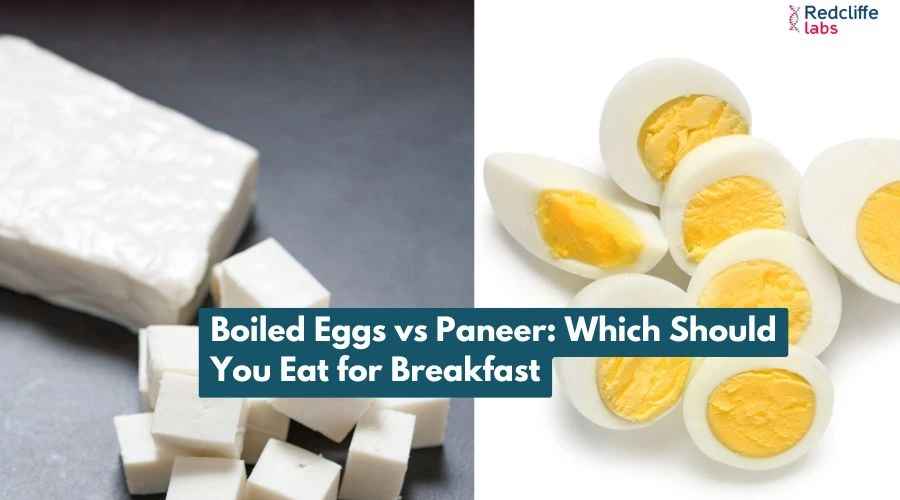
Boiled Eggs vs Paneer: Which Should You Eat for Breakfast

Most mornings are spent in haste as one tries to prepare for work, university, or simply adopt a healthy lifestyle. At such times, what one eats in the morning can be crucial to staying energized and satisfied throughout the day. At such times, most people ask themselves, " Should I opt for boiled eggs or paneer?
Well, both options are good sources of protein and are commonly consumed by Indians. However, are they both healthy? Both foods contain protein, a necessary nutrient for breakfast, but depending on your goal, one may suit you better.
Which of the two is more nutritious? Which is a better source of calories, and which should you use for weight gain or weight loss? This blog compares these two foods.
While both are highly protein-rich foods, they have distinct nutritional profiles. Let's compare these two.
Nutritional Comparison: Boiled Eggs vs Paneer
| Option A | Option B | ||
| 2 Large Boiled Eggs (per 100 gms) | Paneer (100 gms) | ||
| Protein | 12-13 g | Protein | 18-20 g |
| Calories | 140-155 kcal | Calories | 260-300 kcal |
| Fat | 10-11 g | Fat | 20-22 g |
| Carbs | Less than 1 g | Carbs | 2-3 g |
| Rich in | Vitamin B12, Vitamin D, Choline | Rich in | Phosphorus, Vitamin B12 |
Key Takeaway:
- Paneer provides more protein per serving.
- Eggs are lower in calories and fat.
Also read:
Why Protein Quality Matters for Breakfast
Not only the protein content but also the protein quality is important to consider here. The egg is an ideal source of protein because it contains all nine essential amino acids that the body cannot synthesize. Paneer is another source of complete protein, as it is a dairy product; however, the two differ in digestibility.
- Digestion: Egg protein is very fast-digesting, making it very helpful when consumed in the morning after a workout.
- Feeling of fullness: Paneer is packed with slow-digesting protein called casein.
- Micronutrient profile: Eggs are rich in choline (a brain-friendly nutrient) and vitamin D, whereas paneer is rich in calcium and phosphorus.
Benefits of Boiled Eggs for Breakfast
Boiled eggs are one of the simplest and most nutrient-dense foods you can include in your morning routine.
1. Supports Weight Loss
Eggs are low-calorie foods packed with protein that make one feel full for an extended period. As a result, appetite hormones are regulated, preventing overeating when not needed. Including boiled eggs in breakfast can naturally support calorie control throughout the day.
2. High-Quality Complete Protein
One of the main advantages of including eggs in your diet is that they provide a complete protein, as they contain all 9 essential amino acids the body requires.
3. Boosts Brain Health
Choline, an important component of eggs, supports brain health and stimulates proper cognitive function. Consuming this type of food will be especially beneficial for those whose lifestyle demands constant concentration.
4. Easy to Digest and Quick to Prepare
Boiled eggs are easy to digest, and almost everyone can consume them without harm. In addition, the eggs can be cooked in advance and kept in a fridge for later use.
5. Supports Eye Health
Lutein and zeaxanthin, antioxidants contained in eggs, improve the condition of the eye membranes and protect them from the harmful effects of blue light rays.
Benefits of Panner for Breakfast
Paneer is a staple in vegetarian diets and offers several health benefits when consumed in moderation.
1. High Quality Protein for Vegetarians
Paneer is an excellent protein source for people who cannot eat meat or eggs due to a vegetarian diet. Paneer helps repair muscles and support other bodily functions; however, both paneer and eggs contain enough protein.
2. Rich in Calcium for Bone Health
The amount of calcium in paneer is significantly greater than that in eggs. It is vital for bone strength and tooth formation, and it promotes healthy nerves and muscle functioning.
3. Keeps You Full for Longer
Fat and protein slow the digestion of paneer more than eggs, helping one feel less hungry for longer. However, excessive consumption of paneer can lead to higher calorie intake.
4. Contains Slow-Digesting Casein Protein
Paneer contains casein, which takes a long time to digest and releases essential nutrients gradually. As a result, one's muscles will get the necessary nourishment after training.
5. Provides Steady Energy
Due to its higher fat content, paneer is an ideal food for people who need constant energy. This type of food does not cause sudden increases in hunger and gives energy.
Also read:
https://redcliffelabs.com/myhealth/food-creative/brown-eggs-vs-white-eggs-which-is-healthier/
Which is Better for Weight Loss?
If your main focus is losing weight, boiled eggs will serve you best.
Here's why:
- Fewer calories
- Lower in fat
- High satiety index
While paneer is nutritious, it is calorie-dense and can lead to excess calorie intake unless portion control is practiced.
Best pick:
- Boiled eggs for controlling calories
- Paneer in smaller quantities if vegetarian
Which is Better for Muscle Gain
While both are effective in promoting muscle growth, the choice depends on your dietary preference.
Eggs contain fast-absorbing proteins, making them ideal for post-exercise consumption.
Paneer consists of slowly digesting proteins, making it suitable for sustained muscle recovery.
Best Pick:
- Incorporate both into your diet if possible
- Consume eggs in the morning or after a workout, and paneer at other times.
Which is Better for Heart Health
It depends on serving size and overall dietary intake.
Eggs were once believed to increase cholesterol levels, but moderate intake does not harm healthy people.
Saturated fats are more prevalent in paneer, which may affect cardiac health when consumed in large quantities.
Balanced Approach:
- Limit paneer intake if you have high cholesterol.
- Moderate intake of eggs (1-2 per day)
When Should You Choose Boiled Eggs
Choose boiled eggs if:
- You are on a weight-loss program.
- You need a low-calorie, high-protein breakfast.
- You want fast-digesting protein post-workout
- You require a high-protein but low-fat diet.
- You have dairy intolerance or a milk allergy
- You are not a vegetarian.
You should consume paneer when:
- You are a vegetarian and need complete protein.
- You need a higher calorie intake.
- You want long-lasting fullness through the fullness.
- You need calcium-rich food for bones and pregnancy.
- You are a growing child or teenager
- You prefer a versatile, culturally familiar food
Can You Eat Both Together?
Yes, consuming both can provide balanced nutrition.
Examples include:
- Egg Bhurji and small chunks of paneer
- Paneer salad with boiled eggs (for non-vegetarians)
This combination gives you:
- Fast and slow-digestible proteins.
- Diversity in nutrients
What do Experts Say?
According to experts:
- Proteins should be a vital part of your daily nutrition.
- Foods such as eggs & dairy products are healthy in smaller portions.
- Balance and portion control matter more than choosing one "perfect" food
Conclusion
Boiled eggs and paneer are indeed good sources of complete proteins. There is no clear winner here. It all comes down to your personal preferences, calorie intake requirements, and any health conditions you may have. For instance, if you seek a protein-rich meal that is not very calorie-dense, easily digestible, and nutritious, boiled eggs are difficult to beat. On the other hand, if you are a vegetarian, have a calcium deficiency, or require prolonged satiety during an intense workout, paneer is a must.
Consider alternating both throughout the week for the broadest nutritional coverage. But remember: consistency and diversity should always come first. The most crucial aspect is not the food you choose but the combination of protein with whole grains and vegetables.
SimpleTakeaway:
- Eat eggs for weight control, quick protein absorption, and reduced calorie content.
- Eat paneer for its calcium, satiety, and vegetarian appeal.
- Alternate both through the week for the best of both.
- Reduce paneer intake if you suffer from hypercholesterolemia.
- Discuss your nutrition choices with a registered dietitian if needed.
Nutrition requirements differ from one individual to another. If you are uncertain whether your current diet provides adequate intake of protein, calcium, or vitamin D, a quick blood test will provide an answer.
Most relevant Redcliffe Labs tests that may be recommended:
- Test for Vitamin D- directly related due to the role eggs play in being a dietary source of vitamin D.
- Vitamin B12 test - an essential component of both eggs and paneer.
- Calcium test - directly relevant to the bone health comparison between paneer and eggs.
- Nutrition profile panel - includes all the tests mentioned above.
FAQs
-
Which is better for a daily breakfast: boiled eggs or paneer?
Both of these foods are very nutritious and healthy choices for your breakfast, and the choice between them depends entirely upon your health needs. Eggs have fewer calories and are perfect for those who need to lose weight, whereas paneer offers extra protein and calcium. Paneer is a good choice if you follow a vegetarian diet, but you can combine both foods if necessary.
-
Can I eat boiled eggs and paneer together for breakfast?
It is perfectly fine to add both eggs and paneer to your breakfast menu if your diet includes such products. This combination will allow you to benefit from both types of protein, one fast-digesting and the other slow-digesting.
-
Are boiled eggs better than paneer for weight loss?
Eggs are always preferable for weight loss, as they have low fat and calorie content but a high protein content. This will prevent hunger pangs and reduce calorie intake. Paneer, though healthy, is high in fat and calories. Thus, it should only be taken in limited quantities.
-
Is paneer a complete protein like eggs?
Yes, eggs are often called "complete proteins" because they contain all 9 essential amino acids the body needs. While paneer is also rich in protein content, it lacks certain amino acids. But if taken along with foods like cereals and pulses, it contributes to a balanced protein intake.
-
How much paneer or eggs should I eat for breakfast?
Generally, for an average person, one to two boiled eggs or around 50-100 grams of paneer is considered to be an appropriate quantity for breakfast. However, this may vary depending on individual calorie requirements and their health needs.
-
Which is better for muscle gain: eggs or paneer?
Both paneer and eggs contribute to the development of muscles, although the manner in which they do so is different. Eggs contain proteins that are easily absorbed into the body, whereas paneer contains slow-absorbed proteins that help in muscle formation.
-
Is it safe to eat boiled eggs or paneer every day?
Yes, you can eat both boiled eggs and paneer regularly as part of a healthy diet. You should have only one or two boiled eggs per day to maintain good health, whereas paneer should be consumed in moderation due to its high fat content.