Black Coffee Calories: Health Benefits, Weight Loss & Nutrition Facts

It's black, black coffee!
Strong, bold, and beautifully calorie-free. This is because it's brewed with just coffee beans and water, without milk or sugar.
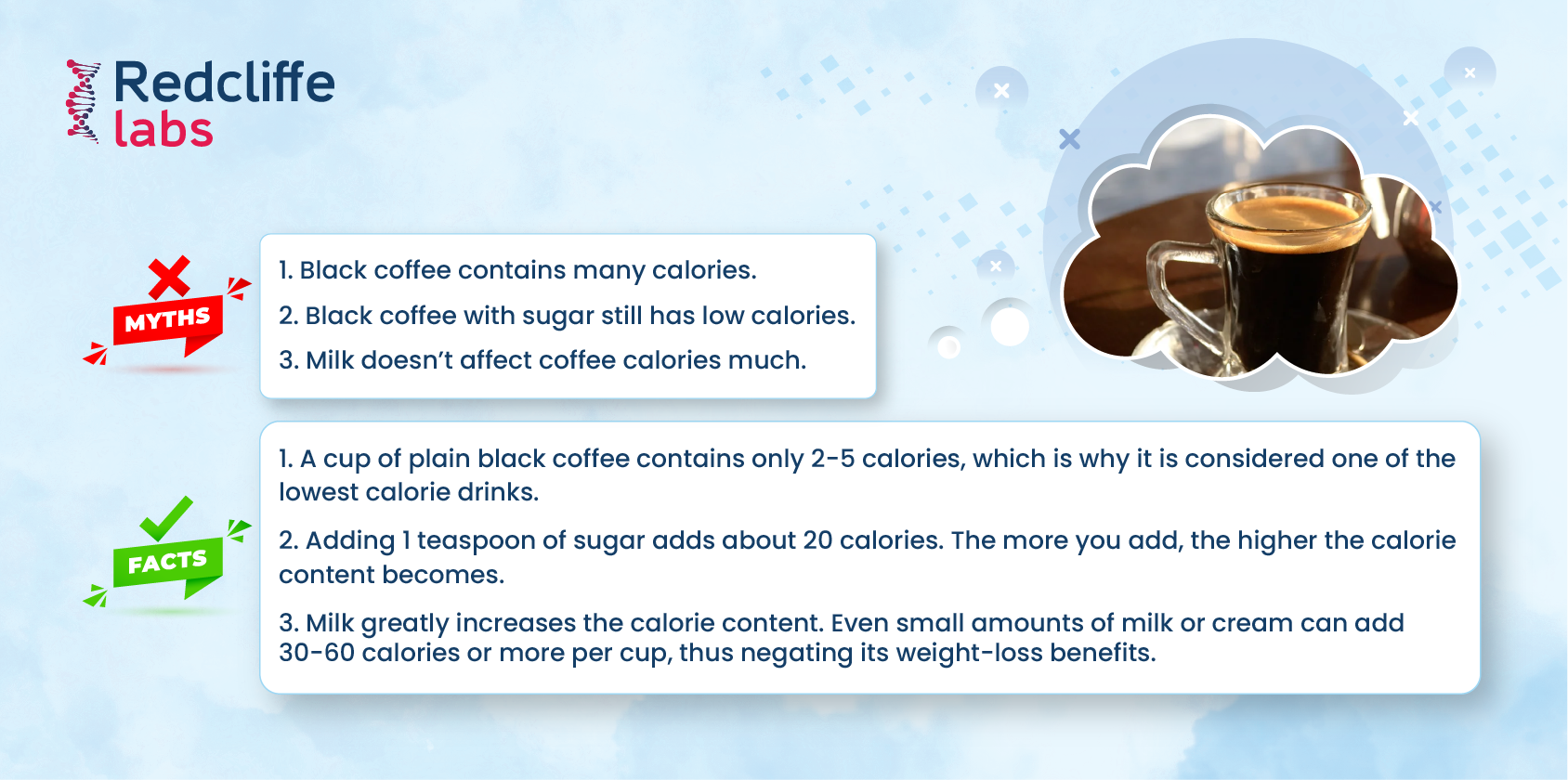
Just 1 cup of black coffee (240 ml) contains only 2-5 calories, making it a go-to choice for many calorie-conscious coffee drinkers. Are you one of them?
Many people enjoy starting their morning with a cup of black coffee. If you are also someone who functions best on black coffee, this blog is for you.
It provides clear information on the calories in black coffee, backed by simple science and practical insights.
Black Coffee Nutrition Facts (Per 1 Cup - 240 ml)
- Calories: 2-5 kcal
- Protein: 0.3 g
- Fat: 0 g
- Carbohydrates: 0 g
- Sugar: 0 g
- Fiber: 0 g
- Cholesterol: 0 mg
Key Micronutrients (Approx.)
- Potassium: 115 mg
- Magnesium: 7 mg
- Niacin (Vitamin B3): 0.5 mg
- Riboflavin (Vitamin B2): Trace amounts
Facts: Black Coffee Calories in India
- In India, people often consume black coffee during intermittent fasting, religious fasting, and calorie-restricted diets because it has negligible calories.
- Indian nutritionists often recommend black coffee as a pre-workout beverage because caffeine boosts alertness without adding calories.
- It is often part of Indian weight-loss plans, such as the Keto and low-carb diets.
- Additionally, people with high blood sugar levels can drink black coffee, as it does not raise blood sugar when consumed without milk or sugar.
Global Black Coffee Facts
- Black coffee is ranked among the lowest-calorie beverages, alongside water and herbal tea.
- Globally, it is among the most widely consumed low-calorie, caffeinated drinks in the USA, Japan, and Scandinavian countries.
- According to the global health guidelines, black coffee is considered safe when consumed in moderation.
- Additionally, studies suggest that drinking black coffee in moderation is the safest option for most adults.
You might wonder whether the way black coffee is brewed affects its calorie content.
Does Brewing Method Change Calories in Black Coffee
Here is the good news: the statement is generally true. The calorie content of black coffee remains almost the same even after brewing as long as it is prepared without milk, sugar, or cream.
Using different brewing methods may affect taste, strength, and antioxidant levels, but they don't significantly change the calories per cup in black coffee.
How Many Calories Does Your Favorite Black Coffee Have
(Without Additives)
Black Coffee With Add-Ons
A simple cup of black coffee can quickly become a 150-300-calorie drink when sweeteners and creamers are added.
Is Black Coffee for Weight Loss?
Yes, black coffee is good for weight loss if consumed in moderation.
SupportsWeight Loss
Caffeine is a natural stimulant in black coffee (without adding cream or sugar) that increases metabolism and promotes fat oxidation. This means your body burns calories more efficiently, even at rest.
Consuming black coffee regularly in moderate amounts may help increase calorie burn and support gradual, sustainable weight loss.
Helps Control Hunger Pangs
The caffeine in black coffee can temporarily suppress appetite by influencing hunger hormone(s) such as ghrelin. Thus, if you drink black coffee between meals, you may be able to avoid snacking and keep your caloric intake to a minimum.
Impacts Calorie Level
A cup of plain black coffee contains only 2–5 calories, making it a great choice for weight loss. Replacing high-calorie beverages, such as sugary teas, cold coffees, or sodas, with black coffee can significantly reduce daily calorie intake.
Helps Shed Water Weight
Black coffee has a mild diuretic effect that can temporarily reduce water retention and bloating. Although this does not translate to long-term fat loss, it may create a temporary leaner appearance and a slight reduction in body weight.
Enhances Workout Performance
When you consume black coffee before exercising, your stamina (endurance) increases, you feel more alert, and you can train at higher intensity. Thus, you can burn more calories while performing cardio and strength training.
Caffeine also helps delay fatigue while allowing you to train longer, harder, and with greater overall calorie expenditure.
How Much Black Coffee is Safe Per Day?
Most health experts recommend 2-4 cups per day (up to 400 mg caffeine). As caffeine sensitivity varies, excess intake of black coffee may cause:
- Acidity and digestive issues
- Anxiety
- Insomnia
- Increased or irregular heart rate
- Headaches
Precautions
- Pregnancy: Limit caffeine intake to no more than 200 mg per day, which equals about 1-2 cups of black coffee.
- Hypertension: People with high blood pressure should limit black coffee to 1-2 cups per day.
- Timing: To prevent sleep problems, avoid drinking black coffee late in the evening or at night.
Black Coffee vs. Milk Coffee: Calorie Comparison
Here are calorie comparison highlights:
Black Coffee: The Super Low-Calorie Champion
Black coffee wins clearly if calorie control is your goal. It is best to go for:
- Weight Loss: Black coffee has almost no calories, making it a great choice for weight loss.
- Milk Alternatives: Skimmed, almond, or soy milk adds fewer calories than whole milk.
- Add-ins: Sugar, syrups, and whipped cream greatly increase calories.
- Caffeine: Both black coffee and milk coffee have similar caffeine levels, though milk can make the coffee taste less strong.
How Do You Make a Great Cup of Black Coffee
Key Elements of the Perfect Cup:
- Use fresh, good-quality coffee beans.
- Grind just before brewing (match grind size to your method).
- Use 1-2 tablespoons of coffee per 180 ml (6 oz)of water.
- Heat filtered water to 90-96°C (195-205°F).
- Brew using your preferred method (pour-over, French press, drip).
- Drink fresh for the best flavor.
Black Coffee & Calories- Summary:
The information above indicates that black coffee fits well into a balanced lifestyle, as it is a low-calorie beverage. It's near-zero calorie content, or with just 2-5 calories per serving and no added sugar or milk, it remains a smart choice for fitness enthusiasts, intermittent fasters, and anyone watching their calorie intake.
Just remember, how you drink it matters. Keeping it plain ensures you enjoy its benefits without hidden calories.
Related Articles
https://redcliffelabs.com/myhealth/lifestyle/black-coffee-benefits-its-side-effects-and-more/
https://redcliffelabs.com/myhealth/general-health/should-you-drink-black-coffee-on-an-empty-stomach/
FAQs
1. Is black coffee good for you?
Yes, black coffee can be healthy when consumed in moderation. It contains antioxidants that help fight free radicals and reduce inflammation. Studies have linked coffee to a lower risk of Type 2 diabetes, Parkinson's disease, and certain cancers, especially when consumed without added sugar or cream.
2. Does black coffee help with focus and alertness?
Yes, black coffee enhances focus and alertness due to its caffeine content. Caffeine stimulates the central nervous system, increasing energy and alertness. Research shows it can improve concentration, reaction time, and mental performance, helping improve overall productivity.
3. Is black coffee calorie-free?
Plain black coffee contains very few calories (about 2–5 per cup) and no fat or sugar when consumed on its own. Adding milk, cream, sugar, or flavored syrups significantly increases calorie content, which may reduce its weight-loss benefits.
4. Why should I choose organic coffee?
Organic coffee is grown without synthetic pesticides or chemical fertilizers, reducing chemical exposure. Organic farming supports environmental sustainability, improves soil health, and helps preserve biodiversity. Many people also associate organic coffee with a cleaner taste and richer flavor.
5. Is black coffee a healthy daily habit?
Drinking black coffee daily can be a healthy habit if intake is moderate. It is low in calories, rich in antioxidants, and may support brain function and metabolism. To avoid caffeine-related side effects, most experts recommend limiting intake to 2–3 cups per day.
6. Should everyone drink black coffee?
Black coffee may not be suitable for everyone. People sensitive to caffeine may experience anxiety, acidity, or sleep disturbances. Pregnant women and individuals with high blood pressure or heart conditions should consult a doctor to determine a safe level of caffeine consumption.
7. Does black coffee contain antioxidants?
Yes, black coffee is rich in antioxidants, including chlorogenic acids. These antioxidants help reduce oxidative stress and inflammation. They may have beneficial effects on the heart and metabolism when black coffee is consumed without sugar or cream.
8. Can black coffee improve metabolism?
Caffeine in black coffee can slightly increase metabolic rate and fat oxidation. While the effect is modest, regular moderate consumption may support weight management when combined with a balanced diet and an active lifestyle.
Leave a comment
1 Comments
alex binder
Jul 8, 2026 at 12:33 PM.
After my wife was diagnosed with breast cancer, it felt like our world was falling apart. With the guidance and care of Dr. Kokobi, we began to find hope again. My wife followed the treatment plan he provided, and over time her health has greatly improved. We are truly grateful to God for using him in her healing journey. I sincerely recommend kokobiherbalremedycentre@ gmail. com for his support, care, and dedication.