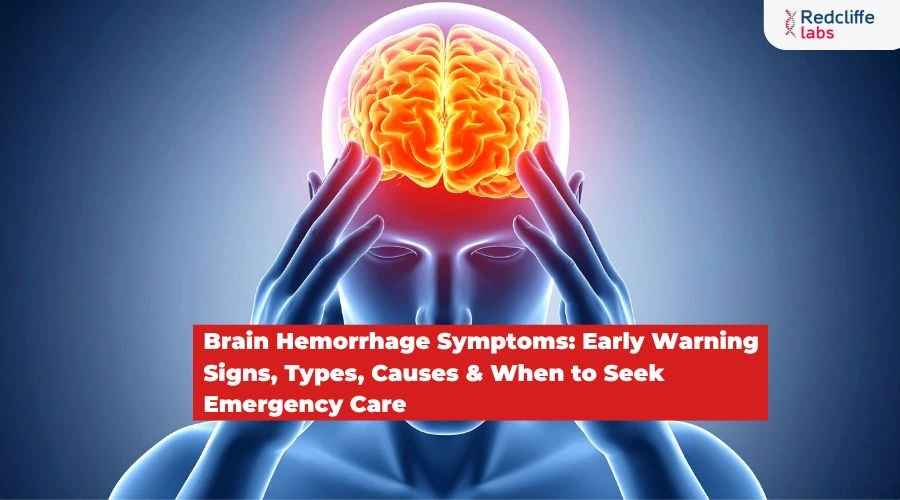
Brain Hemorrhage Symptoms: Early Warning Signs, Types, Causes & When to Seek Emergency Care

The brain is one of the most vital organs of the body, controlling everything from movement and speech to memory and emotions.
Many brain-related conditions are rare, but knowing their early signs can be very helpful for those who need to take quick measures to safeguard their long-term brain health.
A brain hemorrhage is one of such conditions where recognizing symptoms early plays a crucial role in outcomes.
What Is a Brain Hemorrhage?
A brain hemorrhage is a type of stroke (hemorrhagic stroke) that involves bleeding in the brain and is a critical condition. This happens when a blood vessel inside or around the brain breaks. Blood that leaks out causes swelling of brain tissues, disrupts the oxygen supply to brain tissue, and can lead to brain damage or even death if not treated immediately.
It is essential to know the symptoms of a brain hemorrhage so that appropriate action can be taken immediately. Recognizing early signs of brain hemorrhage can be life-saving.
Types of Brain Hemorrhage
Brain hemorrhage or "brain bleed" is a very broad term. Different types of brain bleeds help doctors identify where exactly the bleeding occurs.
So, let's look at the brain bleed types ( by Location)
- Intracerebral Hemorrhage - Bleeding within brain tissue
- Subarachnoid Hemorrhage - Bleeding between the brain and arachnoid membrane
- Subdural Hemorrhage - Bleeding between the brain and dura mater
- Epidural Hemorrhage - Bleeding between the skull and dura mater
- Intraventricular Hemorrhage - Bleeding into the brain ventricles
Each type produces slightly different symptoms, but many overlap.
Early Brain Hemorrhage Symptoms: You Should Not Ignore
Symptoms of a brain bleed vary based on the type, but could include:
- Sudden, severe headache (often described as "the worst headache of life")
- Nausea or repeated vomiting
- Sudden dizziness or loss of balance
- Blurred or double vision
- Difficulty speaking or slurred speech
- Sudden confusion or disorientation
- Weakness in the face, arm, or leg (especially one side)
- Tingling or numbness
- Sensitivity to light
- Difficulty concentrating
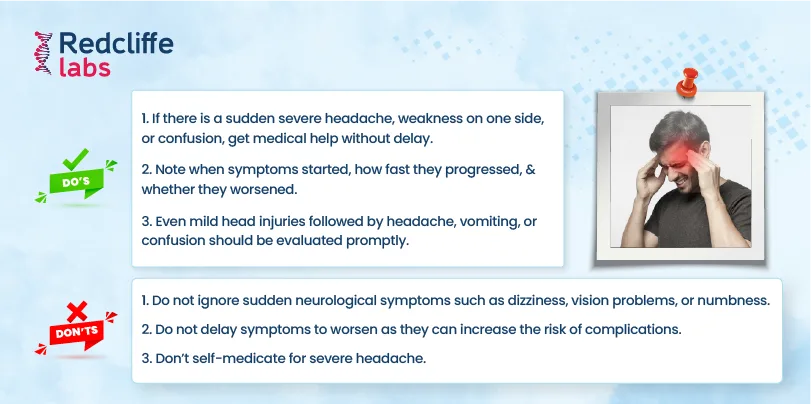
Even mild early symptoms require immediate medical evaluation.
Did you know?
The first symptom of a brain bleed is a sudden, painful headache.
Severe & Advanced Brain Hemorrhage Symptoms
As bleeding progresses, symptoms worsen rapidly:
- Loss of consciousness
- Seizures
- Sudden collapse
- Paralysis on one side of the body
- Severe confusion or coma
- Difficulty swallowing
- Unequal pupil size
- Abnormal breathing patterns
- Sudden drop in alertness
These symptoms indicate a life-threatening emergency.
Brain Hemorrhage Symptoms by Affected Brain Area
Symptoms by Affected Brain Area
- Personality changes
- Poor judgment
- Difficulty speaking
- Weakness on one side
- Memory loss
- Difficulty understanding speech
- Emotional instability
- Loss of sensation
- Trouble recognizing objects
- Difficulty reading or writing
- Vision loss
- Visual hallucinations
- Breathing problems
- Loss of coordination
- Double vision
- Coma
How Brain Hemorrhage Symptoms Can Vary
Brain hemorrhage symptoms vary from one person to another. The severity and combination of symptoms are determined by several factors, including the bleeding location, the volume of blood involved, how quickly medical care is received, and the person's age and overall health.
Sometimes, the signs may appear suddenly; on the other hand, they can develop over time and at first, seem not severe. Understanding this difference is crucial when looking at symptoms in older adults and children.
Brain Hemorrhage Symptoms in the Elderly
Key symptoms of brain hemorrhage in older people:
- Sudden confusion or delirium
- Frequent falls
- New memory issues
- Balance problems
- Sudden weakness or numbness
- Headache after a minor injury
Prompt medical evaluation is needed, as symptoms may be subtle and easily mistaken for normal aging.
Brain Hemorrhage Symptoms in Infants and Newborns
Common signs in infants and newborns:
- Excessive lethargy
- Excessive crying
- Bulging or tense soft spot (fontanelle) on the head
- Poor feeding/weak sucking
- Floppiness or reduced muscle tone
- Pale or bluish skin color
- Vomiting & Seizures (Common)
Because infants cannot express discomfort, any sudden or unexplained neurological change should be evaluated promptly.
Brain Hemorrhage Symptoms in Children and Toddlers
In children, symptoms may resemble those seen in adults but can also affect behavior and coordination. These may include:
- Sudden headache
- One-sided weakness/numbness
- Difficulty walking, loss of balance, or dizziness
- Confusion, unusual drowsiness, or behavioral changes
- Slurred speech or vision problems
When to Seek Medical Care: Every Minute Counts
Follow the FAST + Headache rule, if someone has:
- Face drooping
- Arm weakness
- Speech difficulty
- Time to act fast
- Sudden severe headache
What Are the Risk Factors for a Brain Bleed?
Common causes of brain hemorrhage:
A brain bleed may occur to anyone, regardless of age, from infants to adults. However, it is more commonly seen in people aged 65 and older. You may be more at risk of a brain bleed if you experience the following:
- High blood pressure (hypertension).
- Head injury or trauma
- Ruptured aneurysm
- Arteriovenous malformations (AVMs)
- Blood-thinning medications (anticoagulants)
- Liver disease or clotting disorders
- Brain tumors
- Cocaine or drug abuse
- Severe infections
How Is a Brain Hemorrhage Diagnosed?
Doctors review your medical history and symptoms first, and then may order imaging tests like:
- CT Scan (first-line emergency test)
- MRI Brain
- Cerebral angiography
- Magnetic resonance angiogram (MRA)
- Blood tests (clotting, infection, liver function)
Other tests that can help detect may include:
- Chest X-ray
- Urinalysis
How Can the Risk of Brain Hemorrhage Be Reduced?
Treatment of a brain hemorrhage depends on the extent as well as the location of the hemorrhage. Your doctor will mainly focus on stopping the bleeding and addressing the underlying cause. Treatment may include:
- Control blood pressure
- Avoid smoking and drugs.
- Use blood thinners only as prescribed.
- Wear helmets to prevent head injury.
- Manage diabetes and cholesterol.
- Regular health checkups
Identifying Risk Factors That May Increase the Chances of Brain Hemorrhage
Timely and accurate diagnosis is essential for controlling diseases that affect our brain health.
Redcliffe Labs offers diagnostic tests to help physicians assess factors associated with a brain hemorrhage, including blood pressure changes, clotting, liver function, and other related health conditions.
By home sampling and having advanced laboratory infrastructure and highly skilled phlebotomists, it is possible to monitor relevant health parameters in a timely and convenient manner.
Well-organized reports with clear clinical insights help doctors and patients accurately understand findings and support informed decisions on further evaluation.
If you or a loved one has symptoms that require medical attention, timely testing and consultation can support faster diagnosis and better care planning.
Do You Need Rehabilitation After a Brain Hemorrhage?
Whether someone requires rehabilitation after a brain bleed depends heavily on the severity, location of the bleed, and how fast the person was treated. Sometimes bleeding disrupts the brain, making daily activities such as movement, speech, memory, or self-care difficult.
Rehabilitation focuses on restoring lost abilities, adapting to any lasting changes, and reducing the risk of future complications.
Long-Term Rehabilitation May Include:
- Physical therapy to regain strength, coordination, and movement
- Speech therapy for communication and swallowing difficulties
- Occupational therapy for self-care and other daily activities
- Healthy lifestyle changes, such as controlling blood pressure, taking prescribed medications, and maintaining healthy eating habits, can help prevent brain hemorrhage.
Recovery and rehabilitation are individual and differ mostly by the severity and location of the brain bleed.
Factors such as the size and location of the bleed, overall health, age, and early medical care all influence recovery outcomes.
With proper care and follow-up, most people experience meaningful improvement over time.
FAQs
-
Can a brain hemorrhage happen without warning?
A brain hemorrhage can be sudden and without visible signs. Such incidents are particularly common in cases such as ruptured aneurysms or sudden vessel ruptures. Nevertheless, some individuals might have experienced subtle symptoms such as headaches, dizziness, or confusion before the hemorrhage, which can easily be overlooked if not evaluated promptly.
-
Is a headache always present in a brain hemorrhage?
It is not necessary to have a headache in a brain hemorrhage. A very severe pain in the head, bursting out of nowhere, is one of the most important symptoms in some types of hemorrhages and might not be accompanied by other symptoms.
However, others might only have neurological symptoms, such as weakness, confusion, vision changes, or loss of balance, and might not experience significant head pain.
-
Can stress cause a brain hemorrhage?
Stress alone does not directly cause a brain hemorrhage. But prolonged or uncontrolled stress can cause elevated blood pressure, and high blood pressure is one of the main risk factors of brain hemorrhage.
Controlling stress through healthy lifestyle choices may lower the long-term risk of heart disease and brain problems.
-
Is a brain hemorrhage fatal?
Brain haemorrhage can be fatal, but outcomes widely depend on the location and the size of the bleed, general condition, and speed of getting medical care.
Getting diagnosed and treated early significantly increases the chances of survival and reduces the risk of long-term complications.
-
Can a person fully recover after a brain hemorrhage?
Indeed, most people can recover either partially or completely after a brain haemorrhage, especially if they receive early treatment and proper rehabilitation. How far one can recover depends on the extent and location of the bleeding, as well as on one's age and overall health.
Rehabilitation therapies often help improve mobility, speech, and daily functioning over time.